in Barcelona
 3 to 5 Nov 2026
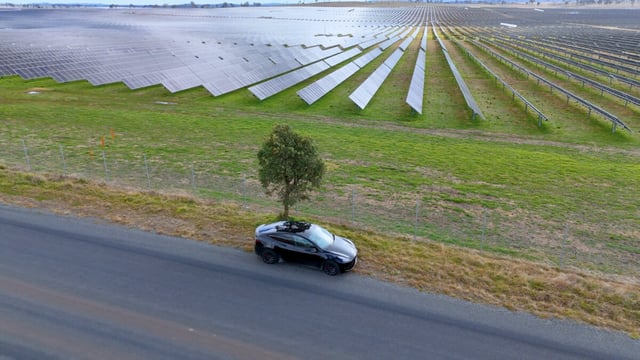
The European Commission announced on 19 October 2026 funding of nearly €3.8 billion for 212 projects, made up of €3.4 billion from the Innovation Fund for 77 net-zero technology projects in 23 European Economic Area countries and more than €390 million from the LIFE programme for 135 climate and environment projects. The Innovation Fund projects could avoid about 290 million tonnes of greenhouse gas emissions over their first decade of operation.
An Innovation Fund Call Oversubscribed Six-Fold
The Innovation Fund call, launched in December 2025 and financed from EU Emissions Trading System revenues, received 358 applications requesting €17.5 billion in grants against an available budget of €2.9 billion, and all five topics were oversubscribed. Kurrantly’s calculation from those figures shows that 21.5% of applications received a grant and that the budget covered 16.6% of the amount requested.
A further 84 projects passed evaluation without receiving budget and, with the 77 funded projects, will receive the STEP seal quality label that helps them attract other public and private funding. Another 160 proposals remain eligible for Project Development Assistance from the European Investment Bank. Independent experts assessed projects on emissions reduction potential, innovation, project maturity, replicability and cost efficiency.
Funding By Topic And Technology
By topic, the selection comprises 12 large-scale projects, 17 medium-scale, 20 small-scale, 12 clean-tech manufacturing projects and 16 pilots, with the Commission listing roughly €1.58 billion for large-scale projects, €895 million for clean-tech manufacturing, €458 million for medium-scale, €394 million for pilots and €124 million for small-scale projects.
The portfolio covers energy-intensive industries, renewable energy, energy storage, clean-tech manufacturing, net-zero mobility, critical raw materials processing and recycling, advanced alternative fuels and industrial carbon management. A small modular nuclear reactor project and a direct air carbon capture and storage project feature for the first time, and six projects address critical raw materials supply chains for rare earth magnets and batteries.
A Virtual Power Plant For Non-Interconnected Islands
Among the Innovation Fund projects, EuniFlex VPP, led by EUNICE Wind Park Holdings (Int) Ltd, is a flexible virtual energy platform for non-interconnected island power systems, according to Greek outlet economico.gr. The project is to demonstrate the first commercial application of ultra-fast bidirectional direct-current chargers combined with battery storage.
Vehicle-to-grid technology lets electric vehicles return power to the network, and the project’s stated main objective is more effective management and lower curtailment of electricity generation, with the aim of opening the way to similar applications across the wider Aegean and Mediterranean island region.
Vehicle-to-grid pilots are also under way in mainland systems. Vattenfall has launched a pilot of 200 bidirectional chargers across central and southern Sweden running through 2028, and the EuniFlex project applies the same technology to island grids where curtailment of local generation is a defining constraint.
LIFE Funds 135 Projects From 1,095 Applications
LIFE selected 135 projects from 1,095 applications submitted in 2025, with over €390 million in EU funding against a total investment of €579 million, so that the EU share covers more than half of the cost and the remainder comes from national, regional and local authorities, public-private partnerships, businesses and civil society. Kurrantly’s calculation gives a selection rate of 12.3%. The programme runs from 2021 to 2027 with a total budget of €5.43 billion, and allocations this year are 9% higher than last year.
Two LIFE projects involve Greece and Cyprus: LIFE BioCommunities brings together six partners from the two countries to involve citizens and businesses in Natura 2000 areas, including a national labelling initiative for nature-friendly products and a digital marketplace, while the Cypriot project Raptors for LIFE upgrades dangerous power lines and addresses illegal poisoning to protect vultures and eagles.
Grant Agreements And The December Call
Promoters of the 77 Innovation Fund projects have been invited to begin grant agreement preparation with the European Climate, Infrastructure and Environment Executive Agency, whose funding contracts will confirm budgets, timetables, deliverables and legal responsibilities, with results announced in the first quarter of 2027. The next Innovation Fund calls are planned for early December 2026 and include a €1 billion clean-tech manufacturing topic. The fund’s portfolio now stands at about 320 projects with almost €17 billion in grants committed, drawn from estimated EU ETS revenues of €40 billion for 2020 to 2030.
The number of the 77 projects that reach signed grant agreements in the first quarter of 2027, and how the December clean-tech manufacturing topic is subscribed against its €1 billion budget, will show whether this round’s 6-to-1 oversubscription persists.