in Barcelona
 3 to 5 Nov 2026
The Comune di Genova presented its new smart city strategy on 23 October 2026 to the city council’s first commission dedicated to the subject, held at Palazzo Tursi, where Francesca Coppola, the councillor for Smart City and the 15-Minute City, and Nicola Canessa, president of the Associazione Genova Smart City, described a framework that treats ecological, digital and social change as one programme under the administration’s 2025-2030 mandate guidelines. According to La Voce di Genova, the strategy rests on a council resolution approved in July, and the session also previewed the twelfth Genova Smart Week, scheduled for 30 November to 4 December 2026 at Palazzo Tursi.
A Council Resolution Moves The Definition Beyond Office Digitisation
The strategy explicitly rejects a reading of the smart city as the digitisation of municipal offices or the adoption of new tools for their own sake, and asks instead that technology be used in a secure, regulated and participatory way to serve environmental and social targets. Ferpress reported that the framework is built around data and innovation as instruments for raising quality of life and widening access to services, while the three transitions are described as interdependent rather than sequential.
Coppola framed the shift in terms of purpose, saying, “Bisogna spostare il focus dalla tecnologia alle persone” (“The focus must shift from technology to people”), according to La Voce di Genova’s report of the 23 October commission session.
Data Assets And Responsible AI Form The Technical Layer
The technical content of the strategy centres on the municipality’s existing information systems and its Geoportale, which the administration intends to connect more closely to public-interest uses, with attention to the secure and shared management of data and to the responsible use of artificial intelligence. The near-term work consists of integrating assets the city already operates rather than commissioning a single central system.
That approach matches the pattern of earlier municipal deployments in Genoa, including the selection of the Kooling platform to process home-to-work and home-to-school mobility data, and a pilot digital twin of surface and subsoil assets built with Hexagon and the START 4.0 competence centre for hydrogeological risk simulation.
The 15-Minute City Applied To Dispersed Historic Centres
The strategy defines the 15-minute city as access to essential services within each neighbourhood, a wider test than shortening travel times, and it commissions a survey of the city’s dispersed historic centres to identify the strengths and weaknesses of each area. The work requires coordination between several municipal departments, since service location, transport, public space and digital access sit under different councillors.
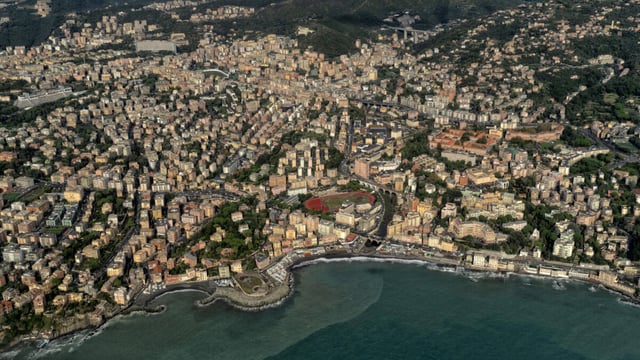
Genoa is a long, narrow city between the Ligurian coast and the Apennines, with a port, a dense medieval core and hillside districts, which makes neighbourhood-level service mapping a different exercise from the grid-based models usually cited for the concept.
Metropolitan Reach And A New Role For The Association
The administration intends to involve the Città metropolitana di Genova and to make municipal skills, tools and data available to smaller municipalities in its territory, which would extend the strategy beyond the boundary of the capital. The Associazione Genova Smart City, which co-organises the annual Smart Week with the Comune, is to become an open urban laboratory for young people, research bodies, businesses and territories.
Smart Week 2026 Adds A School Programme And A Startup Contest
The twelfth Genova Smart Week, titled “Smart Together”, will run from 30 November to 4 December 2026, with conferences in the Salone di Rappresentanza at Palazzo Tursi on four themes: the digital city, smart mobility, urban regeneration, and the city, sea and port, according to Prima Pagina News. Technical support comes from Clickutility Team, and events will again extend to the eastern and western coast and the hinterland.
Two additions were announced: the Genova Smart School, a programme for students and citizens that includes visits to city laboratories and control rooms, and Evolucity, a national contest for startups developing smart city solutions, organised with Fondazione Genova Startup and Cybertribu according to the same report.
For scale, the 2024 edition recorded more than 8,000 attendances at conferences and street events, 150 speakers, 81 partners and a reach of about 450,000 people through communication channels, AGI reported ahead of the 2025 edition, which ran from 17 to 23 November 2025.
Public Lighting And Mobility Contracts Set The Delivery Baseline
The strategy lands on top of a set of live infrastructure contracts. The municipality’s nine-year public lighting energy performance contract, awarded in 2020 under the Consip Servizio Luce 4 framework and managed by City Green Light, was about 95 percent complete in April 2026, with roughly 55,000 light points converted to LED within a programme valued at €34 million, Kurrant reported at the time.
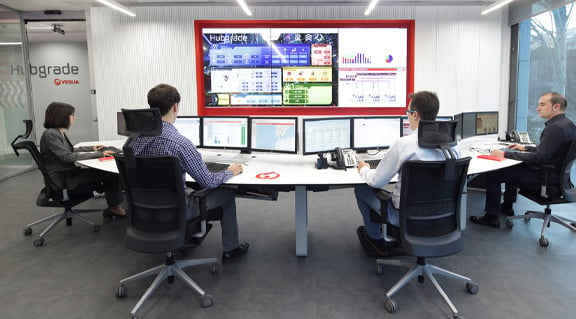
The same report described a planned allocation of about €1 million for smart city functions tied to that network, including statistical analysis of faults, sensor integration and a lighting-and-safety concept. Separately, Movyon, representing Autostrade per l’Italia, has supplied a smart city control room and traffic monitoring infrastructure for urban mobility.
The first public test of how the strategy translates into delivery arrives with the Smart Week programme from 30 November, when the Genova Smart School visits to the city’s laboratories and control rooms and the Evolucity contest will show which of these existing deployments, from the 55,000 converted light points to the mobility analytics and the control room, the administration presents as the operating base for the July resolution, with the lighting contract’s 2029 expiry setting the longer horizon for any sensor and fault-analysis integration.