in Barcelona
 3 to 5 Nov 2026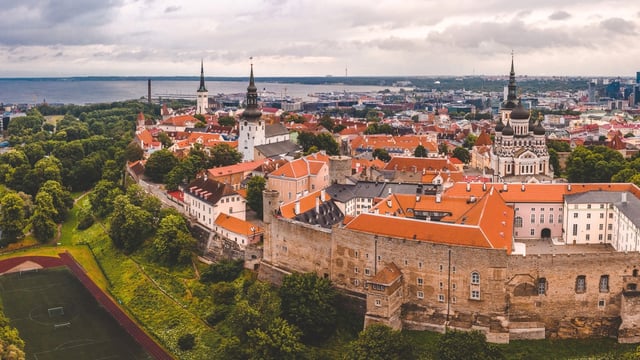
The Comune di Ferrara, the Emilia-Romagna provincial capital of 130,059 residents, said on 25 September 2026 that it has completed the first of three three-day study visits under an EU peer-learning project on urban digital twins. The project, “From Data to Action: City-to-City Exchange on Urban Digital Twins”, was approved on 17 June 2026 by the Programme Secretariat of the European Urban Initiative, with Ferrara as lead applicant and Tallinn in Estonia and Norrköping in Sweden as peer cities that already operate digital twins.
The first visit took place in Tallinn, a second in Norrköping is scheduled for October or November 2026, and Ferrara will host the Estonian and Swedish delegations in early 2027. The timetable was confirmed by the municipality’s press office and reported by il Resto del Carlino and estense.com.
An Exchange Budget Built On Travel Lump Sums, Not Technology Procurement
The European Urban Initiative has a total budget of €450 million from the European Regional Development Fund for the 2021 to 2027 period. Its City-to-City Exchanges are a capacity-building strand, not a source of capital funding for platforms, sensors or software licences.
Track tenders like this
New smart city and utility tenders across Europe, flagged daily with an AI summary.
Under the City-to-City Exchanges call, the initiative covers travel and accommodation and supplies a thematic expert to moderate the exchange. The programme FAQ specifies that support is paid as lump sums to each participating city after the exchange, covering travel, per diem and staff costs for peers only.
Exchanges may involve one to three visits of two to five days each. The call gives preference to cities with fewer than 500,000 inhabitants, a threshold all three cities in this exchange sit below.
The initiative reported that 96 City-to-City Exchanges had been approved as of December 2025, with a success rate above 90%. That places Ferrara’s approval inside a high-volume, low-barrier programme rather than a competitive innovation grant.
Neither the municipality nor the initiative has published the lump-sum value attached to the Ferrara exchange, so the direct EU contribution to this project cannot be stated.
Tallinn Brings A €750,000 Platform Built On Lidar And BIM Data
Tallinn, a city of 460,999 residents in 2023, reports total funding of €750,000 for its digital twin work, drawn from the city budget and EU funds, according to its self-reported Portico practice sheet. The Tallinn Strategic Management Office is named as practice owner.
The Tallinn City Model began as a detailed 3D representation of the Old Town for tourism use and has since been extended citywide. It combines the municipal topographic database with lidar point clouds and Building Information Models to run daylight, shadow, noise and air-pollution analyses for planners and designers.
The same practice sheet records a completed pilot that paved the way for a full platform, a public 3D viewer and a green-space mapping project. It also describes a mobile survey of road condition covering all 1,200 kilometres of the city’s streets.
The challenges Tallinn lists are instructive for Ferrara: acquiring underground utility data for 3D modelling, identifying what residents need from the tool, and defining one concept across very different applications. None of them is a visualisation problem; all of them are questions of data supply and governance.
Norrköping’s Model Came From A SEK 1,874,963 Research Project
Norrköping’s digital twin grew out of SimStad, a project led by Erik Telldén that received SEK 1,874,963 from the municipality’s research fund. It ran for about eighteen months to 31 December 2023, according to Norrköping Science Park.
Linköping University developed the method, using deep learning with computer vision and image analysis to automate mapping and classify urban content. The output includes 3D models of trees, buildings and roundabouts that the municipality uses to test scenarios such as sea-level rise and noise exposure.
The model has been on public display at Visualiseringscenter C since 21 March 2024, with funding from the Norrköping research fund, Visual Sweden and the Wadström Foundation. That makes Norrköping the research-led counterpart to Tallinn’s administration-led programme.
Ferrara Arrives With High Digital Maturity But An Undisclosed Twin Budget
Ferrara scored 84 out of 100 in the 2026 edition of the Ca.Re. index, compiled by FPA for software vendor Deda Next across 110 Italian provincial capitals, its sixth consecutive year among the most digitally mature. The same report on the ranking states that the city secured €3 million in national recovery plan (PNRR) digital funding and has a digital twin project under way for real-time monitoring of its territory.
The municipality has not published a budget, vendor, data model or delivery date for that twin. The exchange is framed instead around learning the methods, results and weak points of established programmes, and studying how partner administrations organise themselves internally.
“For the first time, indeed, thanks to this experience, the technicians of the respective bodies will be able to engage directly. The dialogue with Tallinn and Norrköping will be an opportunity to understand how to use data to support more informed choices for the city,” said Eleonora Costa, Councillor for International Cooperation, Digitalisation and Smart City at the Comune di Ferrara, in the municipality’s September 2026 press release.
Italian Cities Are Choosing Different Routes To A Municipal Twin
Cosenza, in Calabria, moved straight to a platform: it launched an urban planning tool developed with NTT DATA that scores access to services against a 15-minute-city model, as Kurrantly News reported in December 2025.
Ferrara’s sequence runs the other way, with peer learning preceding any disclosed purchase. That order reduces the risk of buying a visualisation layer before the city has settled where its underground network, cadastral and sensor data will come from, and who will maintain them.
The two peer models also point in different directions. Tallinn’s twin is anchored in a municipal strategy office with a mixed city and EU budget, while Norrköping’s was built through a university partnership on a research grant of under SEK 2 million, so Ferrara will have to choose an operating model as well as a technology.
The programme FAQ states that exchanges should be completed within five months of approval, which would fall in mid-November 2026. The municipality has not explained how the early 2027 Ferrara leg fits that window, or whether it will be funded under the same approval.
The larger open question is whether Ferrara’s own twin, announced as under way but still without a published budget or procurement, will get multi-year funding for the underground and utility data acquisition that topped Tallinn’s list of challenges, once three study visits paid for by travel lump sums have ended.