in Barcelona
 3 to 5 Nov 2026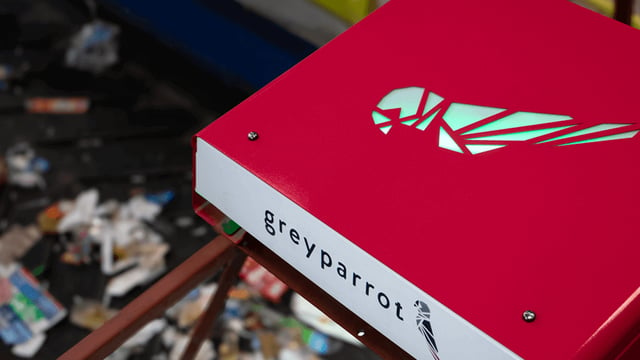
London based Greyparrot has raised $27 million (£20 million, €23 million) in Series B funding led by technology investor Omar Mir, the company announced on 28 July 2026, bringing its total funding to $60 million and following a milestone in which its computer vision system surpassed one trillion detected waste objects. The round will fund expansion of Greyparrot’s AI powered waste sorting cameras across North America and Europe, with the company aiming to help facilities avoid more than one million tonnes of waste by 2030.
How The Analyzer Camera System Identifies Waste In Real Time
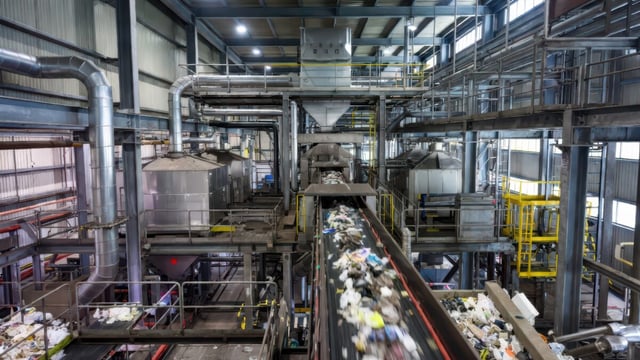
Greyparrot’s core product, known as the Analyzer, is a computer vision unit mounted above sorting conveyor belts inside recycling facilities. The system identifies materials, packaging formats and brands as items pass beneath it, replacing manual sampling that the company says covers less than 0.1 percent of material moving through a typical plant. Analyzers are now deployed in facilities across more than 20 countries, according to the company.
Funding Round Structure And Investor Background
The Series B was led by Omar Mir, an international board member at World Wide Technology and an adviser to The King’s Trust International on AI and advanced technology, who has spent roughly 25 years building AI infrastructure businesses. Existing backers including Speedinvest, 360 Capital, Closed Loop Partners, Regeneration VC and Planet Fund also participated. Greyparrot was founded in February 2019 by chief executive Mikela Druckman, Ambarish Mitra and Nikola Sivacki, and had previously raised $2.2 million in a 2020 seed round and $11 million in a 2022 Series A.
Building in this space?
Kurrant Ventures backs start-ups digitalising cities and utilities, and opens doors to the operators that buy from them.
- Latitudo 40
- GoodVision
- Meersens
- Cortexia
Regulatory Milestone With The UK Environment Agency
In the first quarter of 2026, the UK’s Environment Agency accepted Greyparrot AI derived waste composition data for statutory compliance reporting, in submissions from customers Biffa and FCC Environment. Greyparrot describes this as a UK first for AI generated data being used in place of manual audit sampling for regulatory filings. The company says the same verified data streams also support national waste audits.
Customer Base Spans Recyclers And Consumer Goods Brands
Waste and recycling operators including Veolia, Biffa, FCC, WM and Circular Services use Greyparrot’s Analyzers to monitor recovery rates and material quality on their sorting lines. Consumer goods companies including Unilever, L’Oréal and Kenvue separately use Greyparrot’s Deepnest platform, a tool built to trace how packaging performs after disposal and to inform redesign decisions tied to Extended Producer Responsibility schemes and the EU’s Packaging and Packaging Waste Regulation. Greyparrot and Kenvue expanded that relationship in May 2026 to validate packaging performance at commercial scale sorting facilities.
Reported Efficiency Gains And Recoverable Material Value
Greyparrot says facilities using its real time data have reported efficiency gains of between 10 and 30 percent, with one unnamed site saving more than £1.5 million in a year. Across its network, the company estimates the materials identified by its Analyzers represent roughly £1.87 billion in recoverable value, including an estimated 17.4 billion PET bottles and 4.2 billion aluminium items. These figures are company reported and have not been independently audited by a third party.
Vendor Partnerships Feeding Into The Sorting Hardware Ecosystem
Greyparrot’s growth has been shaped in part by hardware partnerships, most notably a February 2024 strategic tie up with Bollegraaf and Van Dyk, in which the recycling equipment manufacturer invested $12.8 million and folded its own AI vision team into Greyparrot, as previously reported by Kurrant. That deal gave Greyparrot access to one of the world’s largest recycling facility builders as a distribution channel for its camera hardware.
Market Context For Waste Intelligence Investment
The global waste management market was valued at roughly $1.5 trillion in 2025 and is projected to reach $2.4 trillion by 2033, growing at a compound annual rate of about 6 percent, according to Grand View Research estimates cited in coverage of the round. Investor interest in data and materials science approaches to circularity has picked up more broadly, with textile recycling startup Syntetica separately raising $30 million backed by Lululemon this year to address nylon separation challenges. Greyparrot’s backers frame the wager as a bet that verified waste composition data, rather than sorting hardware alone, becomes the more valuable and defensible layer of the recycling stack.
“Waste is one of the planet’s largest untapped resources, and data is the infrastructure that unlocks it,” said Mikela Druckman, co-founder and CEO of Greyparrot, in the company’s July 2026 Series B announcement.