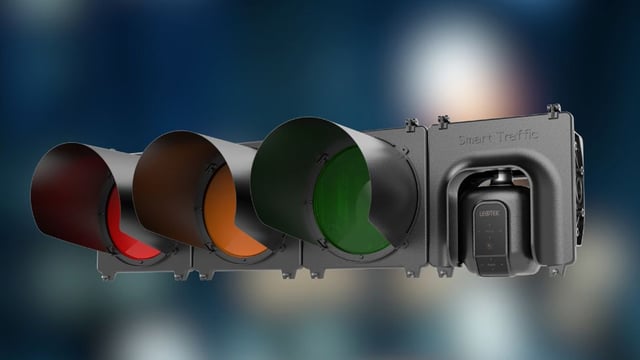
Ouster Inc., a provider of lidar sensors, has been awarded a $2 million contract to implement its BlueCity traffic management solution in Chattanooga, Tennessee. This deployment will cover over 120 intersections across the downtown area, establishing the largest lidar-powered smart traffic network in the United States.
Following a successful pilot at 12 intersections, the expansion aims to enhance roadway safety and reduce traffic congestion. The Ouster BlueCity system integrates digital lidar sensors with advanced perception software and edge AI to optimize traffic signal management. This technology enables real-time traffic flow improvements, pedestrian safety enhancements, and supports vehicle-to-everything (V2X) communications.
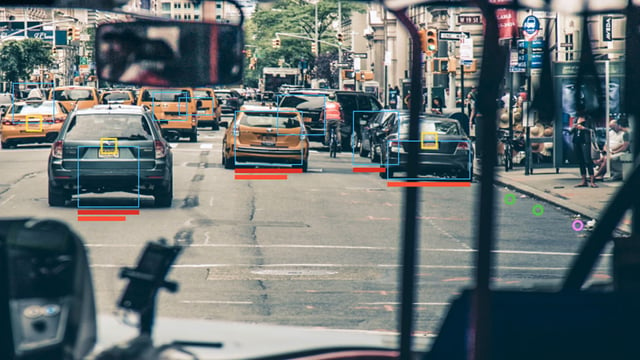
The BlueCity solution creates a real-time 3D digital twin of each intersection, allowing for accurate monitoring of road events involving vehicles, pedestrians, and cyclists. The system employs deep learning AI for reliable object classification and detection, addressing complex scenarios such as near-miss incidents, red light violations, and wrong-way driving.
Chattanooga is collaborating with Southern Lighting & Traffic Systems and the Center for Urban Informatics & Progress at the University of Tennessee Chattanooga Research Institute to expand its lidar-connected traffic infrastructure by the end of 2025. The initiative builds on previous successes, including a crosswalk installation that eliminated near-miss incidents on a high-risk city block.