Subeca, the smart water metering company announced on 12 October 2026 that it has raised approximately $3,000,000 in a Series A-2 round led by Burnt Island Ventures, with participation from the water-focused fund Cycle H2O, the water utility group SUEZ and several further investors, according to the company’s release on PR Newswire. The company states that its bundled smart meter and software package is live in 23 communities, a figure that is vendor-supplied and unaudited.
The round follows a Series A of $6,000,000 announced in May 2024, which was led by SUEZ with Burnt Island Ventures and Amazon’s Climate Pledge Fund taking part, so two of the three named backers in the latest round are investors that financed the previous one.
A Small Round Set Against A Large Addressable Market Claim
Subeca says that more than 51,000 utilities and businesses in the United States have been priced out of advanced metering by the cost and complexity of legacy systems. That count is the company’s own estimate and has risen since 2024, when Dallas Innovates reported a figure of more than 40,000 for the same segment, a change the release does not explain.
Building in this space?
Kurrant Ventures backs start-ups digitalising cities and utilities, and opens doors to the operators that buy from them.
- Latitudo 40
- GoodVision
- Meersens
- Cortexia
Measured against the 23 live communities, the new capital of roughly $3,000,000 works out to about $130,000 per existing deployment, and the combined disclosed funding of approximately $9,000,000 is the sum of the two announced rounds, not a total the company has itself confirmed.
The company’s base has also moved on paper: the 2024 coverage described Subeca as San Diego-based with its module built in Texas, whereas the 2026 release is datelined Cary, a change of headquarters or press address that the announcement does not explain and that Kurrantly News could not verify.
Connectivity Through Amazon Sidewalk Instead Of A Utility-Owned Network
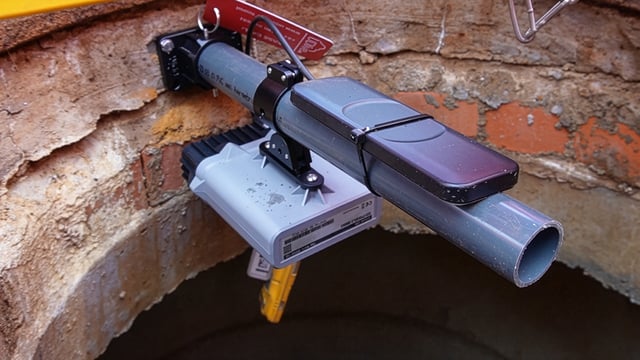
The technical premise of the product is the communication module, which the release says connects over Amazon Sidewalk, a shared low-power network that the company states covers more than 90% of the United States population as well as parts of Canada and Mexico. The coverage figure is a claim made in the company’s materials and in the 2024 coverage, and it describes network availability for Sidewalk devices rather than measured signal quality at an individual meter pit.
The utility therefore does not build or lease a fixed radio network, which in conventional advanced metering infrastructure is the largest upfront cost. The trade-off is dependence on a third-party network whose coverage, pricing and terms are set by Amazon, a dependency the announcement does not address.
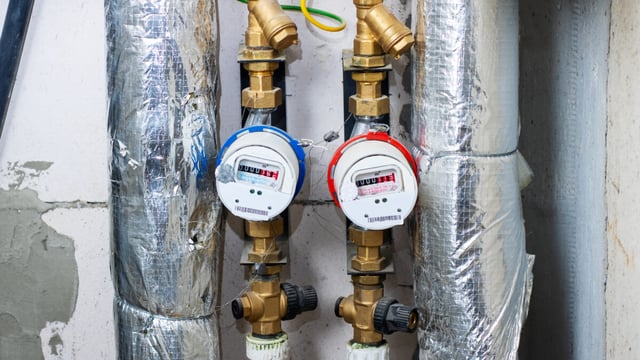
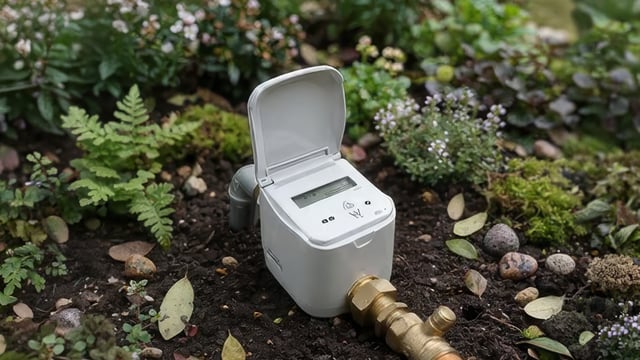
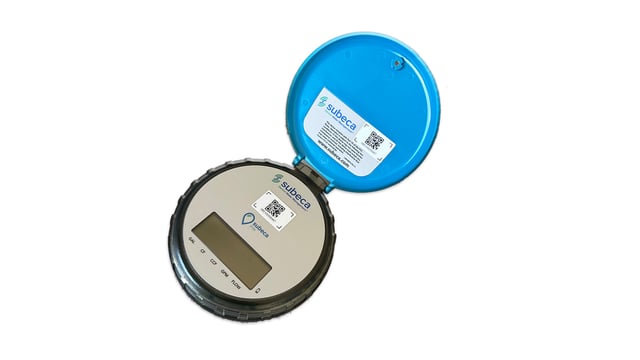
The 2024 coverage described a meter register that retrofits onto most existing water meters in under one minute and an IoT module manufactured in Richardson, Texas, which indicates the hardware strategy is to add communications to meters the utility already owns instead of replacing them.
Investor Mix And The Role Of SUEZ
SUEZ, which led the 2024 round, is a strategic investor with its own utility operations, and the release names it among the participants in the new round. Cycle H2O is described by the company as a venture fund with a water focus, and the release cites its work with H2O Innovation as a route to municipal and industrial customers.
The release does not give the size of any investor’s cheque, the valuation, the lead’s board arrangements or the share of the round contributed by existing backers, so the split between new and follow-on capital cannot be established from public documents.
The scale of the round is also modest next to the capital typically needed to supply meters at volume. Hardware businesses carry inventory and warranty obligations that software revenue does not offset, so a raise of about $3,000,000 extends the runway for the current 23 communities rather than financing a national rollout, and the release gives no revenue, burn rate or runway figure that would allow the point to be quantified.
Leadership Change Between Rounds
The 2024 coverage identified Patrick Keaney, formerly worldwide head of AWS Water at Amazon, as chief executive officer, having been appointed in May 2023. The October 2026 release names Anne Mushow as chief executive officer. The material reviewed does not state when the change took place or the reason for it, which is relevant to a buyer assessing continuity of the product roadmap.
What A Utility Buyer Should Test
The company positions the product at small and mid-sized utilities that larger meter vendors have served poorly, and the 23 live communities are the only adoption data point in the announcement. The release does not state how many meters are installed in those communities, what share are retrofits, the leak-detection performance measured so far or the per-endpoint price.
Those omissions matter because the case for flexible connectivity rests on a total cost per connection that is below that of a fixed network, and the evidence offered consists of a deployment count without a unit count. Until Subeca publishes installed endpoints, uptime on Sidewalk links and a price per meter, the claim that smaller utilities can be served affordably remains a hypothesis that its 23 customers have yet to document.