in Barcelona
 3 to 5 Nov 2026
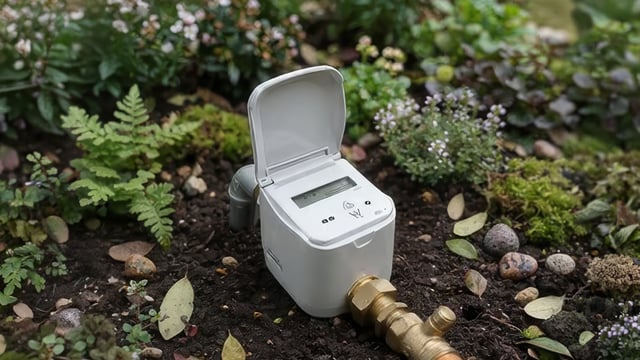
The eThekwini Municipality, the metropolitan authority for Durban in South Africa’s KwaZulu-Natal province, plans to install smart water meters across its area, the Cape Times reported on 31 October 2026, while residents contest bills built on estimated readings, leaks and disputed accounts. The city had installed 1,865 smart water meters by the end of May 2026 with 135 more under way, a combined 2,000 units set against a non-revenue water rate of 58% cited by Mayor Cyril Xaba in March 2025.
Non-revenue water is supply the city buys from bulk provider uMngeni-uThukela Water but never bills, and at 58% it exceeds half of everything eThekwini purchases. In the 2022/23 financial year the loss stood at 57.3%, equal to about 615 million litres a day and more than R2 billion a year, according to Daily News reporting from July 2023.
A Replacement Target Of 40,000 Meters A Year Frames The Programme
Xaba presented a Water Turnaround Strategy of 13 measures at a media briefing in March 2025, and meter replacement sat at its centre. “Our target is to replace 40 000 water meters annually,” Xaba said, according to The Citizen’s report of 24 March 2025.
This project is heading to tender
New smart water tenders worldwide, flagged daily with an AI summary.
The strategy treats 15 years as the service life of a meter and schedules every older unit for replacement, because the accuracy of measured volumes falls as meters age. Proactive leak detection technology and ward-based plumbers brought in-house were listed alongside it.
The May 2026 Dashboard Records 1,865 Smart Meters In Service
The city’s Accounts Management Dashboard Overview Report for the month ending May 2026 states that the Smart Water Metering Programme exceeded its annual installation target, with 1,865 smart meters installed and 135 more being rolled out in uMhlanga, Westville, New Germany, Bellair and Amanzimtoti, according to the South African Government News Agency.
The same report puts the share of urban water meters read and billed on actual consumption at about 95%, while faulty electricity meters awaiting replacement continue to generate estimated bills. The 2,000-unit smart total equals 5% of the 40,000-meter annual replacement target.
Qualifying indigent households in the municipality receive 6 kilolitres of free basic water per month, according to the same 2023 reporting, so metered consumption data also determines which portion of a household’s usage falls inside that allowance and which is billed. Every account that moves from an estimated to a measured reading therefore changes both the revenue line and the support line of the city’s water budget.
Meter Theft, Illegal Connections And Repair Deadlines Complicate Billing
The metering programme operates against operational problems the city has itself described. Ednick Msweli, head of eThekwini’s Water and Sanitation Unit, said in 2023 that theft of water meters contributes to pipe bursts and water loss, and the 2022/23 figures cited above came with a rise in amounts owed to the city of R5 billion, from R19 billion to R24 billion, in a single year.
Under the 2025 strategy Xaba declared zero tolerance on illegal connections, set a 24-hour response and repair deadline for all burst pipes, and required plumbers to submit before-and-after photographs of repair work, with the call centre used to check customer satisfaction afterwards, as reported by The Citizen. Technical teams with equipment to stop water theft among residential and business customers were also being set up.
Seven Suppliers Under National Treasury’s RT29 Contract Set The Price Range
National Treasury approved the RT29 transversal contract for smart metering in May 2024 with seven approved suppliers, and eThekwini ordered from all seven, according to Independent Media reporting from July 2025 that cited purchase orders. Orders of 2,000 smart units carried unit prices between R1,645 and R2,600, a spread of 58% between the lowest and highest figure.
The same purchase orders included 2,000 non-smart meters at R1,996 each. Smart meters can be disconnected remotely from an office, whereas non-smart units require staff to visit the property, for example where a customer has bypassed the meter.
Debt Relief Runs Alongside The Metering Push
The Special Debt Relief Programme, which originally ran from May to June 2025 and wrote off 50% of qualifying debt owed at the end of January 2025, closed in January 2026 after writing off R515 million for more than 4,500 customers. Council reopened it in July 2026 for customers with unresolved disputes on electricity, water and property rates accounts, with a window running to the end of August 2026 and about 154 qualifying disputes worth roughly R112.3 million, the South African Government News Agency reported.
Estimated readings are the common thread in those disputes, which is why the share of accounts billed on measured consumption is the figure the city tracks most closely in its dashboard.
A National Upgrade Of 15 Million Meters Sets The Wider Scale
The municipal programme sits inside a national shift toward connected meters. At 2,000 smart units against a 40,000-meter annual replacement target, smart devices cover 5% of one year’s replacement volume, so the share of future purchases that carry remote reading will determine how quickly estimated billing, and the 58% non-revenue water rate behind it, can fall.