in Barcelona
 3 to 5 Nov 2026
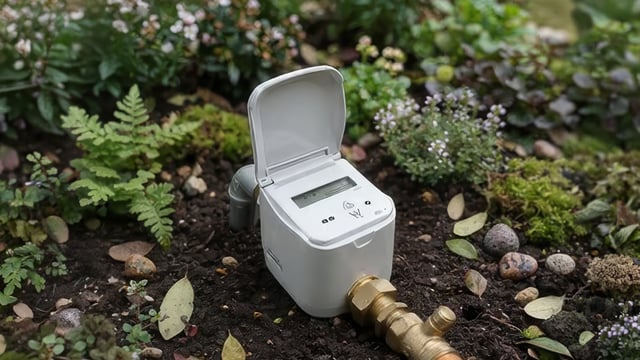
The City of Houston, Texas, whose council voted unanimously on 21 October 2026 to add $5.5 million to its advanced metering infrastructure contract with Sensus USA, Inc., has raised the agreement’s maximum value from $38 million to $43.5 million, the first increase to that ceiling since the contract was awarded on 24 November 2020. The money comes from the Water and Sewer System Consolidated Construction Fund and is intended to keep Houston Public Works’ metering operations funded through the end of 2027, while the contract itself runs through 2030.
The city had spent $34.3 million of the original ceiling before the vote, according to KPRC 2 reporting republished by The Cool Down, and Houston Public Works attributed the request to material, equipment and operating cost increases that were not anticipated when the contract was written.
A Ten-Year Contract That Reached Its Ceiling in Six
The 2020 agreement was structured as a ten-year deal with a $38 million maximum, and the city initially set aside $18.5 million of it. In October 2024 the council approved a further $16.1 million in spending authority, an action that did not change the maximum value, so the new vote is the first time the ceiling itself has moved.
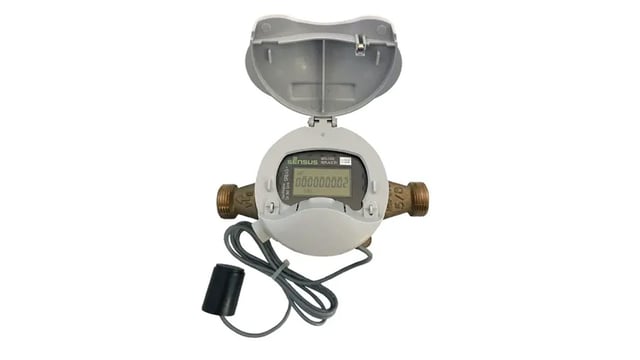
Under the arrangement Sensus USA, the metering business of Xylem, supplies the network equipment, materials, labor, training and supervision, and it also operates the software-as-a-service platform that collects and processes the readings. Houston Public Works field staff and contractors install the individual meter-reading devices and related infrastructure, which splits responsibility for the programme between a vendor-run network and city-directed deployment.
Failing Hardware Behind the Billing Problems
Houston Public Works Director Randy Macchi told council members that the city has about 500,000 meters in the ground, that they last roughly 20 years, and that they are failing at an accelerated rate. Since 2024 the department has replaced about 30,000 meters and estimates that at least 300,000 more require replacement, a gap that implies a replacement rate an order of magnitude below what the stock needs if the programme is to be completed within a single meter life cycle.
The remote-reading devices that attach to those meters have been the more immediate concern. About 230,000 have been installed or replaced, with roughly 10,000 more under way, compared with about 150,000 completed by December 2024 at a cost of $35 million, according to an earlier KPRC 2 report. Malfunctioning devices forced Public Works to estimate consumption instead of reading it, and in April 2024 residential bills temporarily shifted to historical consumption while faulty units were replaced.
“We still deal with high bills today,” said Macchi, Director of Houston Public Works, according to the October 2026 KPRC 2 report on the council vote.
Unpaid Balances and Resumed Shutoffs Raise the Stakes
The financial exposure on the customer side is large relative to the contract. An August 2026 report put about 15,000 delinquent customers at a combined $30 million in unpaid water bills, and Texas Scorecard reported that shutoffs suspended in 2024 resumed in September 2026 for accounts above $500 that are at least 90 days past due.
Council Member Twila Carter, who holds At-Large Position 3, cited the $30 million in unpaid bills and the hundreds of residents reporting excessive charges tied to faulty meters when supporting the appropriation as a long-term fix. Public Works also estimates that 32 billion gallons of water go unaccounted for each year, a figure that combines leakage, metering error and unbilled consumption.
Pilot Meters Run Alongside the Sensus Network
Separately from the Sensus ceiling, the council approved $8.5 million in 2025 for 25,000 new smart meters, about 2,000 of them for homes whose existing meters are too old to connect to a remote-read sensor. Those units are being monitored in a 12-month pilot covering every council district, intended to test installation times, crew capacity and deployment methods before a wider rollout.
The pilot gives customers near-real-time usage data online rather than a monthly bill alone, and Public Works has said it will notify customers who receive a new meter or sensor and monitor the equipment for a period afterwards.
Cost Escalation Is a Pattern Across Large Municipal Programmes
Houston is not the first large utility to find that a fixed-ceiling metering contract is exposed to hardware inflation over a decade. Programmes that depend on replacing hundreds of thousands of endpoints are sensitive to unit prices, installer availability and the age profile of the existing meter base, all of which Houston’s figures reflect: 300,000 meters still to replace against a contract that has now consumed most of its authorised value.
The city has also indicated that a further funding request may follow in 2027, which means the $5.5 million bridges roughly 14 months of operations rather than closing the programme’s funding needs.
What the 2027 Request Will Have to Show
The next decision point is the 2027 funding request, when the council will be able to compare the 12-month pilot results and the replacement pace against the 300,000-meter backlog. If the rate of about 30,000 replaced meters over roughly two years holds, the backlog would take two decades to clear, so the figure that will decide the size of that request is how far Houston Public Works can raise annual installations once the pilot has tested its crew capacity.