in Barcelona
 3 to 5 Nov 2026
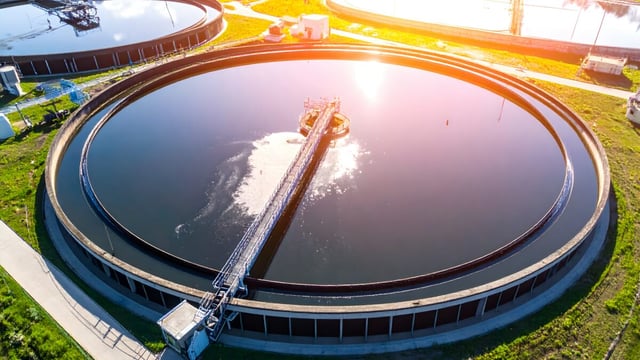
The CircSyst project, a €10 million programme funded by the European Commission under Horizon Europe and coordinated by the Valencian technology institute AIDIMME, has started operating its water-reuse technologies at the wastewater treatment plant of sector 13 in Riba-roja del Túria, in the province of Valencia, Spain, according to an AIDIMME release dated 21 October 2026 and regional press coverage published on 26 October 2026. The demonstrator, built with the Spanish water subsidiaries of Veolia and the Riba-roja del Túria town council, takes treated effluent from the plant as its raw material and produces four preset qualities of reclaimed water for industrial and urban users, with the stated aim of showing that an industrial estate can cover a significant share of its water demand by recovering its own discharges.
CircSyst, short for Circular Systemic Solutions, runs from 1 June 2024 to 31 May 2027 under EU reference 101135505 and sits within the Circular Cities and Regions Initiative, according to the AIDIMME project page.
Treated Effluent Becomes the Feedstock for a Tertiary and Quaternary Stage
The Riba-roja del Túria installation adds a low-cost tertiary treatment stage downstream of the existing plant, where water that has already passed through conventional wastewater treatment is channelled into a tertiary and quaternary demonstrator that produces the reclaimed water. According to the CircSyst project description, the demonstrator uses advanced membrane filtration combined with demand-forecasting software that optimises production, and the output is intended for irrigation, cleaning and firefighting use by industrial customers.
Rainwater is integrated as a complementary resource, so that the system draws on two inputs rather than on effluent alone, a design choice that reduces dependence on the volume and quality of discharge from the plant on any given day.
Sensors and a Matching Platform Set the Water Quality Per Customer
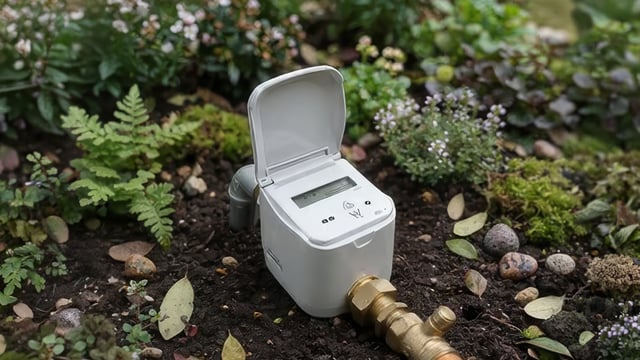
A network of sensors installed in the treatment plant, in the treatment system itself and at the consuming companies measures the quantity and quality of water against demand, and the control layer automates purification so that each client receives the quality its process requires. The four preset qualities described in the regional press coverage are selected from that demand data instead of being produced as a single standard grade.
Demand is registered through Simbylay, AIDIMME’s industrial symbiosis platform, where companies state the volumes and quality parameters they need and are matched to the available supply. The arrangement moves the quality decision from the treatment operator to the buyer, which changes how treatment energy and chemical costs are allocated across users.
Funding Structure: €10 Million Across 32 Entities, With 37% Placed in Valencia
The total project budget is €10 million, shared among 32 public and private entities in eight European countries, and 37% of it, equivalent to €3.70 million, is assigned to demonstrators in the Valencian Community. Local partners include AIDIMME as coordinator and technology provider, the Veolia companies Hidraqua and Aquatec, the Riba-roja del Túria town council and IVACE+i, the Valencian public body that represents the region in the Circular Cities and Regions Initiative.
The coordination at AIDIMME is led by Ángel Marcos Vicente, and the Valencian demonstrator is one of four water-management demonstrators in the project.
Setrece Expansion Adds €23.6 Million of Separate Regional Spending
Separately from CircSyst, the Generalitat Valenciana authorised an investment of €23.6 million in July 2026 to expand the Setrece wastewater treatment plant in Riba-roja del Túria, according to Retema. The works will be carried out by EPSAR, the Valencian public wastewater sanitation entity, and financed through the regional sanitation levy.
An earlier tender for the works was withdrawn so that EPSAR could update the project budget to reflect higher execution costs, and the new contract is planned with an execution period of 28 months including commissioning of the new facilities. The CircSyst demonstrator and the Setrece expansion are separate budgets, but they concern the same municipal wastewater system and the same industrial demand.
Three Other Demonstrators Test the Model in Slovenia, Belgium and Sweden
The Riba-roja del Túria pilot is intended as a replicable model for industrial, urban and agricultural areas in Spain, Belgium, Slovenia and Sweden. The remaining water demonstrators are located in Podravje, Slovenia, coordinated by the Regional Development Agency for Podravje in Maribor, in Flanders, Belgium, led by Vito, Aquaduin and Aquafin, and in Visby, Sweden, led by RISE, according to the CircSyst project site.
Because the four sites differ in climate, effluent composition and industrial mix, results from Valencia will be compared against sites with different water scarcity and discharge conditions before any replication claim can be tested.
Project Close in May 2027 Will Set the Comparison Window
The grant period ends on 31 May 2027, and the 28-month execution period planned for the new Setrece works means that operating data from the CircSyst demonstrator will exist well before any expanded plant capacity is commissioned. The measure that will matter to the Generalitat’s sanitation agency and to industrial buyers is the cost per cubic metre of each of the four reclaimed grades against the potable-water tariff the estate’s companies currently pay.