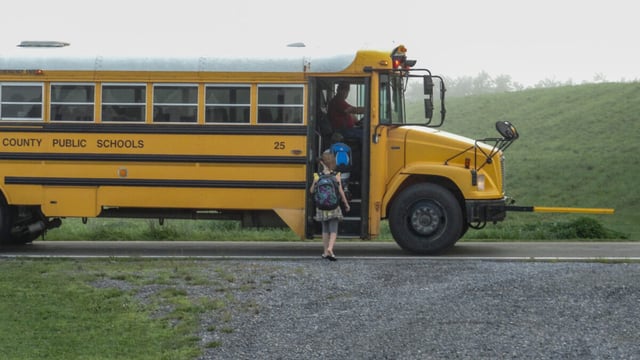
The City of Boston, acting through the Boston Public Schools Transportation Department at 2300 Washington Street in Roxbury, Suffolk County, opened a procurement for an AI-enabled stop-arm camera programme designed to reduce illegal passing of stopped school buses, with proposals due before 1:00 p.m. on Friday, 30 October 2026. The solicitation does not state the number of buses to be equipped, the budget, the contract term or the fine structure on its public notice page, so those terms will sit in the full request for proposals documents rather than in the announcement.
City Councilor Enrique Pepén told NBC Boston that he hopes for a spring pilot, followed by a fleet-wide rollout for the next school year, with an initial phase that could rely on warnings and public education before any fines are issued. Boston Public Schools had not responded to the outlet’s request for comment at the time of publication.
A State Law Opened The Door, And A Draft Ordinance Closes It Tightly
Massachusetts previously blocked automated enforcement of traffic laws, which kept school bus cameras out of the state, and the change came through legislation signed by Governor Maura Healey that lets cities and towns operate stop-arm camera systems and issue civil citations to vehicle owners. Under that framework, footage that does not show a violation must be destroyed within 30 days of recording, and limits apply to how retained footage can be used.
Following projects like this one?
New smart mobility tenders across Europe, flagged daily with an AI summary.
A draft ordinance on school bus violation detection monitoring systems, filed on 20 May 2026 and taking effect on passage, sets the local conditions: cameras sit on the stop arm of buses that regularly carry children in the city, buses must display signage while a system operates, and the systems may not photograph the front of a violating vehicle or the rear above the bottom of the rear window. Citations must be mailed within 14 days for Massachusetts-registered vehicles and 21 days for out-of-state vehicles, and owners have 20 days to pay or request a hearing.
Each violation carries the maximum scheduled assessment for a red light violation, which the ordinance does not express as a dollar amount, and a penalty of up to 33 percent can be added if the fine remains unpaid more than 30 days after the citation. Unpaid assessments can lead the registrar to refuse to renew or to suspend a licence or registration.
Human Review Sits Between The Algorithm And The Citation
The ordinance assigns the Executive Director of Transportation for Boston Public Schools to supervise implementation and to deliver evidence to the Boston Police Department, where an officer inspects the images and issues the citation. Pepén told NBC Boston that the cameras activate only when the stop arm is extended and a vehicle passes, that the system captures only the licence plate of the offending vehicle, and that police officers confirm each violation before a citation is sent, so the software flags events and does not decide liability.
Photos and recordings must be destroyed within two weeks of the final disposition of a case, they cannot be used in other judicial or administrative proceedings, and private parties cannot obtain them except for enforcement or for an owner defending a citation. The city says data privacy will form part of its vendor evaluation, a point the ACLU of Massachusetts had earlier tied to governance policies, retention limits, access controls and a process to challenge automatically issued tickets.
The Vendor Payment Clause May Matter More Than The Camera Specification
The draft ordinance allows a contract with a private vendor or manufacturer but makes the agreement effective only after a majority vote of the School Committee, and it bars payment that depends on the number of citations issued or on a share of fine revenue, requiring instead that compensation reflect the value of the equipment and services provided. That restriction removes the per-ticket and revenue-share models that some programmes elsewhere have used, and it forces bidders to price hardware, installation, hosting and review support as a fixed service.
The ordinance also requires an annual report to the Massachusetts Department of Transportation listing the cost to maintain each system and the revenue each system generates, while saying nothing about how fine revenue is spent.
Benchmarks Elsewhere Show The Range Of Outcomes
A five-week pilot in Peabody on 10 buses caught about 860 drivers passing stopped buses, according to a MassLive report distributed by GovTech, although a 2024 Hoodline report cited by its May 2026 coverage refers to more than 3,400 violations, and the two figures are not reconciled in either source. In Rhode Island, Providence began enforcement after a month-long grace period with fines of $250 for a first violation and $500 for later ones, and the vendor BusPatrol was reported to supply cameras for 140 buses there and for 30,000 school buses across 16 states.
Kurrantly News previously reported that Miami-Dade County Public Schools relaunched its AI-powered school bus safety programme across nearly 900 buses with BusPatrol and the Miami-Dade Sheriff’s Office, which gives Boston a reference for fleet-scale deployment under a different state framework.
Pepén argued the case for automation in terms of coverage, saying: “It’s impossible to have a police officer at every single corner, at every single bus stop, or every school at all times,” as quoted by NBC Boston in its report of 6 October 2026.
Because the city cannot pay a vendor per citation and has not published its fleet size or budget, the bids due on 30 October will show whether a fixed-fee model can be priced competitively for a fleet whose size bidders must still learn from the full documents.