The municipality of Escobar, in Buenos Aires Province, Argentina, signed a four-year strategic cooperation agreement with Hikvision in Hangzhou, China, that aims to convert its municipal monitoring centre into an innovation laboratory for smart city pilots, according to InfoBAN on 13 October 2026.
The agreement was signed by Escobar mayor Ariel Sujarchuk and Xu Peng, chief executive and director general of Hikvision, and is described as the first the Chinese manufacturer has signed with an Argentine municipality. No contract value, equipment quantities or signing date were published.
What The Laboratory Will Do
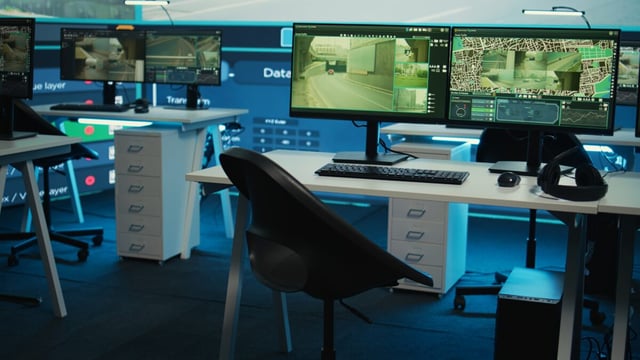
The Centro de Monitoreo de Escobar will operate as a test environment for proofs of concept, pilot projects and demonstration initiatives in which municipal and Hikvision teams trial new technologies in real urban settings before wider regional and global rollout. The agreement is endorsed by the Consejo Provincial de la Economía del Conocimiento, known as COPEC.
Track tenders like this
New smart city and utility tenders across Europe, flagged daily with an AI summary.
Four technical areas are named: public security and prevention, mobility and traffic management, environmental monitoring and water management, and the integration of data from several government departments into unified real-time visualisation platforms. The report gives no device counts, camera numbers or budget for any of them.
A Supplier Commitment Without Published Terms
According to the report, Hikvision has undertaken to deploy every new technology in Escobar in practice before it reaches other markets. Hikvision is described as having more than 68,000 employees and a presence in 180 countries, figures that come from the report and not from a company filing.
How a first-deployment commitment would be enforced is not stated. Neither the report nor the sources reviewed describe whether the municipality will buy the equipment, receive it on loan, or share data with the company, and each of those arrangements carries different procurement and data-protection consequences.
How The Deal Came Together
The report says the agreement began to take shape in June 2026, when Xu Peng visited Argentina after a stop at the company’s offices in São Paulo, Brazil. A meeting scheduled for 30 minutes ran for more than an hour, and the executive toured Escobar, after which he invited the mayor and his team to Hangzhou.
Negotiations had been started by the municipal security secretary, Rocío Fernández. The mayor made the trip as part of a tour of China during which, the report says, he is reviewing several artificial intelligence and technology projects.
The Mayor Frames The Deal As An Employment Argument
“It is a historic opportunity to place Escobar at the forefront of technological innovation applied to public management and always for the benefit of millions of people in Buenos Aires province, since this will result in more and better jobs and in the development of safer, more efficient, sustainable, connected and resilient cities,” said Ariel Sujarchuk, mayor of Escobar, in remarks reported by InfoBAN on 13 October 2026, translated from Spanish.
Context For Procurement And Data Governance
Hikvision is subject to restrictions in several jurisdictions, including a U.S. Federal Communications Commission ban on new equipment authorisations, which is the reason municipal buyers outside China often ask for documentation on security certification and data location. The report does not mention any such requirement in Escobar, and the sources reviewed do not indicate that the municipality has published a data-protection assessment.
An agreement framed as a laboratory also differs from a procurement, so any equipment installed under it may fall outside the competitive tendering rules that apply to municipal purchases. Whether Argentine public-procurement law treats the arrangement as a gift, a loan or a contract is not addressed.
What Is Left Unanswered
The announcement describes ambitions and four technical areas, but contains no performance targets, no list of pilots and no timetable. The test of the arrangement will be whether Escobar publishes the terms on equipment ownership, data access and the criteria for moving a pilot into municipal purchasing, since without them the first-deployment commitment cannot be distinguished from a supplier’s marketing programme.