in Barcelona
 3 to 5 Nov 2026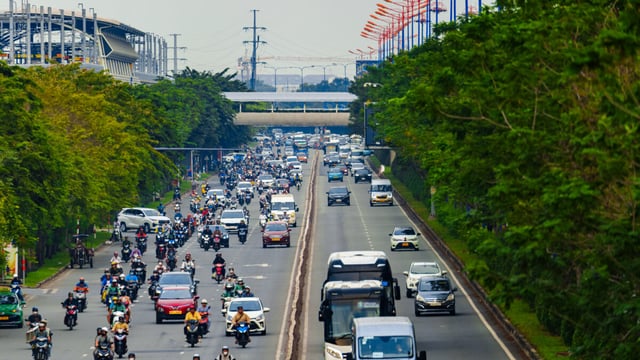
Hanoi Police, the public security force of Vietnam’s capital, said at a digital transformation forum on September 30, 2026 that nearly 5,000 analytics-equipped cameras are now operating on the city’s main roads and intersections. The force is also piloting a “Hanoi Smart Police” platform that combines cameras, drones and a resident-facing app. The two documented deployment phases account for 4,297 of those cameras, and a project covering more than 21,000 units is now being implemented.
Two Phases Account For 4,297 Of The Nearly 5,000 Cameras
The first phase put 1,837 cameras into service in December 2025, and the second added 2,460 units from July 1, 2026 across 238 key intersections and city gateways, Tuoi Tre reported. The gap between those 4,297 units and the “nearly 5,000” figure cited by police has not been itemised in public reporting.
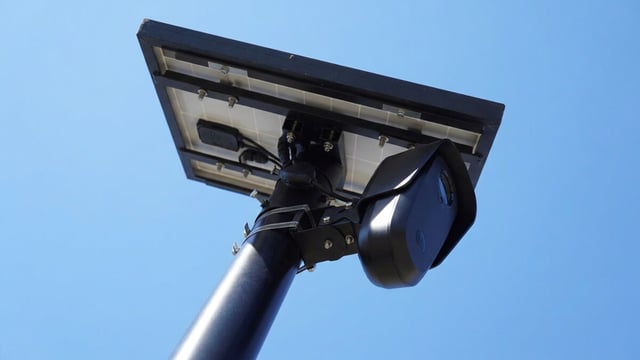
The second phase is weighted toward enforcement and traffic measurement: 1,107 cameras detect traffic violations, 960 measure vehicle flow, 112 monitor intersections, 251 pan-tilt-zoom units cover public order and 30 detect speeding.
Track tenders like this
New smart city and utility tenders across Europe, flagged daily with an AI summary.
Supporting infrastructure for that phase includes 57 servers, 930 camera poles, 100 traffic control cabinets, 36 roadside information screens, 475 km of fibre optic cable and 136 km of power cable, according to the same report. No contract value or supplier for the phase two hardware has been published.
The system’s scope has also widened beyond traffic. Police say it now flags urban order offences including illegal dumping, unauthorised entry into restricted areas and public disturbances.
What The Smart Police Pilot Has Produced So Far
The Smart Police pilot began on September 2, 2026, when Lieutenant General Nguyen Thanh Tung, Director of Hanoi Police, launched a “Smart Hanoi Police” app, a drone-based surveillance capability and a wireless fire alarm system, VietNamNet reported.
Results presented at the September 30 forum were modest in volume. Officers handled 131 violations directly and forwarded 1,873 cases for classification and file completion, while the system helped respond to two traffic accidents and 38 congestion or incident cases.
Closing the forum, Hanoi Police leadership said the value of digital transformation should be judged by the effectiveness of police work and by residents’ convenience and satisfaction, rather than by the number of systems and technologies put into use, VietNamNet reported.
The forum also brought in police from Ho Chi Minh City and Hai Phong to compare approaches, and covered the implementation of the national population data and electronic identification programme known as Project 06, which links police operations to citizens’ digital identity records. Hanoi Police said they had issued 142 documents on digital transformation during 2025 and 2026, and named information security and personal data protection as standing requirements.
A related public-facing pilot opened on August 15, 2026 at 89 Dinh Tien Hoang Street beside Hoan Kiem Lake. The 24-hour Smart Police Station kiosk was developed by the Ministry of Public Security’s C06 department and lets residents and visitors file reports, place emergency calls and attach images or video in several languages.
Enforcement Volumes Show Where The Cameras Are Pointed
Weekly enforcement data indicate that a subset of the network does most of the ticketing work. Between September 17 and 23, 2026, cameras recorded 4,007 of the 8,456 traffic violations logged by Hanoi traffic police, Tuoi Tre reported. Driving against the flow accounted for 2,130 camera-detected cases, failing to wear a helmet for 1,390 and ignoring traffic signals for 162. Across all violations that week, including those found by officers at checkpoints, police impounded 1,847 vehicles and issued fines totalling VND 573,700,000, a figure the report did not split between camera-detected and officer-detected cases.
The same report put the number of cameras with violation detection at more than 1,100, covering 195 intersections and 25 major routes. That is broadly consistent with the 1,107 enforcement units in phase two and suggests most of the network is used for monitoring and flow measurement rather than issuing fines.
An earlier lane-enforcement trial gives a sense of detection volume on individual corridors. Between August 27, 2025 and March 15, 2026, a system developed by South Korean company TOPES detected more than 3.07 million motorbike lane violations on Pham Van Dong and Vo Chi Cong streets, VietNamNet reported. It reported accuracy of about 95% by day and 90% at night, a figure that comes from the trial’s operators and was not independently tested. Set against that trial, the citywide network’s 4,007 camera-detected violations in a week equal fewer than four per enforcement camera, which suggests either stricter evidentiary thresholds for issuing penalties or detection rules tuned more narrowly than the lane pilot.
A 21,000-Camera Project Raises The Scale Question
The next step is far larger. VietNamNet reported at the September 2 launch that Hanoi Police were working with 21,671 analytics cameras across security and congestion management, and the September 30 report described a project of more than 21,000 units now being implemented.
At that size, the camera estate would be more than four times the network now operating. Neither the city nor the police have published the project budget, the procurement route or the vendors selected.
Hanoi recorded a population of 8,053,663 in Vietnam’s 2019 census, which would put a 21,000-camera network at roughly one unit for every 380 residents. The Smart Police model also adds drone surveillance and a two-way resident app on top of fixed cameras.
The pilot figures presented so far measure activity, such as cases forwarded and incidents assisted. They do not yet show whether violations, collisions or congestion have fallen at the 238 phase two intersections since July, which is the evidence the leadership’s own effectiveness test would require before the 21,000-unit expansion is justified on outcomes rather than coverage.