 in Barcelona
 3 to 5 Nov 2026
every day the world's population uses 10 billion tons of water the problem there's not that much to go around you know think about your three main bills right your water gas and electric your utility bill your water bill is always the least right least expensive of the three normally but which of those three could you literally not live without just two percent of the earth's water is fresh and much of it is leaking away. 34 percent of the world's water to be exact. Pinktown got a lot of press coverage so it's quite well known as an example of a city that was going to run out of water. Leaking pipes, faulty meters, broken water mains. Aging infrastructure is a top challenge for utilities yet many left the funds to fix it. Water utilities are now turning to IOT. Sensors, loggers, AMI. These are the type of investments you're trying to do. to keep one of the most vital resources in motion. The job of the water utilities is going to change a lot during the next 10 years. Join us as we dig into these solutions and study how these utilities are making them a reality. A water distribution network provides a constant supply of pressurized, safe drinking water. It's made up of a system of pipes that transfer water from the service reservoir reservoirs and balancing reservoirs to consumers. And within that system, utilities will isolate parts of the network into district metered areas, enabling the utility to better manage the network in terms of pressure levels, consumption and leaks. But too often, cities will still wake up to this. It all started here on Jerome Avenue and West 175th Street. It's a common sight across the United States. A water main breaks every two minutes. It's a 48. inch main that runs under Jerome Avenue. It was installed in 1909. You know water networks have been created for thousands of years to sustain populations in any individual location but the maintenance of those is extremely expensive and the more established a city is the more complicated and costly it is to repair and maintain a network. The cost to update the water network equipment in the United States is estimated at 70% in the United States. hundred and fifty billion dollars. Across Europe, that number is over 54 billion dollars. Just take a look at France, where 20 percent of all drinking water doesn't reach the customer. So what's a utility to do? It can't afford to replace its equipment, but it can't afford to invest in technology like this. These devices, which are both loggers and controllers in water network systems. Data logging enables utilities monitor pressure throughout the network utility will place them in specific areas throughout the network like an entry or exit point of a dma a vulnerable section of the network or a high critical area like a hospital or industrial site a high -speed data logger can also identify and address pressure transients in the distribution network a logger gathers its data by plugging into a pressure sensor and the logger then communicates that data to the cloud the utility connect a valve controller to the logger which enables the utility to control the opening of the valve that allows for the utility to reduce or to increase pressure on the network cape town south africa could become the world's first major city to run out of water one of the more notable use cases where this technology has paid off is cape town south africa they reviewed all their options they had already used i2o's pressure management technology in a reasonably limited way historically in the network and they made an assessment and decided that the most cost -effective thing they could do in those circumstances was apply pressure management very widely as well as some extra effort on finding and fixing leaks and they managed to reduce the water losses in the network by 16 megalitres a day and more than 70 % of that reduction was achieved by pressure management indeed so quickly did it have an effect achieve their three -month target within just three weeks. Aside from pressure sensors there are also acoustic sensors and water quality sensors. Water quality sensors are the most expensive estimated at $5,000 which includes service over four years. They measure the level of chlorine temperature and can detect any change in water quality but because of their price a utility will only deploy one or two within a district metered area. Acoustic sensor are the cheapest. They cost around $150. These will measure noise to measure leakage and you can find them scattered across the network. Yet despite the varying costs, these sensors are still cheaper and easier to deploy than ever before. Now with the new technologies, mainly in terms of radio network protocols, I mean with LoRaWAN, 5G, narrowband IoT, LTE -M, there are more and more solutions. connect sensors and IOTs at the right cost. These communication standards enable the IOT devices to transfer data, which is especially valuable for the use of AMI, Advanced Metering Infrastructure. This type of technology sends data on a consumer's water consumption from the smart meter outside a home or business to the utility. We have over 1 ,200 utilities in that six years that have deployed this technology. For us, that has been one of the fastest -growing technologies that we've ever deployed. A great example that showcases an AMI system in action took place in Lyon, France, home to the country's second-largest water system. In 2013, 25% of its water didn't reach the consumer. The city hired Veolia, the world's largest water utility services company, to tackle the problem. Veolia installed more than 400,000 smart meters across the city, along with 5,500. 100 acoustic sensors from Gutterman. Veolia then connected all of that technology to an AMI system developed by its obsidiary birds. And all of that data was then fed into a centralized control room platform, which gives the utilities a 24-hour surveillance of the network. The network efficiency, or the water lost, comes from 25 % to 13 % in the network. five years. So we have saved a lot of water on this contract. Come 2024, the total addressable market for an IoT based water distribution system is estimated to reach over 600 million dollars. The industry is now turning its attention to software. A central event management system enables the utilities to detect, analyze and manage many of the challenges we've been discussing so far in this story. Companies like Innovize, the United States, Takadu and Israel and Vicente in Singapore have pioneered in this area and existing hardware companies like I2O have now expanded their offerings to meet the demand. It's paying off. Not only can these companies gather more data more easily, but they can also profit from recurring revenue and better margins. You know, if you had 100 devices out there, you'd need around 60 people to examine all the data arriving from those 100 devices. Well, it's not viable to employ that many people, whereas it is viable to get software. 24 hours a day, seven days a week, 365 days a year, to review that data, analyze it and flag to you anything that's of significance from there. So it's clear this is the direction water utilities will be moving, a combination of hardware and software. And there's no time to waste. In the next couple of minutes, a water main will break the United States. But could the right technology have prevented it? For more coverage like this, be sure to stick with Current Insight and hit the link below if you have... a question for this story.
How Smart Utilities Use IoT To Keep Water Running
WaterWater distribution monitoring
In this video
-
 Xavier Mathieu
CEO, Birdz (Veolia)
-
 Joel Hagan
CEO, I20 Water
-
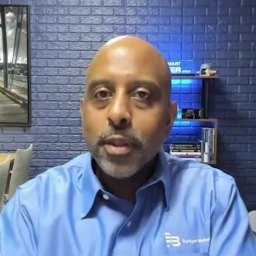 Morrice Blackwell
Sr. Manager of Utility Solutions, Badger Meter
About this video
The world is facing a critical water shortage, exacerbated by aging and underfunded infrastructure. Kurrant delves into this urgent issue, examining the challenges faced by utilities in providing fresh water to consumers.
This video focuses on the innovative use of Internet of Things (IoT) technology as a potential solution by smart utilities. Featuring insights from industry experts, including Morrice Blackwell, Senior Manager for Utility Solutions at Badger Meter, Xavier Mathieu, CEO at Birdz and Joel Hagan of I20 Water (Now Mueller Water Product), it's an informative exploration of how modern technology and digitalisation are being leveraged by utilities to address a global crisis.
This documentary is essential viewing for anyone involved with water utilities or city management, policymakers, environmentalists, students of environmental science, technology enthusiasts and anyone concerned about the future of our planet's most vital resource.
Read the transcript machine-generated
More in Water
See all 6:49
Data Sharing Enhances AMI Rollout for Cities, Utilities, Customers
 7:31
Severn Trent’s Water AMI May Lead to More Connected Solutions
 6:20
Using GeoAI to Calculate Wastewater Taxes in Cologne
 8:18
A Look at a Digitally Driven Spanish Water Utility
 6:40
Why are UK water utilities switching to AMI Meters?
 5:31
Tel Aviv Combats Two Water Challenges with One Solution
Latest news in water
All news- Ameresco Completes $5.9M Water Metering Upgrade Covering 8,000 Meters In Mustang, Oklahoma29 Oct 2026
- Houston City Council Raises Sensus Water Meter Contract Ceiling To $43.5M27 Oct 2026
- Riba-roja del Túria Pilots Four Grades Of Reclaimed Water Under €10M CircSyst Project27 Oct 2026
- Saanich Starts Five-Year Upgrade Of Water Meter Reading Equipment At 30,000 Properties25 Oct 2026
Kurrant advisory
Planning a water project? Talk to Kurrant.
Behind these interviews is Kurrant's advisory team, working with utilities, cities and the companies that serve them.
- Strategy AdvisoryKurrant is actively involved in resolving the challenges that cities, utilities and industry players are facing.
- M&A AdvisorySmart city and utility expertise for successful deals, turning insights into strategic gains.
- Engineering & ProcurementBetter engineering and procurement decisions, by identifying and developing digital and IoT solutions across use cases.
Or write to us: contact@kurrant.com
Send us a message