in Barcelona
 3 to 5 Nov 2026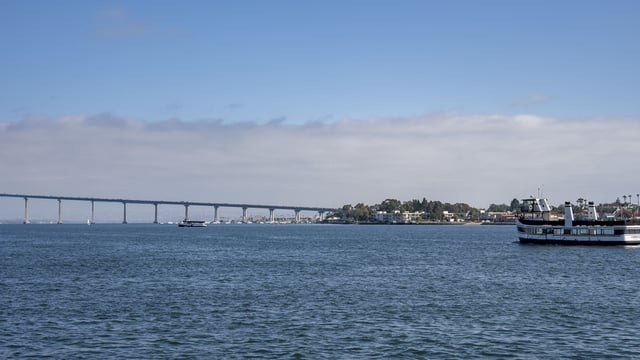
The California Department of Transportation is set to begin a $145 million construction project on the San Diego-Coronado Bay Bridge in October 2026, installing an 8-foot steel wire mesh barrier and 20 artificial-intelligence-enabled surveillance cameras along the 2.12-mile span. The project, expected to take roughly two years and proceed in two phases, follows a June 2026 permit approval from the California Coastal Commission and responds to the bridge’s status as the deadliest suicide site in the United States, with more than 470 deaths recorded since it opened in 1969, according to San Diego County Medical Examiner’s Office data cited by Voice of San Diego.
Construction Phasing And Physical Barrier Specifications
The barrier will consist of an 8-foot vertical steel wire mesh fence mounted atop the bridge’s existing 34-inch concrete guardrails, supported by 8-foot posts and secured with tension cables. Caltrans designed the mesh to be 87 percent transparent to preserve sightlines to San Diego Bay, a requirement tied to the Coastal Commission’s visual-impact review.
Construction will run in two roughly year-long phases, with the northbound side of the bridge completed first, including barrier installation, new cameras on existing light poles, and updated signage. The southbound side will follow in phase two, and Caltrans has said at least one travel lane in each direction will remain open throughout.
AI Camera Deployment Still In Design Phase
Caltrans plans to replace all existing surveillance cameras on the bridge with 20 units capable of automated detection, according to agency spokesperson Aaron Hunter, cited by Voice of San Diego. The cameras are intended to flag unusual activity and alert the California Highway Patrol and Caltrans in near real time rather than relying on bystander 911 calls.
Caltrans has not disclosed a vendor or confirmed a system architecture. Steve Welborn, a Caltrans public affairs manager, said the agency remains in the design phase and has not executed a contract for the AI technology, and cautioned against characterizing the system as suicide-specific before deployment details are finalized.
Caltrans has also declined to confirm whether the bridge cameras will mirror the detection system CHP already uses at its Los Angeles Communications Center, which identifies pedestrians and stalled vehicles on freeways to flag hazards before crashes occur.
“It’s a unique project for Caltrans because we normally don’t do these types of projects, we’re maintaining roads and repairing pavement,” Hunter said, in comments to Voice of San Diego published July 28, 2026.
Regulatory Path And Environmental Mitigation
The Coastal Commission’s June 10, 2026 approval followed a staff report concluding the vertical mesh design was the least visually intrusive option among alternatives reviewed, including a horizontal net modeled on the Golden Gate Bridge system. Commission staff and San Diego Fire-Rescue and police officials rejected the horizontal net over rescue-access concerns, since extracting someone from a below-deck net would likely require closing the bridge entirely, according to the Coronado Times.
Approval carries a Visual Mitigation Plan requirement: Caltrans must lower an existing 8-foot chain-link fence along the Bayshore Bikeway to roughly 3.5 to 4 feet to restore bay views for cyclists, and fund new murals on four bridge columns in San Diego’s Barrio Logan neighborhood in partnership with the Chicano Park Steering Committee.
Market Context: Bridge Deterrent Systems Nationally
The project follows the completed installation of stainless steel suicide-prevention netting on San Francisco’s Golden Gate Bridge in early 2024, which a study in the journal Injury Prevention found was associated with a 72 percent reduction in suicides. Until that net went in, the Golden Gate had been the country’s deadliest bridge for suicide; Coronado has since taken that designation.
A similar precedent exists at the Duke Ellington Memorial Bridge in Washington, D.C., where a fence installed in 1986 was linked to a 90 percent drop in suicides at that location without a corresponding increase at a nearby lethal site, according to research cited by Johns Hopkins Anxiety Disorders Clinic director Dr. Paul Nestadt.
Prior Deterrent Measures Found Ineffective
Caltrans previously installed four-inch metal bird spikes along the bridge’s railings in 2019 at a cost of $420,000, following passage of state legislation known as SB 656 in 2018 that also created an advisory committee to guide a permanent barrier design. A peer-reviewed study published in May 2026 in the International Journal of Injury Control and Safety Promotion, co-authored by UC San Diego trauma surgeons, found no measurable decline in the bridge’s suicide rate after the spikes and call boxes were installed.
The study, led by UC San Diego general surgery resident John Austin and surgery professor Dr. Amy Liepert, who both served on the Caltrans advisory committee, characterized the earlier measures as an “underinformed public policy decision” made without significant input from healthcare stakeholders.
Funding And Timeline Risk
As of September 2025, project funding had not been fully secured, with local officials warning that the effort remained vulnerable to delay absent full appropriation, according to the Times of San Diego. Caltrans has since confirmed the $145 million project as fully scoped and scheduled to begin construction this October, with completion targeted for 2028.