📖 Read Video Transcript
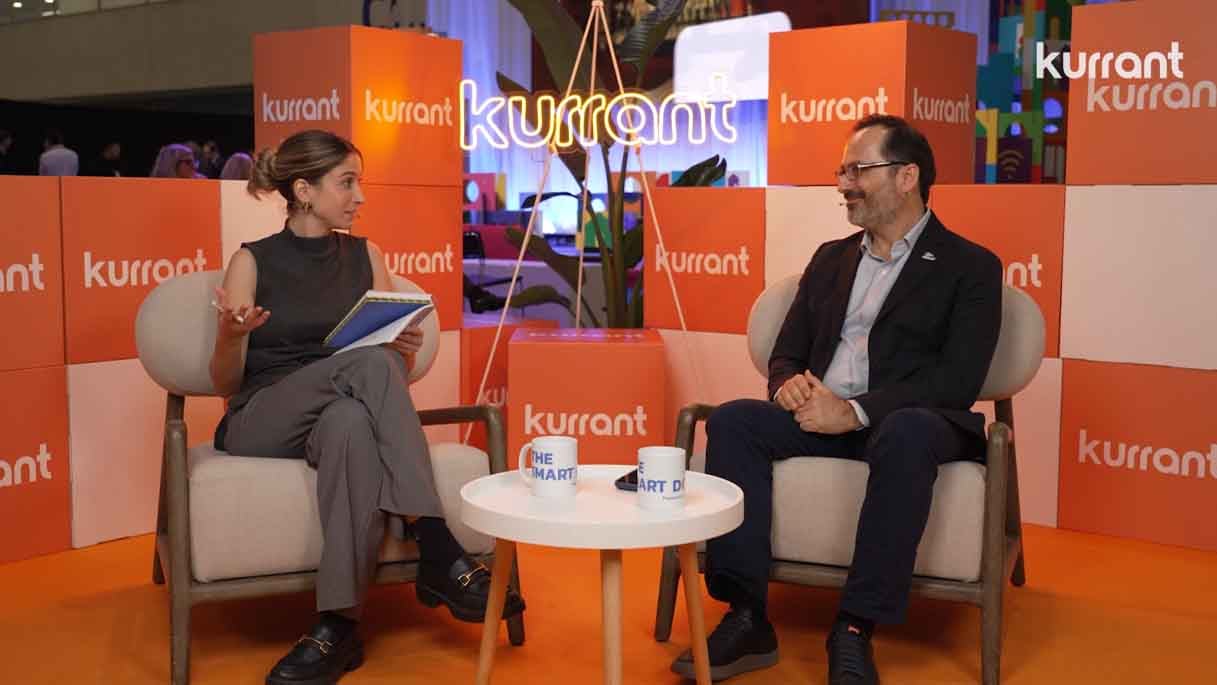
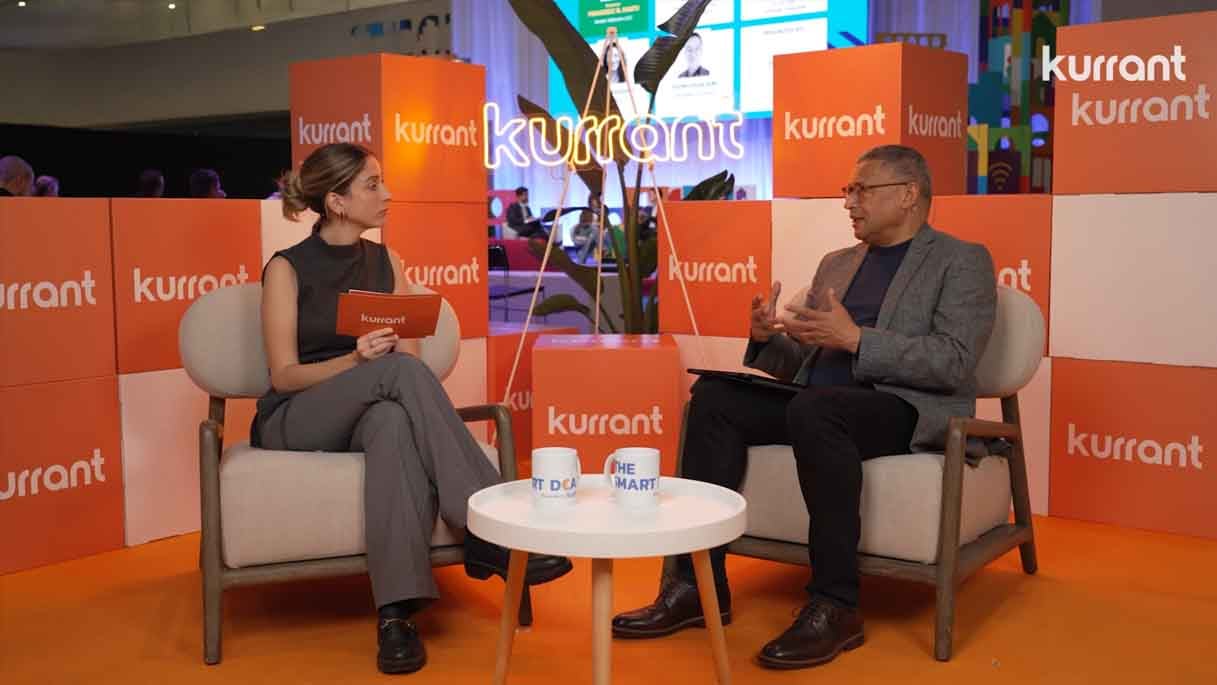
Hello from the Kurrant studio once again. And I am here with Edgar Pieterse He is a board member of the development Bank of Southern Africa, and we will be discussing smart cities in a context of informality and limited digital infrastructure. So, Edgar, the first question has to be what does smartness mean in a context where informality, inequality and limited digital infrastructure are dominant? So in that context, smartness is really doing what you need to do to understand what is going on. So it is data, but it is not in how it's normally understood in the tech world where you do a particular kind of survey, because most of what is going on in these cities dominated by informality. And just to give a sense of scale. About 80% of the labor market is informal in most sub-Saharan African cities, and people live, 55 to 66 to 60% of people living in informal homes. So the problem is that the state can't read that. They don't know how to make sense of it. They don't have the data. So smartness is really to invest in understanding what is going on. And the people who know what is going on is the people who are in these jobs and who live in these homes, and they are typically organized in social movements and other forms of collective organization. And they tend to enumerate themselves. They do surveys of themselves because they need to understand what the assets are, but also what their deficits and needs are so that they can advocate effectively. So in the first instance, smartness has to be about knowing what is actually going on and not what the bureaucrats imagine is going on. Okay. So is it, more community led, the smartness then? Well, it is about understanding that communities already have knowledge and data and these kinds of assets, and that you need interface mechanisms between the typical ways in which municipalities or state departments or the private sector would collect data about what is going on in the city. And what is missing is how do you bring these different data together? What's the interoperable system and what's the sense making of that? And that sense making capacity means you've got to draw on local universities, local think tanks and so forth, because that capability does not exist in most African municipal governments. So the smartness is about understanding what you don't know, but what the assets are in your city that you can bring together in a creative way so that you can really, really understand the actual city that actual economy and the actual livelihood practices of the majority of your citizens. Okay. And then Africa is urbanizing faster than any other continent. What's the biggest opportunity but also the biggest risk for cities as they embrace digital transformation. So the biggest opportunity comes back to this question of the real city. So when you have to feed your family, get your kids to school and you've got almost no income, or more insidiously, the income is variable and it is precarious, what people do to navigate that circumstance is what I call an adaptive capacity. So really understanding what that adaptive capacity looks like, how people have to hustle in the day to day, that intelligence. For me that's the biggest opportunity. So if we can take what technological platforms can do and what applications can facilitate and grafted onto that adaptive capacity onto that innovation capacity, then I think there's a place for it. But if you think that these tools, you can pull off the shelf and impose it on these contexts, they're going to fail. At best, they will serve us like 10% of the population and the commercial side of the city, but they won't actually be smart with regard to the whole city, if you know what I mean. Okay. And then how can digital innovation address the infrastructure and service deficits that shaped so much of urban life in the global South. So again the point is to understand that these the way these services and infrastructures and products are designed are with Western cities in mind, or let's say high income cities in mind and the proprietary products that's in the market is simply inappropriate for context in most of these places. So recognizing that you need a bespoke set of responses that arises from the local ecosystem, local computer science departments, programing departments, urban studies departments, planning schools, and so forth that understand this context, but also can move between these norms and standards at a global level that drives the industry, but recognizes how you hack those standards so that it can work for the local context. And so that's really what is needed, and how are we going to make this framework relevant for these contexts. And earlier you mentioned technocrats you have warned against technocratic urbanism. How can cities avoid turning smart city agendas into top down exclusionary projects? Well, the way to avoid sort of a technocratic approach is really to work with the assets you have, which I have mentioned are these organized formations in these cities. Secondly, is to understand that we've got to embrace the policy agenda that the UN has been trying to advocate, that digital access is a fundamental human right, that digital commons has to be the precondition for how we design and plan long term investments to enable digital infrastructures and most importantly, the applications that can help us every day convenience, affordability, which is the key word in these cities. And then, of course, the productivity of these informal businesses because I don't criticize informality or informal businesses. I think that people struggle. They would much rather prefer a stable job with a good income. But it is important to recognize that there's a lot we can do that can help these businesses become more competitive, more productive. And I think knowing how to use these technologies within a digital commons framework to facilitate those livelihood institutions for the urban poor in particular, that is the critical issue for me, and that's how we avoid a technocratic agenda. The other point to make is that we know that there's all kinds of democratic innovations you can institute. So, for example, you could create citizen juries that could audit and adjudicate whether the tech investment portfolios of the public sector or partnerships between the private sector and the public sector, whether that indeed serves the interests of the city, right, whether it aligns with the normative frameworks internationally or nationally or locally. And to really taking citizens as serious, if you will, oversight actors within how we roll out these frameworks. That, for me is the most important antidote to technocratic, dominance. I think this last idea is applicable everywhere. Absolutely, absolutely and urgent everywhere. And in some ways even more so in our OECD countries, where the capital investments are so enormous and it serves very particular interests. Absolutely. Yeah. And then what forms of local innovation ecosystems between universities, startups and civil society do you think hold promise? Yeah. So this is a great question. because I'm right in the beginning with my university, which is the University of Cape Town, vice chancellor, he's new. He's been there for a year, and he's announced innovation and entrepreneurship as a key new priority for the university. And he's asked me to work as part of a team to develop a framework for an innovation district for the university. So we've been looking at comparable contexts in the world, middle income, dramatic developmental needs, significant capital in the system, but misallocated and so we've been looking at tech Monterrey in Mexico, at Medellin and Colombia. There's an amazing example in Cotonou, in Benin, just outside the city called Seme City. And then we're looking at interesting context from the global North Melbourne, Bristol, because they've really tried to figure out how do you do this in a way that mitigates gentrification and deals with questions of heritage and memory in the urban fabric, and use cultural assets as a resource for innovation and for urban regeneration. So I've been thinking a lot about this, and some of the lessons that seems to be clear is that you need an entity that can drive it, that is independent of the vested interests, both within the university but also within the local commercial sector. Also, it can't be within the public sector because it is just too bureaucratic. It's not nimble enough. And so institutionally, you need an arm's length mechanism with a mission to achieve the public interest outcomes of the innovation district, but at the same time with a capital base so that you can actually do things. The last point to make, and that's the model that seems clear, is that you've got to start with intangible assets, you've got to activate these places. So we've got almost 25,000 students who live within this catchment. And at the moment, you know, they don't feel they're part of anything where unfilled is innovation anywhere. Because the fundamentals of placemaking and good public space and walkability and access to green spaces is just missing. And there's no cultural programing at all. And so we will start with that. And that's the big takeaway for me institutionally, that you really have to have a cultural led strategy to activate this space and then to enthuse young people in particular, to be part of defining the substantive mission of the innovation district. And then you bring in the big real estate players and so forth, to be do very bespoke catalytic interventions that can activate research and innovation that is related to the regional economy. And that can really tap, if you will, the unique characteristics of the regional economy in the city. So that's sort of the lessons I've taken away. And yeah, I'm very excited about the potentiality of that format. And this last idea also will make it more successful. Right? I think so. And also, you know, you then don't just become a glorified real estate broker because that's the big risk is that you're creating these big tech companies. They want a certain kind of urban ambiance, which is completely disconnected from the real culture of the city and the history of the city. They want to basically feel they neither in Dubai nor in New York, nor in Barcelona, nor in Cape. Damn right. And that it will kill the city. It will kill the university. And so I'm very clear that we need a very strong urban tech agenda to drive the approach, because it's at the end of the day about people and culture, and the rest then follows. Right. But yeah, but that's not that's sort of counter-intuitive for people to do this kind of work, but I'm convinced that that's the right approach to take. Adapting to each, Adapting it locally. Absolutely. And of course, our city's, repositories of racialized spatial inequality and exclusion. So you can't do an urban renewal intervention or build an innovation ecosystem and not go to the heart of that question, because if you can address that, you really unlock the true potential and innovation in the city, because that means people are learning how to deal with very painful things, very difficult things, and the kind of institutional muscle that you build once you go there is really important for building viable commercial and research agendas. And then my last question has to be if you could rewrite the global narrative on smart cities in one sentence, what would that be. So you prompted me with this question before I actually wrote it as I'm going to read it because it's easier. Because I won't memorize it. So for me, smart cities are comfortable in their own cultural skin and commit to co-production experiments to solve pressing local challenges. It deploys digital capabilities in service of a social cultural purpose. Perfect. I think that's the perfect sentence to end our conversation. Thank you so much for your time. So much. Thank you.