📖 Read Video Transcript
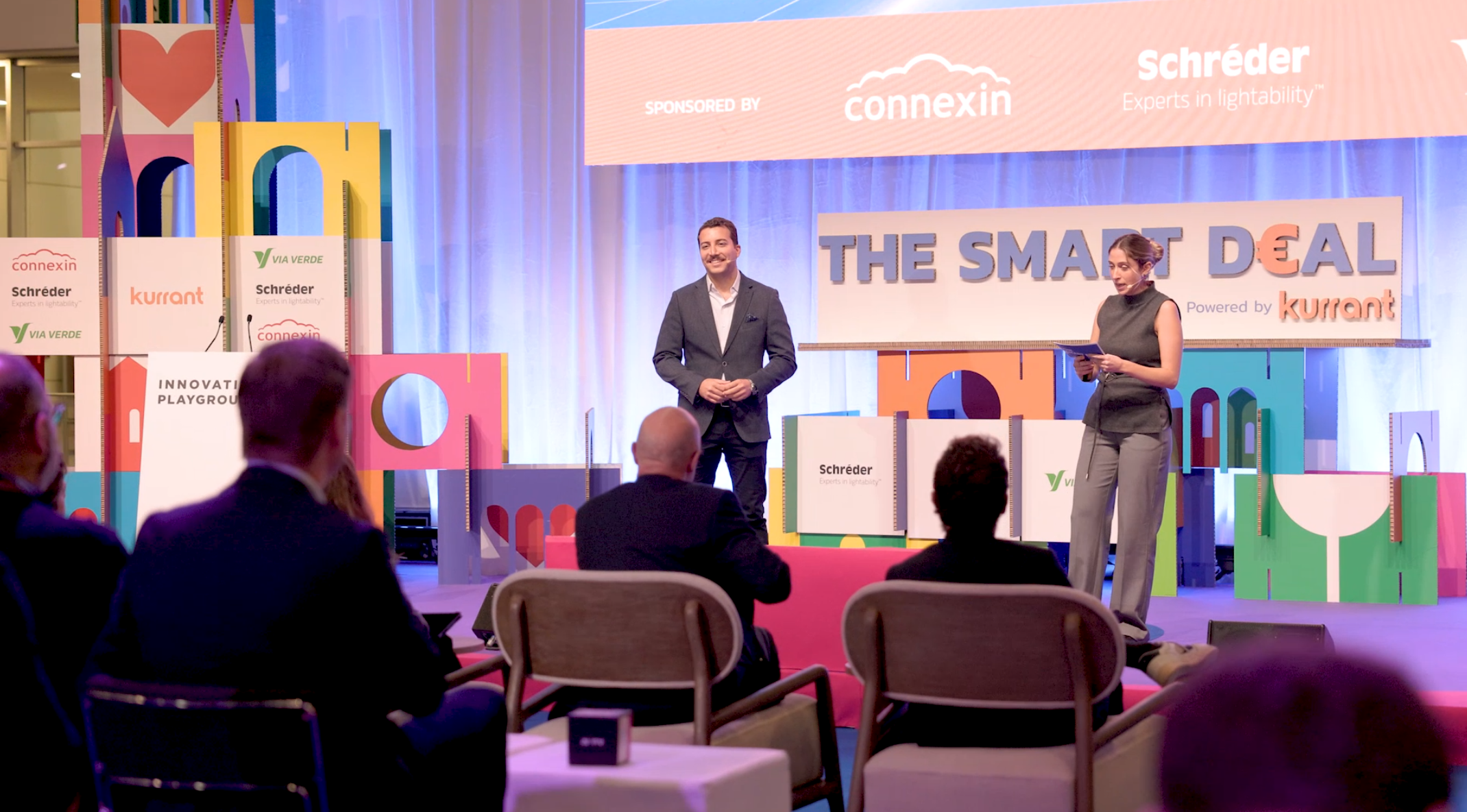
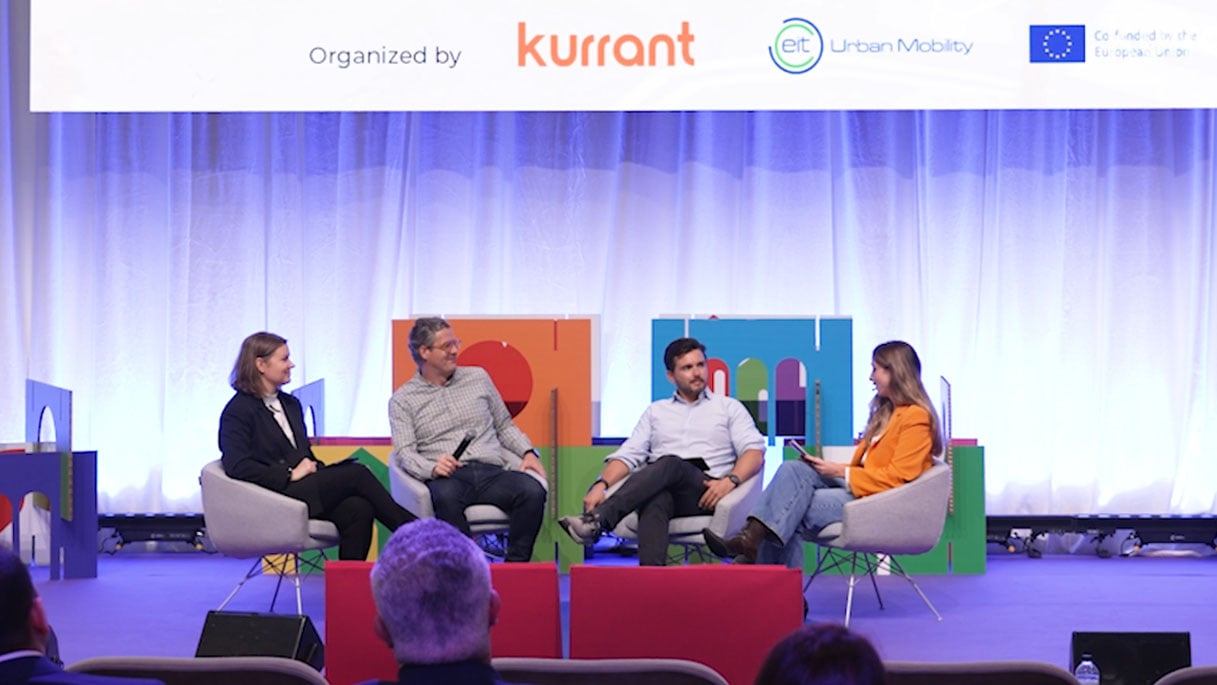
Hello all, and welcome to this panel. Smart mobility sits at the heart of livable, sustainable and efficient cities. Yet, as with most innovation as we've seen, with most innovation, it faces challenges, especially when it comes to financing and scaling new solutions. In today's panel, we're going to be exploring how innovation or how investment can be aligned with impact. With me today here on stage. I have Agnese Busa, head of the Smart City Development division at the city of Riga. I have Daniel Serra, director of Impact Ventures at EIT Urban Mobility and João Felix, head of corporate venture at Grupo Brisa. I would like to kick off the conversation by asking Daniel the first question. And it's what's the biggest barrier today for smart mobility projects and aligning innovation with infrastructure? Is it the tech, the financing or the governance? All of the above. What is it? We are talking about about investments okay. And I think it's, is very important that, when you are talking about innovation and you are taking a decision that is, risky decision. And always you expect to have a return. You know, after your investment. And there are different ways. So we will talk later about the type of returns that we expect to, you know. But, I think today the, the biggest barrier that we see on a European level is, what we say about innovation procurement. I think the way that, not public administration, I see for the private sector, they are acquiring, you know, new innovation is a big barrier. Especially, in our role idea to mobility that we support early stage startups. They are facing many problems, to deal with innovation. That means that, we can say that, when we say about cities, normally that's, where we are collaborating more. The public transport operators, they really need the innovations. But the problem is that sometimes they cannot invest in innovation. I mean, the governance, as you were saying, is very challenging sometimes, you know, and on the other hand, is not prepared to take some risk because always a startup is a risk. And that means that we need to work. And I think the European Commission has identified this problem not only for mobility. That is one of the biggest problems that we have. And yes, I will give you an number that, from our 140 investment, the top 24 investment that we have, the ones that are doing better. All of them are B2B. They all know that I'm doing business to business, not business to go to governance that say something. Does that mean as well what you were saying. The idea you were just discussing that there is more trust in the big companies rather than the startups. No, I think the system is prepared for the big corporates. I mean there are some procurement process that require, minimal revenue, that any a startup will do. I mean, also but especially with, you know, with public money sometimes, you need to I mean, you need to give a lot of liability for the project, especially when we are talking about infrastructure. You know, it's it's sometimes the startups are not prepared to, to just to procure this process. So they, they are kicked out on the first phase of the process. That means that, I'm not an expert on public procurement. Maybe Agnese will explain better than me, but, I mean, I understand that the public procurement is complicated. Okay. They are managing public money as we are managing public money, but, we are talking about this innovation procurement, how we can bring innovation, how we can buy innovation, how we can test innovation, and always, as I say, there is risk. If I may add, public procurement is one thing and it's complicated. But when it comes to innovation public procurement, the biggest issue I would say is the timing because for, innovative public procurement it will take 18 to 24 months. This is from our experience. We had one project in which we decided to make this innovative public procurement and we thought that this will be the perfect match. So we will have innovative solutions and we will do it with the innovative public procurement and everything will be great. And when we started, we understood that we just can't fit within the timeline of the project because project is three years and the procurement will last up to two years. So this is the huge problem. Another problem, at least in Latvia, that, regulation, puts all the responsibility to the municipality. This is like not shared responsibility, just on the public body. And, Yeah, this is also a question, how to leverage it because I understand that we as a public authority should take the risk. But at the end, the risk should be taken by some particular person. And when it comes to that, we have regulatory bodies who are saying, how can you spend so much money on the innovation when you even don't know Will it afterwards will be, like, as planned? And will there be success in it? And therefore, we have this state control and they are just saying, sorry, you can't spend money if you will not get positive results. Therefore, yeah, the result is, and I believe we are not the only ones who are struggling. We know that in Europe, innovative procurement is, like, not working. Almost no Challenge on both both sides. And if we go back to the startups topic João mobility startups face long sales cycles. We know that like any other company in the industry. So how can investors and public bodies share risk. Which is something that we were just discussing about sharing the risks and sharing the responsibilities. How can they share risk more effectively to help good ideas scale beyond projects, beyond pilots, and not stay in that pilot phase? Well, that's a great question. In a previous life before I became an investor, I was also startup founder in the mobility space, and I felt that problem. It's not just the sales cycles that are long. If you look at it from a macro level, you have to repeat that sales cycle every time you want to onboard a new client. Yeah. And in the end of the day, now, speaking as an investor, the money that you need is competing with companies who can scale immediately. So funding mobility through traditional VC models is, very high risk endeavor, a very high risk game. Typically this is where public funding or innovation projects come in and we see, we see a lot of that, supporting early stage innovation, but that also dries up after a certain point. In the case of mobility, and we were discussing this before the panel started We need to support these companies for a lot longer because changes in mobility take a lot longer. People need to adapt to new ways of moving around, regulations sometimes need to catch up. We still don't have autonomous vehicles at scale. Not because of technical problems, but because of a regulatory problem. And so every time you're trying to do something innovative in this space, by nature, we will take a longer time. And the innovation projects, even the public support ends at a very early stage. And so you see pilots materializing, but then you don't see the results coming through, because that support ends and the private enterprise is not yet ready to take over. Now, as part of what we do, I'm coming I think we changed a lot the way Brisa is doing innovation procurement. We've streamlined that process. Our innovation team is working very tightly with the procurement teams, legal teams to make that a faster process. And in the end of the day, we always try to see this as a long term support. So if we are doing a project with you as a venture client or something along those lines, we're in it for the long run. Even if it takes, longer than a traditional VC with would not be interested in taking. And you've seen the benefits of taking that step. We've seen the benefits as a company. Yes. From the innovation perspective, the VC arm of Brisa is very recent, so we don't have a track record on that. But my years before as a founder and now as an investor, the whole sector of mobility is one where returns are very hard to achieve, especially because of these long timelines. So even if there are success stories and we have them, we have the Ubers, Trainlines, etc. who became great success stories in this space. They all took no decades or more than a decade, and that for a traditional financial VC fund, destroys your returns in the end of the day. So funding this market out of purely private, enterprise, it's going to be tough. And I don't think this is recognized at the public funding level, to the point where support programs extend beyond early technology or early technological adoption. So anything you'd like to add, Daniel? Because I saw you, you were nodding very intensely. No, I think I like what you say related to that, you change the way you work to work with a startup because you need to be very hands on, okay? I mean, and also, that's something that with our activity, we have a very famous program that is RAPTOR or you know, rapidly prototype for urban mobility solutions. And basically, we take a challenge from the city and we find a startup that can solve this problem. But that's not enough. What we want, first, we need to know that this city will procure this solution, and we ensure that the city will be working together with this startup because they need much more support. Okay? They are innovative. They are faster. And that's a problem, most of the time. But we want to give the resources to the city. We want to solve the problem. That means that this is something very important. And I think, always when we talk about the startups, we need to be very highly involved. I mean, this is something that is really required because, this is a way for to create innovations, you know, and the problem that we have is how we can make them really grow and to scale. That's a challenge, because I think in Europe we have good numbers in terms of early stage startups. We are very good compared with US or China. But we miss this, this scale ups, that will really transform and disrupt, the traditional business. I'd like to jump now on to my favorite question as a journalist, which is what I really like to ask. And it's about ROI. So, Agnese, what about ROI? I mean, there's obviously the metrics of reducing emissions. But are we seeing a bigger focus on financial ROIs from cities to be able to maybe launch more projects? Well, cities are, like in cities like Riga. We are not focusing on traditional financial ROI because this is not our core business. Therefore, we are more measuring the socio-economic benefit, what we can provide to the city, to the public, therefore. Yeah, this this is not at least not yet. And this is because of the nature of the innovation. It is hard to measure this if we are speaking about traditional infrastructure investment, if we are speaking about the bridges and streets and so on, then of course there is always a cost benefit analysis and nothing happens before there is a like a real proof that these investments will be, with a, a return, but again, not the financial return. This is again socio economic return, because financially its always in minuses. But but yeah, but we as a city we are more focusing on creating the environment in the city for innovation and for investment because it means then there are coming, businesses,, investors who have their real financial ROI, which means that they are providing better environment, creating the jobs. So the smart city means that it makes better place for the citizens, for the people who work there or just visit there because the environment is welcoming. So this is what we are focusing on more. What do you think Daniel in your role. It, it what have you been seeing. I mean we also, we faced this I mean this, it is not a problem but is we are very focused on return of investment. That's because we are an investor and we are looking for financial return of investment. But at the end, we are very committed, as a body of the European Union for the impact. But I think there is, I mean, that obviously there's from the perspective of the city, I fully understand that they, they look for the final benefit. But at the end, we look for other type of benefits that we can create that, for example, job creation is something very important that we are measuring. Because at the end, I think we are helping, to grow these companies, to create job creation, better talent and job creation. That means that, I think, we should be all commitment with these KPIs that sometimes are more related to impact on sense of financial value. But I mean, here, I mean, I'm when we talk with the startups, and sometimes we see what models that are really working. I mean, sometimes we as well from Europe, we need to look in other parts of the planet, because there are good examples, and I think, for example, I have a good example of the how the city of Miami is doing. They have had a very good program to support innovation procurement, and they really support and invest in startups. Obviously that's a problem of of governance. But sometimes we need to think how we can do it differently. Because, otherwise, it will be very challenging. And João, general public private partnerships are evolving. Are there other contractual and collaboration models that can accelerate the deployment of innovation. And if you have any some examples you'd like to share that would be great. No. Absolutely, but just before answering that, let me just add something to the ROI discussion So we absolutely measure ROI across innovation projects, across investments that we make. That's one of our core KPIs. That being said, we're happy to measure ROI in a much longer time frame, okay, when it comes to innovation projects. So, if it's very horizon one, immediate innovations then obviously there needs to be a business case associated with it. But if we're talking longer term innovation, horizon two and three, then we're happy to take more risk, with a potential uncertain ROI to move forward. But we definitely look at it as a very important KPI for our innovation projects. Now, coming back to your question, we are a private company operating in a highly regulated environment because we have the concessions of the motorways in Portugal. So, yeah, we have the in a way, some of the vices from the public sector in terms of procurement, etc., because we are very bound by these rules. I think the relationship between startups and companies is evolving. At least I've seen that evolution in the past ten years. Early 2010 it was very hard to sell this to, to sell, to have startups sell to large companies. I mean, again, back to my previous experience. We did that. We worked with companies like Daimler, Volkswagen, etc. but the procurement process was always a nightmare. And sometimes you couldn't even go to the tender just because you didn't fill one of the the tick boxes. I think that is changing, as innovation teams now have more empowerment to become venture clients. And I think that's a model that I really believe can bridge some of these issues that we've discussed, where corporates recognize that startups are a different animal. They cannot be put through the same processes as if you're buying paper. Or in our case, construction services or materials. They need to be handled differently. They need to have different points of contact, different workflows to be successful in delivering their value to the corporate client. But this is a change to the way corporates look at the process. And there needs to be a lot of support high up to move these processes along. And I think we've done that at Brisa. We've actively done not just pilots but pilots and the next steps of these pilots, successfully over the last couple of years. And it's been working out quite well, both for us as the buyer, but also for the companies, as they become our suppliers and use us as a platform to learn how to navigate with corporate clients or enterprise grade clients. So we also deliver that value to them as part of the pilots we do. Any other types of collaboration you'd like to mention that? No. Okay, then we can jump on to our next, question, which is about priorities. Maybe for the cities Agnese. So, AI, I electrification, MaaS, They're reshaping urban mobility. But where should cities focus their limited resources in order to get the biggest impact and maybe faster? I will come back again to my first answer about creating the environment. Because we should not do everything by ourselves. Because, again, we can't do everything by and by ourselves. collaboration is very important. This is one. But if we speak about limited resources and really where to invest, data, we believe that data is everything. Because we need to know, what is happening. We need to make data driven decisions. If we don't have the basis, then the decisions are wrong and we know that afterwards. But for the smart city, the data is the basics where the people are moving, where the traffic goes, what is with the cargoes, where is the traffic flow? What is, about the pedestrians, cyclists, micromobility users? So data is the basics. This would be my answer if we are really speaking about some limited resources in and where to invest. I can share experience with our city, what we have. Like all the cities, have constraint with the finances when it comes to innovation implementation. And this is also always with our city. But we have created an investment fund which is, dedicated specifically only for the internal municipality institutions. So we are actually, making this internal innovation culture to grow, to ask, to encourage our people to think innovatively, to test new ideas, just to make research and see rather one or other solution is good for further work before investing in it. I'm speaking about really small projects. The budget is around 130,000 per year, so this is very limited resources. One project is up to €25,000, but with these small steps we are starting with ourselves. We are starting with the employees because there is always resistance. And we go with the idea that we need, collaboration. So we need to involve people, we need to speak with them. We need to understand their constraint. What are the, problems? Why they are afraid to do something innovatively and just make them a part of the process. So actually, about the collaboration, if we speak, we come back to this question of collaboration also among the colleagues is also very important. And and yes, since the resources are limited then for the city is also is very important cooperation in project calls. So because this is the place this is the source of the funding for innovative, solution implementation. And maybe since you mentioned data, a good data management platform. So you're not overwhelmed with the platform? With the data, with all the data. Definitely. Definitely. I'm talking about quality data. And I can share that we in Riga have a great, GIS platform called the GeoRiga. So we have collected all the data and we are putting this is, portal in two parts internal one, which is with all the data available in municipality, also sensitive data. But there is also public portals side. And we are keeping all our data open to our society. So, citizens can use them, businesses can use them, make new services based on the data and so yeah, quality data. That's the that's the key. Would you like to add anything, Daniel? Because, I mean, you were you've worked very closely with. No, I think it's, Yeah. I fully agree that we will have, many data driven cities in the future. The problem here is that there are, I mean, cities, big cities like Riga that, they are producing, they are able to manage very big flows of data. But obviously when we go to a median and small city, they have a lot of problems. But there's also solutions to the problems. There are companies that are able to help the city to get their data on open data sources. You know, third parties. And, and they really need the data because that's helping to improve everything around the city. And and we can talk also about, this trend about creating digital twins. But so we see still there's a challenge between the private and the public sector on the, on the trust to share data. And some levels of data, when we have obviously we keeping all the privacy, but we sometimes, when we talk about real time data always is much more challenging. This is procurement is helping us to do that. But here we are already implementing, you know, new strategies for the European Commission. That is the European data spaces, for mobility that we think that now is still under development, but in the future it will be a tool, a framework that will help to have, to share data on a different level. And then I wanted to finish the panel with a question that I want to throw at the three of you. And it's, it's 2035. What does success look like for sustainable, connected urban mobility and what needs to change now in the financing part to get there? João,, let's start with you. How to define success in a ten year time frame? I think from from my perspective, I think the most transformational technology that you can get to in the next ten years in urban mobility is autonomous driving. The technology is there or almost, and it will radically change the way people move, bringing down costs of the private mobility, but also complementing existing systems, rail, trams, etc. by bringing people closer to the stations. It will or can help complement times of the day where there's less frequency, where there's no need for larger busses to circulate, or so many carriages. And this will fundamentally change how we potentially can fundamentally change how we move within city environments, especially if cities regulate it that way. So limiting the possibility of bringing your own vehicles into the city center, things like that, to really drive, this adoption, what needs to change in terms of financing? I think financing in this case won't be the barrier. I see a much larger regulatory barrier. Both at supranational national NCT levels to get everyone on board with, you know, how to bring this to reality, how can we leverage what's being done in other countries? Learn from it, learn from the mistakes, learn from the problems, and try to do a better job at that. Since we're not leading that, that race at the moment, from my perspective, won't be a funding issue. Funding will be available for other for other things, within urban mobility that simplify the way people can access urban mobility systems. More integrated, easier to use. That leverage tools people already use. You know, perhaps in bringing, the topic of the day, perhaps bringing AI closer into planning to do predictive planning of your mobility through tools you already use, like WhatsApp or other, integrated solutions. But again, it's not about the funding. From my perspective, it will be much more about can we provide an alternative to the current situation that people will actually adopt on their own instead of being forced? That's the question. Okay. Good answer. I think, my heart says autonomous mobility. I love this topic. Yeah. I think if I look back, you know, in this Congress, we see some prototypes, that are sre around. We see long term implementation technologies here. Technology will stay. Technology will be deployed. But I think nowadays if we are looking, in the global geopolitical situation, I think to 2030, I think resilience for cities will be very important and we need to adapt better to the climate change, migration. You know, everything that could happen in the future. We need to prepare our cities. This is a big challenge for cities, to be much more prepared. And also especially on the mobility. I mean, when yesterday we had you had received this alert in the phone. What are you doing? What is the next decision that you take from the perspective of mobility? The metro will work. I we don't know. I mean, we need to be prepared for those things and, and 2030 I think that's, maybe this is a topic that, including cybersecurity, there will be, is already a trend that is coming already. And many cities, I think in your region, they already they are more aware, you know, that they need to be much more prepared. You know, I'm what about the financing part? What do we need to one thing we should change to get there. I think it's a bit of changing the priorities. Because, I mean to have a system that is especially on the mobility mobility system of a city that is prepared for this type of disruption, obviously it has a cost, But now, I mean, let's think about it differently. I mean, automation can improve, you can have. And from one day to another 100 cars serving public transport in one city. And cut a metro line, we need to think differently, have a different approach. It will require much more money. but European cities, population is growing. That means that, we need to be prepared for that. That change that is coming out. And Agnese, I guess I will answer more philosophically for me, the ideal scenario in 2030 is that, people have, the possibility to choose if I want to go by public transport. It is available, clean, convenient. If I want to use micromobility tools, they are safe, accessible. If I want to go by car, I can also do that. So I think it is like not making to choose over the modes, but to have the combination of them and and the possibility really to decide what I want to do. So this is my answer to both my vision in 2030. What to do, how to achieve this? There I would say that we need to move from, pilot or project phases to, to really, coordinated development, which is set in some political framework. And therefore I can I am proud to say that we finally in Riga, we have starting this summer, Riga smart city guidelines, which are a policy document, adopted by politicians that for right now we have the legal framework and it means that, in innovations this is long term agenda included in the strategy of city development and mobility is one of the priorities within that. So I really hope that this will also mean that there will be some dedicated financing for that and or that our guidelines are essential for the period 25 till 2030. So in 2030 we can come back to this question and see how it worked. So I'll see you here 2030. Right. Okay. Perfect. Well I like the coordinated development I like that idea. So thank you so much for the conversation. It was very interesting. And hopefully in 2030 when we're back here, we can see that financing is moving a lot faster. Thank you for your time and thank you for coming.