← Back to all events




Smart City Expo World Congress Barcelona 2025
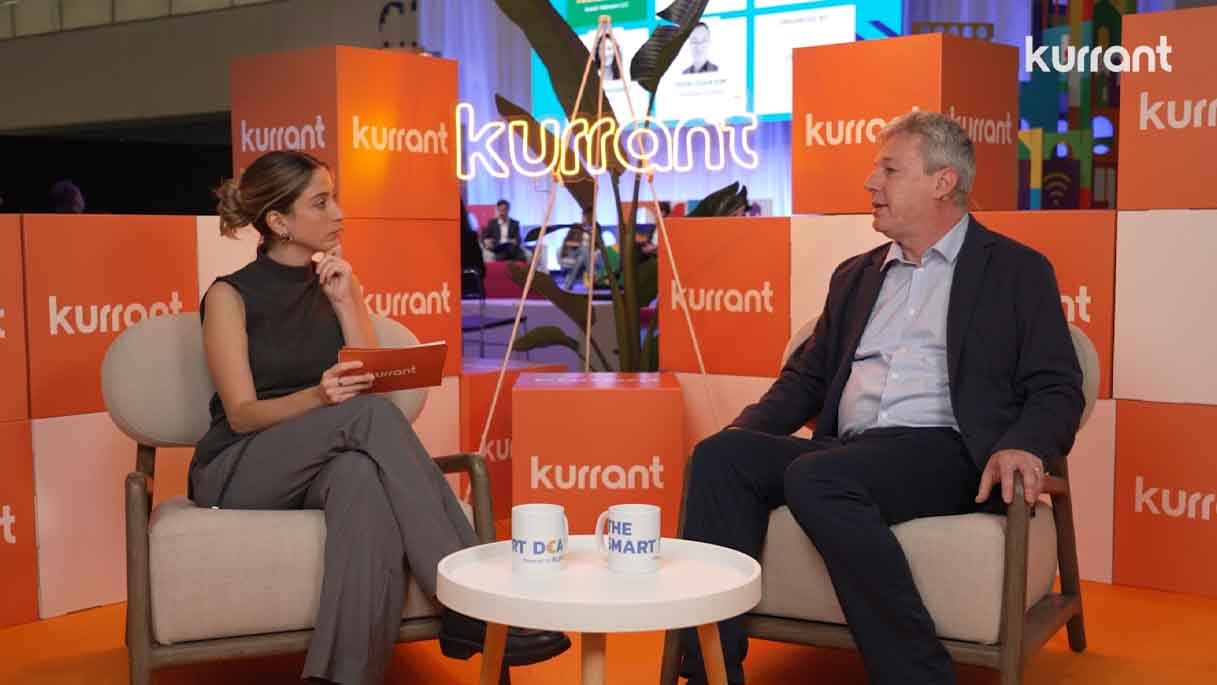
From Living Labs to Trustworthy Data with Josep Laborda
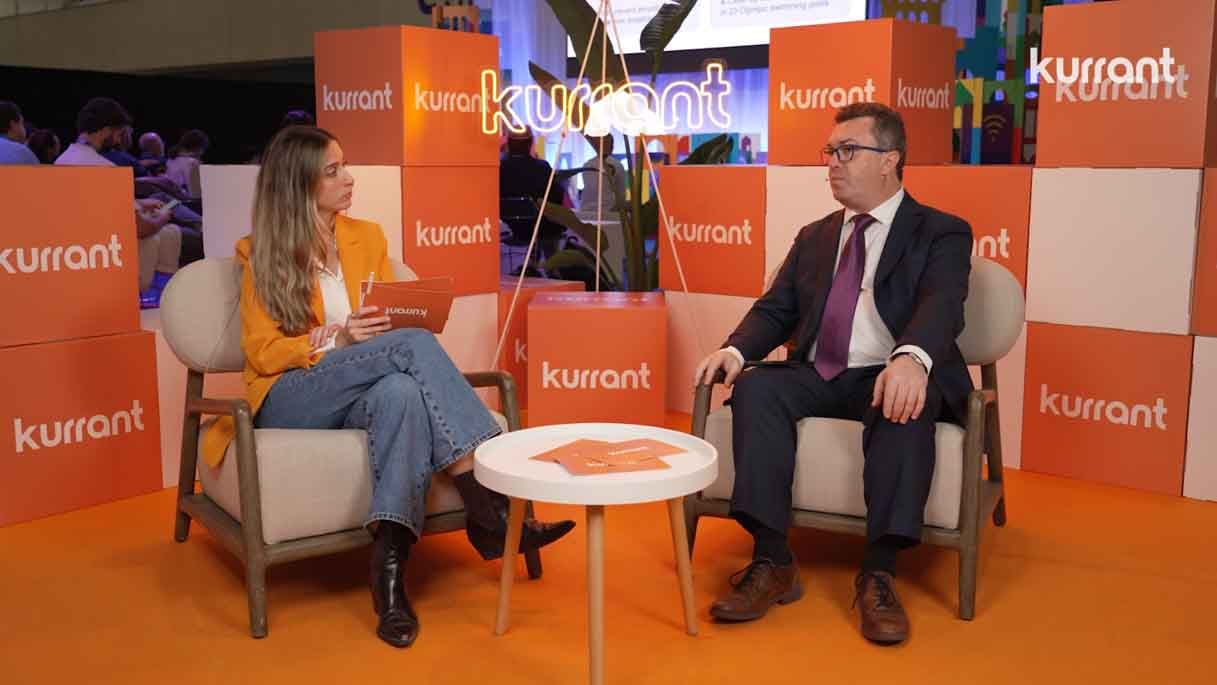
Josep Laborda (Co-founder & CEO of Factual) shares how innovation companies can help cities align stakeholders, test solutions in real-world “living labs,” and deploy technology that citizens accept. He discusses why MaaS has struggled, what’s driving progress in mobility and decarbonization, and why cities must measure real impact to avoid greenwashing—using tools like blockchain-backed data certification.
📖 Read Video Transcript
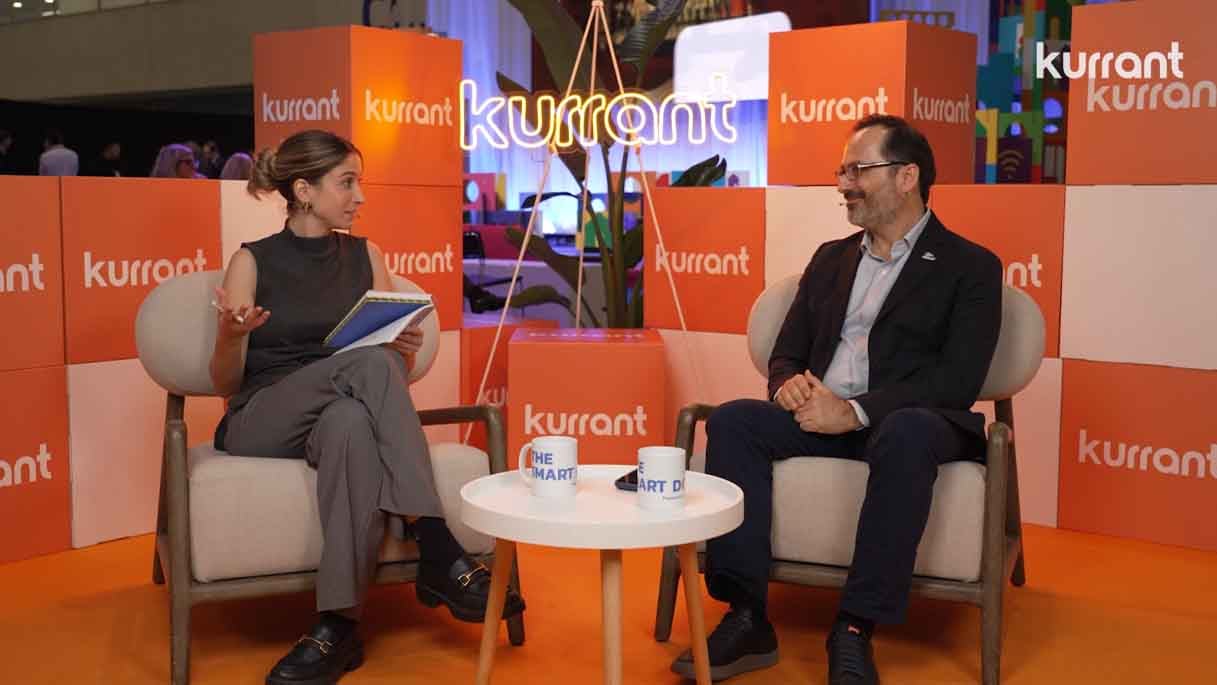
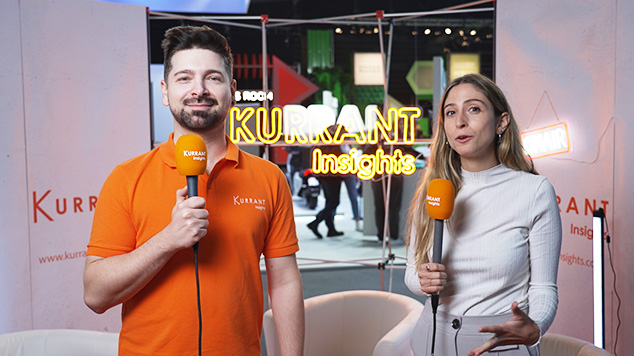
We're at the Kurrant studio. I'm with Josep Laborda. He's Co-founder and CEO of Factual. Factual, has been deeply involved in European innovation projects around smart mobility and urban tech. Welcome, Josep. The first question I would like to ask you is, how do you see the role of companies like Factual shaping the smart cities agenda? That's a good question, because if you think of a city, a modern city it is a complex ecosystem involving many stakeholders, many actors. From the public authorities down to the agents that basically shape the city. Technology providers, mobility service providers, the citizens themselves are part of the city. So making them work together in a manner so that the major challenges facing cities are met it's complicated. And it involves many things from governance down to the technology implementation to societal challenges. And a company like us basically addresses all of these challenges, by applying innovative methods, by making different stakeholders cooperate. And basically, help shape the cities of the future by leveraging technology in a way that is not invasive. That is natural, that is well accepted by the people. And, yeah, that’s one of our goals as an innovation company. Factual often acts as a bridge between public authorities, startups and EU institutions. So what makes a city's innovation ecosystem truly work? I would say collaboration. And, one thing that is really important, I would say crucial in order to make innovation happen, is for cities to offer the public space as a testing ground for innovative concepts. So, I mean, having living labs that really now offer the right conditions for innovators, in the right setting, to basically validate new concepts, and make sure that this works in the real world, not in a theoretical way, but rather, targeting real users. This is the kind of things that are facilitated typically by EU funds. So we have a long experience in capturing EU funds for these kinds of projects involving different stakeholders and coordinating them towards achieving great objectives. So the cities that are ready to basically again, offer their their streets, their equipment, their infrastructure to basically validate new concepts, utilizing technology, there to try, those are the cities that we like and the ones with whom we, we cooperate in this kind of projects. Okay. My next question was going to be, what do you think is the biggest success factor? But I mean, maybe you kind of already answered that question, but it was more like strong governance, open data or community engagement? Well, that's again a good question. I would say it is a combination of all of these things, but I would start by saying that, you know, principally, in my opinion, it all goes down to leadership, I would say. So, if there is leadership from the city perspective, if there is vision and a strategic vision, if the city is there to try new concepts, then it all facilitates implementing this new concept, these innovations. Of course, the availability of data is crucial in order to develop new technologies and new services. And we are lucky that we are in a phase in the innovation arena where there are new concepts flourishing like such as data spaces, for example, where data is made available in a decentralized manner in a way that it's more accessible and it can be better used. So there are exciting developments happening. And of course, citizen engagement is also very important. They need to perceive that technology, new concepts are not something that these are innovations that are come to basically facilitate the living. And you've been very vocal about mobility as a service and connected automated mobility. Where are we today with MaaS and what's holding it back? Well, mobility as a service has been a very hot topic for many years now. It is certainly not the hottest topic today. One of the reasons might well be the fact that the business model has been elusive, so far. It is a very bold concept, but the reality is that when it comes to actual implementation and when it comes to orchestrating different mobility providers under the same umbrella, under the same front end, same application, it becomes much more difficult to basically implement the concept behind MaaS. So the innovation in this regard is rather going to be more tailored, mobility services, flexible mobility, demand responsive transit, this kind of more tailored solutions that are data driven, and that cater for the specific needs of end users, are the ones that are taking the lead, more than, this more rather holistic view of mobility, combining all modes of transport. That is, the old concept of MaaS in my view. And of course, connected mobility, autonomous mobility is part of the mix, part of the recipe for future mobility in cities. And I think that the way this is going to be implemented, for real in cities is in such a way that, again, you don't want to go too much beyond what is possible, but rather implement technology where the fit is really good, where there is a specific use case where basically providing automation is really something that is feasible technically from the legal perspective, from the governance perspective. And I'm thinking, for example, on public transport, that's one of the most obvious, in my view, use cases where automation is going to flourish, in European cities and elsewhere. And let's talk about goals. So the EU has decarbonization goals. What kind of mobility innovations are most promising for reaching those goals? Okay. Well again the the easy answer to your question would be, of course, electrifying the fleets, going electric, promoting more active mobility, more walking, more cycling. I will elaborate on the more walking and more cycling. So, I mean, a way to reduce emissions certainly is not to drive your own car but rather cycle or walk. How do you make people cycle more in cities? One way to do it, and we have researched this very much in our projects, is by making sure that the infrastructure for cyclists is ready in cities. It is available, and it is safe and comfortable if you enable safe and continuous, comfortable cycling infrastructures, people will cycle more. And in doing so, the overall emissions in the city will be reduced. So I mean, again, it is not a complex recipe for decarbonizing cities because, the bicycle is an old mode of transport. It's not too technological. I mean, everyone, almost everyone knows how to cycle, how to ride a bike. And in promoting more healthy mobility, and cycling in particular, we can achieve this objective. And in this regard, for example, ourselves, we have developed a technological lane patrol, which is a tool that many cities are, these days, buying from us, which is, basically aimed at assessing the level of safety of cycling infrastructures and giving hints to the city officials or the owners of the infrastructure, where to invest and what kind of measures they could implement to make them, I mean the cycling infrastructure, is more safe, more appealing. And at the end of the day, encourage more people to cycle instead of driving. Okay. And are we close to achieving the goals that the EU is looking to fulfill? I don't think so. I mean, because the reality is that the climate change is a real massive global problem. The global warming is there, it is objective and it is also true. And it is a fact, that we are not achieving the targets. The targets are ambitious, but are needed. So, I mean, we are working towards, achieving these objectives, but there is much more that needs to be done. And the cities, need to be part of this transition. They need to take leadership in order to achieve the climate goals that we all want. And in this regard, one thing that definitely needs to be faced is all those measures that we could call such greenwashing, where there are measures that pretend to be reducing emissions, but then they don't. Right? Yeah. By monitoring the data, I'm making sure that the reductions are real and are measurable and are credible. And we would support cities in this transition in a way that attracts more investment, more credibility, more endorsement by the citizens. Because what you don't want here is that just pretend that you're doing something. But at the end of the day, you don't do anything. So, it's again, it's challenging, this technology that facilitates this kind of monitoring how effective these measures are. And we also applying technology just to monitor and certify that specific measures are delivering real impact so that nobody can just fake the figures and the results. And we do this with a technology, again, because we incubate technology in our company. And so we basically our USP is that we combine consultancy with product development that is technology based. So this is the combination part of the USP. So we call this Factualizer. It is a technology which basically facilitates that. Our partners certify that whenever the data that acknowledges a fact cannot be modified at all. And we know this by leveraging blockchain technology. Okay. My last question is you said we need to stop the greenwashing, for example. And what's something cities need to stop doing to innovate better? I would say that having too many legal procedures, administrative procedures, is something that undermines innovation. So whenever you want to test something new, something really innovative in a city, something that is a must is that the city facilitates some sort of sandbox or safe environment for piloting new concepts. I mean, I think the main thing undermining innovation, in my view, from my experience, is too complex legal frameworks that basically make innovation slower, more difficult. So, again, coming back to what I said earlier, having the city as a as a living lab, as a playground for innovations, I would say is what is needed. So removing the hurdles and making it easier. Exactly. Okay. Well with this idea we finish our interview. But thank you so much for being here and for your time. Oh thank you for having me. And thank you for watching.
Playlist: Smart City Expo World Congress Barcelona 2025
20 videos
Day 1 - Kicking off the Smart City Expo Barcelona 2025
The Smart Deal 2025: Pitch Day Highlights
The Smart Deal Reveal - Overview
LoRaWAN Turns 10: What's next? with Alper Yegin, CEO at the LoRa Alliance
Rochelle Haynes on Building Data-Driven, Equitable and AI-Ready Cities
Investing in Smart Mobility: Bridging Innovation and Infrastructure (Panel)
AI to Optimize Waste Management Across Cities with Daniel Panadero González
LA Street Lighting’s Smart City Playbook with Miguel Sangalang
Madrid’s Digital Strategy with Sonia Crespo Nogales
Gérard Wolf on The French Recipe for Sustainable Cities Video
Data From the Streets: Rethinking Smart Cities in Africa with Edgar Pieterse
Aleksander Rajch on the Future of Mobility in Central Eastern Europe
Scaling Urban Innovation with Gianmarco Piola and Pedro Moreira
From Living Labs to Trustworthy Data with Josep Laborda
Driving Europe’s Digital Future with Chiara Venturini
The Future of Urban Road Safety with Luca Pascotto
Building Smart, Equitable Cities with Debra Lam
Connecting Every School by 2030 with Irene Kaggwa
Smart City Expo 2025: The Wrap-Up
How AI and Accessibility Will Transform Urban Mobility with UCL Experts
More Smart City Expo World Congress Barcelona editions
🎥 Recent Event Coverage



🎬 Kurrant Originals
📰 Latest News


© Kurrant. All Rights Reserved. · Editorial Standards · Cookie settings
This site is protected by reCAPTCHA and the Google Privacy Policy and Terms of Service apply.