in Barcelona
 3 to 5 Nov 2026
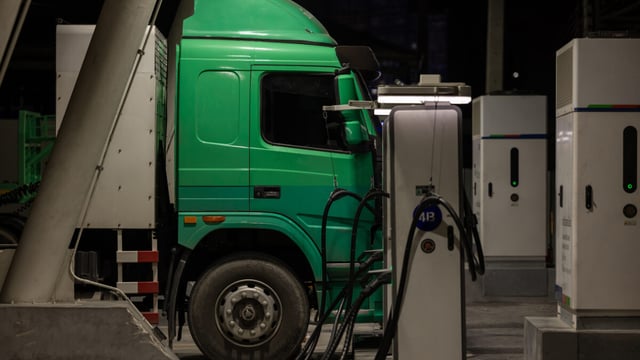
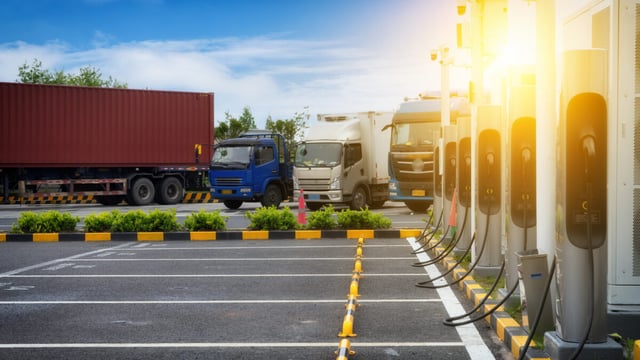
Autobahn GmbH des Bundes, the federal company that runs Germany’s motorways, opened on 20 November 2026 a Europe-wide negotiated procedure to select companies to plan, build and operate fast-charging sites for electric trucks at serviced rest areas, according to NOW GmbH, the federal agency coordinating the programme. The contract is split into five lots of about 45 sites each, every lot mixing larger and smaller locations.
Why: Closing The Gaps In A National Truck Network
The tender is the second stage of the federal truck charging network. Contracts for the first stage, covering 124 unserviced rest areas, were awarded in five lots on 30 June 2026, with 836 charge points, of which 447 use the Megawatt Charging System (MCS), according to GoingElectric. As we reported in July, ENGIE Vianeo won the South-East lot.
The full network is planned at about 350 sites and about 4,000 charge points, according to NOW.
This project is heading to tender
New smart mobility tenders worldwide, flagged daily with an AI summary.
The ministry is building the network itself because sites are far apart and drivers’ rest rules tie them to specific stops. Autobahn GmbH argues this would leave only one operator on many stretches of motorway, according to GoingElectric.
Manufacturers now expect a slower ramp-up of zero-emission trucks than they did in 2024. In surveys presented at a transport ministry conference in Berlin, they said battery trucks could reach about 50% of new registrations in Germany by 2035, ecomento reported. Transport minister Steffen Bilger said the federal government plans to support truck charging with several billion euros from its Climate and Transformation Fund over the coming years.
Charge Points, Power And Contract Terms
The lots cover about 1,250 MCS charge points and 1,870 CCS charge points in total, according to NOW. MCS points must deliver at least 1,000 kW, or 800 kW each when units share power, under the tender requirements.
CCS points for short daytime stops must reach 400 kW, and those for overnight parking 150 kW. Sites need dynamic load management to stay within their grid connection, with battery storage as an option where the connection is too small.
Contracts run for eight years with an option to extend by four. The federal government pays operators for construction and operation at their bid price, taking on much of the investment and utilisation risk, according to GoingElectric.
The government also sets a single infrastructure fee per charging session across all lots, which operators collect and pass on. Prices to drivers are left to operators, and ad-hoc charging without registration must be available. Autobahn GmbH applies for the grid connections.
Price counts for 70% of the score, with the operating concept and the construction concept at 15% each. Bidders must already run at least 80 public charge points rated at 150 kW or more.
What Happens Next
Requests to participate are due by 5 January 2027. Shortlisted bidders are expected to be invited to submit first offers by 15 February 2027, and the tender timeline puts the award in the fourth quarter of 2027. The last sites are due to open by 31 December 2030.