in Barcelona
 3 to 5 Nov 2026
The U.S. Environmental Protection Agency has awarded Georgia $499,385,000 to repair and harden drinking water, wastewater and septic infrastructure damaged by Hurricane Helene. The Georgia Environmental Finance Authority will administer the money from Atlanta across five funding categories, with the first individual project awards going to its board in November. The pipeline behind that decision already contains 124 scored pre-applications worth roughly $861 million, from Augusta and Valdosta down to towns of a few hundred residents, nearly two years after a storm that killed 37 people in the state and left water and sewer systems running on rented generators for days.
Backup Power And Remote Monitoring, Not Pipe, Define The Project Mix
The recurring failure mode documented in the applications is not structural damage but loss of power and loss of visibility. Dozens of small systems reported wells offline for days, lift stations filling because operators could not see wet well levels, and crews physically rotating a single portable generator between sites.
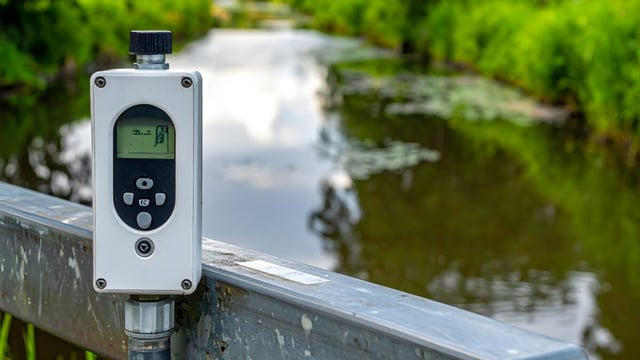
The proposed remedies reflect that. Baldwin County is seeking $3.75 million to elevate a lift station and install SCADA monitoring at all 11 of its stations. Folkston, Pembroke and Wadley each propose permanent generators paired with telemetry that transmits pump status, fuel level, run time and alarms to staff mobile devices.
The smallest capital item on the clean water fundable list, $127,006 for the City of McRae-Helena, is a Streametric cloud SCADA deployment for well and tank monitoring plus a diesel bypass pump. Waynesboro proposes manhole monitoring devices to locate the worst inflow and infiltration, and the Town of Alto has submitted a $150,000 SCADA-only project covering every well and storage tank.
Athens-Clarke County’s $1.8 million request is a controls refresh across eight remote sites that explicitly cites cybersecurity hardening alongside real-time operational access, a rare instance of cyber appearing inside a disaster resilience programme.
Augusta, Valdosta And Savannah Anchor The Upper End Of The Portfolio
Augusta-Richmond County is the largest single applicant. Its projects include $7 million to reconstruct sections of the Augusta Canal embankment and $6 million to repair the canal bulkhead gate, infrastructure the county states supplies roughly 70 percent of the city’s source water, plus two 24-inch transmission mains adding redundancy for hospitals and downtown.
Valdosta has requested funding across three fronts: $16.1 million in large-diameter drinking water interconnections, $18.2 million in detention, conveyance and green infrastructure to cut inflow into its sewer system, and the lift station hardening and SCADA programme.
Savannah’s entry is the most forward-looking and among the cheapest. A $200,000 feasibility study would examine relocating the city’s raw water intake away from Abercorn Creek, where storm surge drove saltwater into the withdrawal point, to a site further up the Savannah River.
The Scoring Rubric Rewards Readiness And Communications Resilience
Projects were scored out of 100 points across five categories: system resilience at 35 points, priority project types at 24, priority planning elements at 10, readiness to proceed at 20 and priority applicant status at 11.
Seven of the resilience points are reserved for projects that maintain internet-based operations and communications through extended outages, and another seven for restoring service faster through valves and SCADA. Eight points go to approaches GEFA considers innovative and eight to multi-jurisdiction collaboration.
Because design-only and planning-only work earns the full 20 readiness points, the two highest-scoring applications statewide are studies rather than construction: a Georgia Southern University hurricane-resilient asset management plan at 89 points and the Savannah intake relocation study at 87.
Affordability is scored separately using median household income, poverty rate, SNAP participation, age dependency ratio and connection count, with utilities under 500 connections receiving 15 points and those above 10,000 penalised five.
Procurement Rules Compress The Vendor Window
Every Helene Resilience Funding project must run a qualifications-based selection for architectural and engineering services regardless of project cost, a stricter standard than GEFA’s normal thresholds. Projects above $3 million require a two-step process including interviews with three to five finalist firms.
GEFA has structured drawdown from EPA’s Automated Standard Application for Payments system across eight quarters, and acknowledges in both plans that some construction schedules will run longer than that window. Engineering firms and controls integrators therefore face a bunched procurement cycle beginning after the November board meeting rather than a steady flow.
Half A Billion Dollars Addresses A Small Fraction Of The Underlying Gap
The award should be read against scale. The American Society of Civil Engineers put Georgia’s statewide drinking water investment need at $19.7 billion in 2023, up from $12.5 billion in 2018, meaning this appropriation covers roughly two and a half percent of drinking water need before any wastewater or stormwater requirement is counted. GEFA has approved close to $6 billion in total financial commitments since 1986.
Hurricane Helene “was a wake-up call: our state’s water infrastructure is not ready to handle extreme weather,” said Raphael Warnock, U.S. Senator for Georgia, in the September 10, 2026 announcement issued with Senator Jon Ossoff.
The pattern echoes other storm-exposed utilities turning disaster funding into digital capability rather than like-for-like replacement, including the Puerto Rico Aqueduct and Sewer Authority’s cellular metering overhaul, where hurricane vulnerability shaped the choice of communications architecture. Whether Georgia’s small systems can operate and maintain the SCADA and telemetry they are about to install is the question the funding does not answer.