 in Barcelona
 3 to 5 Nov 2026
← Back to all events
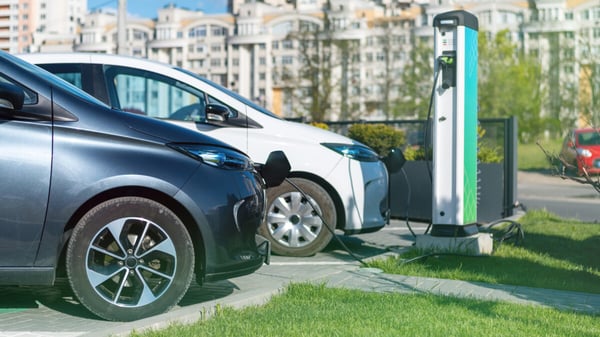 On Charge Opens First Of 11 Privately Funded Charging And Security Hubs In Rome
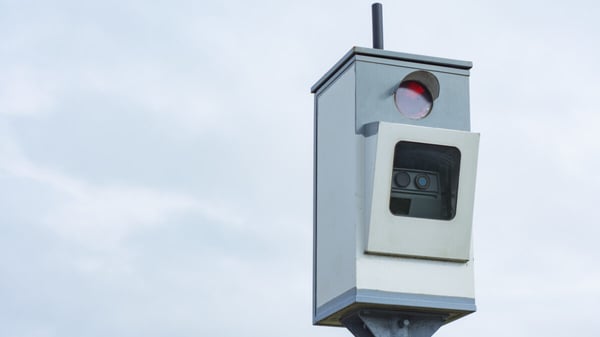 San José Hires Verra Mobility To Run 33-Site Speed Camera Pilot
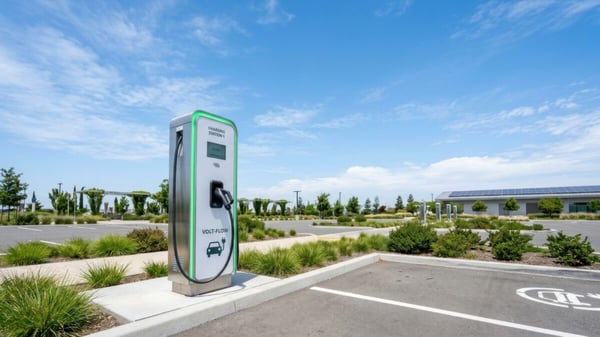 Ohio Commits $31M In Federal NEVI Funds To 40 New EV Fast-Charging Sites
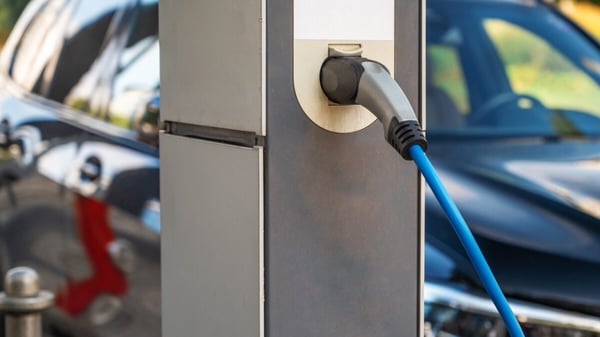 Australian Energy Regulator Lets Essential Energy Own 300 Streetlight EV Chargers In Regional NSW
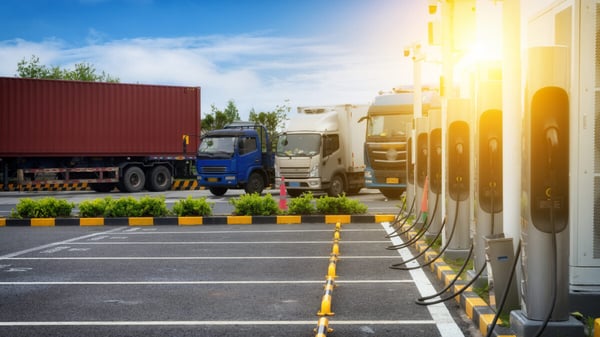 Autobahn GmbH Tenders 3,120 E-Truck Charge Points At 227 Serviced Motorway Rest Areas
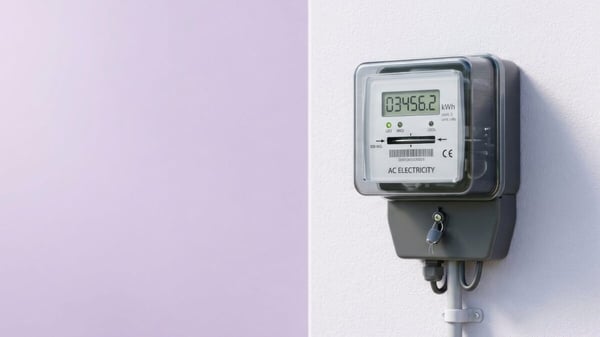 Columbia, Missouri To Start Smart Meter Installs In Spring 2027, Funded By Special Obligation Bonds
Smart City Expo World Congress Barcelona 2023
A Smart City Project: From Conception to Deployment (English and French Captions)
📖 Read Video Transcript
Hello everyone.
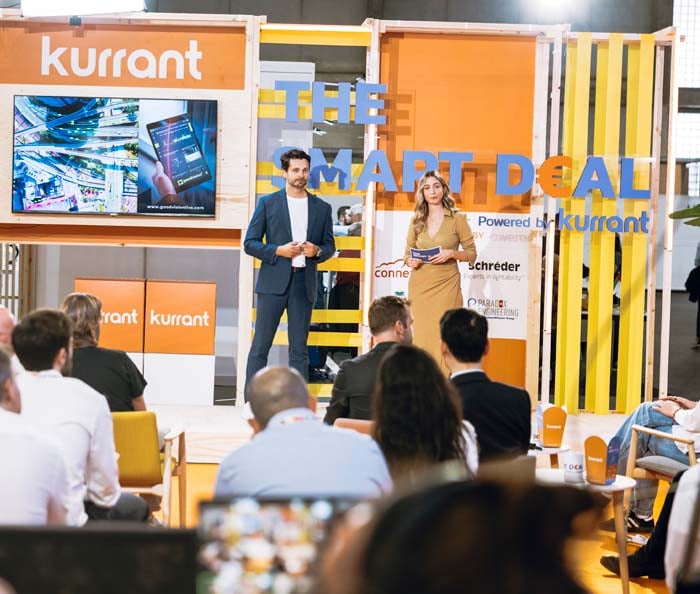
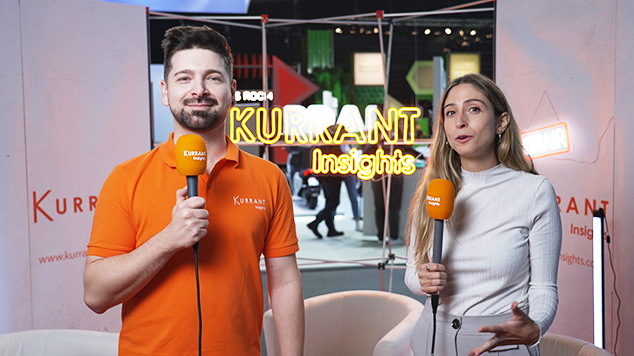
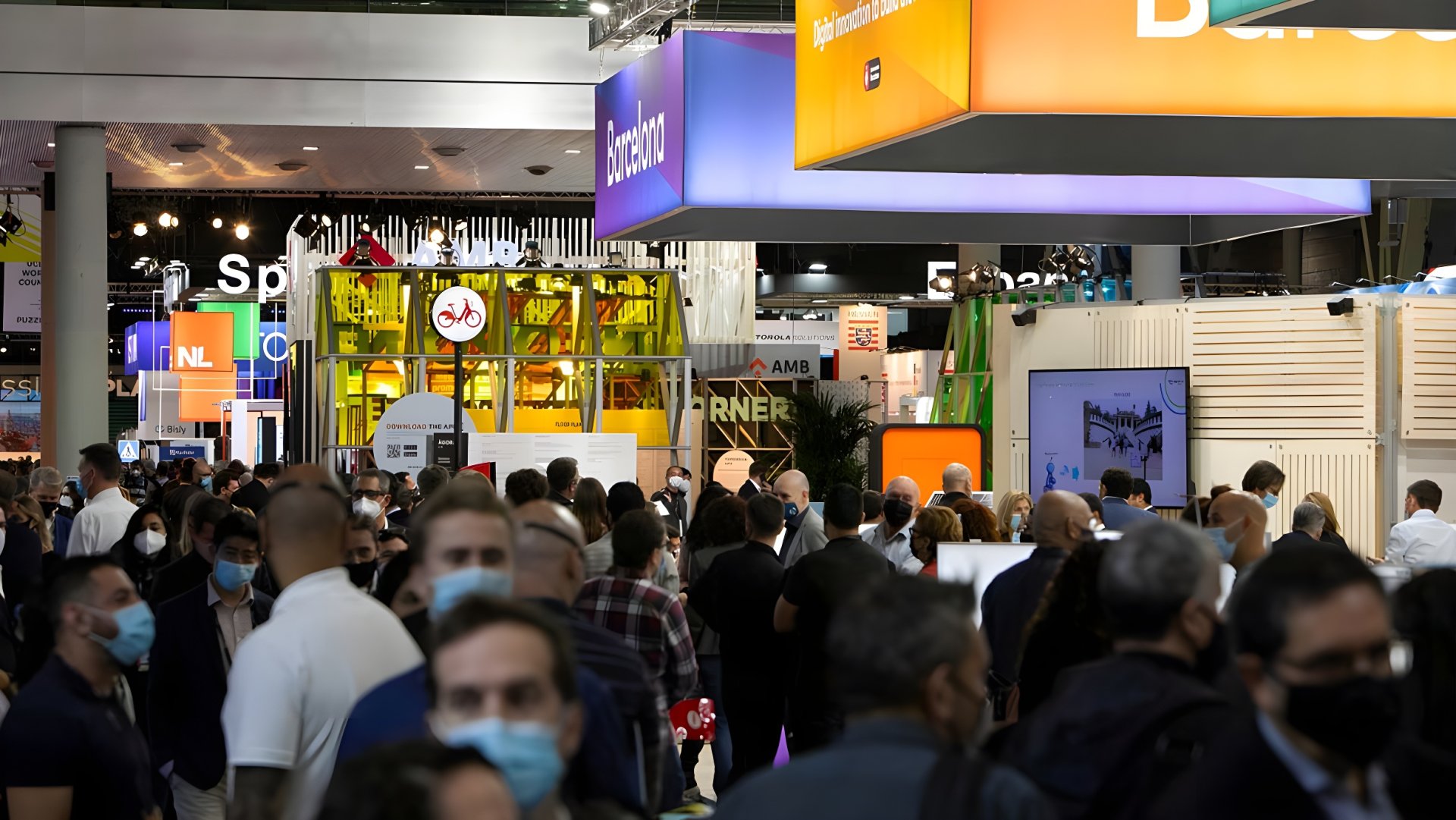
Welcome to Smart Expo Barcelona at the Kurrant booth where we are organizing a new roundtable discussion.
Today's roundtable topic, will be about discussing specific projects and the challenges or ease of conducting these Smart City projects with two of the largest European cities as today, we have two very special guests at this roundtable.
First, Aude Robert who is the Smart City Coordinator for the City of Brussels.
Thank you, Aude, for being with us today.
My pleasure.
And then we also have Michèle-Angélique Nicol, She is the head of public space sharing and air quality at the City of Paris.
Thank you for being with us, Michèle-Angélique.
Glad to be here.
And we will start directly with a first question, maybe one after the other.
Aude, some projects you have led recently, since you have been in charge of the smart city in Brussels.
I might start with a major project that we have carried out over the past few years.
It’s perhaps the one that has the most impact on the citizen which is our digital transformation project.
It's perhaps not the most visible, but it has a lot of impact on the way we serve citizens, we really wanted to put our citizens at the heart of our processes.
We moved to a new administrative center and in parallel, we really carried out a whole digital transformation of our processes.
And so the idea was to implement a 360-degree approach with the citizen at the center.
An omnichannel approach too where the citizen has the same user experience, no matter which channel is chosen.
This led to a whole transformation of the city's IT architecture.
So we really tried to work with sorts of Lego blocks that can be assembled together to create new services and thus it will really create the foundation for the city of the future.
So it's really a very important project.
And a foundational project.
Absolutely.
Alright.
Understood.
We'll talk about other project examples.
Michèle-Angélique, any project examples at the City of Paris?
Yes, I have two recent examples in mind, one that is still ongoing and both of which are projects carried out as part of a European project.
Because it's also important for carrying out this type of project, to be part of a consortium and to have different companies supporting the project and to have external funding because it's also relatively expensive for the City to have this type of project.
So a first project was called Splusload which focused on the use of delivery areas, an application system to control the occupation of delivery areas for goods in one of the districts of Paris, in the 10th district, which was our experimentation site.
And the second project, which is ongoing, another European project called INCIT-EV a more industrial project, with large companies like Colas, VDCOM, Stellantis, Enedis to test dynamic inductive electric charging in an urban environment.
So the concept is to have electromagnetic coils installed in the roadway that allow the vehicle driving to be charged directly with electricity.
And so there are challenges in reducing battery size, needing fewer charging stations in public spaces, and so on.
We can see just with these three project examples that the scope, the perimeter, is really 360.
We have more foundational projects necessary for a city, others that are innovative that we would like to see but that are probably risky.
My second question, these projects that you have led and many others behind, what triggers these projects?
What is it?
Is it the user's need.
The use case, is it meeting a startup that offers you something.
Is it an elected official expressing a particular wish to cover their policy.
Aude, a few words on this, do you have examples?
So, we really try to start from the needs because we realize that when we start from the need, the project has a higher chance of long-term success.
So, the need that will be identified by the business department which will think we have identified a need, let's work on it, let's find a solution to work on it.
Sometimes there are also needs that have been identified upstream or that have been integrated into the majority agreement, thus the political agreement.
So, we have a bit more pressure also to implement them because of these political deadlines.
So yes, it's really the need that guides us.
Afterwards, we also try to have a lot of contacts with startups, potential suppliers to enhance our knowledge of potential solutions.
And to be able, when launching public tenders, to know who to address.
You were explaining to me earlier, indeed, before this roundtable, that you are in an era where, in certain environments, you talk about a need, or even a technology, and then we try to go see the businesses and that's a bit more complicated in this case.
Yes, that's it.
And what we also see is that within the administration we really need to get some of our colleagues to understand that they shouldn't come with a solution and really need to start from the need.
And that, we have a whole awareness to create as well.
We have a PMO strategy unit working on that, which is really in the process of setting up a well-framed process so that project validation is done according to a well-defined sequence.
Michèle-Angélique, in the context of some of these projects you mentioned earlier, or maybe others otherwise, any examples of where it comes from?
What is the trigger?
What are the triggers that bring the most important success factor to the project?
Well, I don't know if I will be able to answer this last question.
What is clear is that in the experimentation, on delivery areas, there, it really comes from a need of the city.
Because we have a lot of delivery areas that are subject to misuse and we have difficulty controlling these misuses.
And the consequence is that as a result, deliveries are made on the main road.
It's congestion, irritation maybe also a factor in accident rates, poor working conditions for the delivery people themselves.
So, we were looking for solutions to better control these delivery areas.
Then, we realized through experimenting that technology, wasn't necessarily the first response actually to meet this need.
In the second example, I would say it's rather there the industrialists who came towards the city of Paris to ask us to be a territory for experimentation, because these are projects that involve heavy investments on their part and being tested in a city like Paris gives visibility to the projects and makes it easier for them within these companies.
To secure the necessary funding and also in the context of European funding give more visibility to these types of projects.
So it depends, you could say.
It's true that the City of Paris is very often solicited to be a territory for experimentation, but we are also attentive to new solutions to meet our needs.
Alright.
If we go back now, It's not easy when you have projects of such varied natures, of course, but if we come back now to the ease or difficulty of carrying out these projects because they are essential, these projects to improve our life, the life of all our citizens in our cities, clearly they are essential.
Now, they are not easy to carry out, these projects.
I think you are fighting every day there.
You have big smiles and everything is fine, but when you return to your offices and with your teams, I imagine that every day, it's not easy at the start of a project, to set it up, to raise the funding.
Michèle-Angélique, you were talking about it a second ago, and the realization, sometimes it takes years it's difficult, you have to convince a lot of people.
What are the most difficult challenges or what are the phases that, for you, the gates, you have to go through and which are the most challenging?
Maybe Aude to start?
So, we often try to set up transversal projects.
And there, we realize that it's sometimes difficult in such a large administration as ours, to break down silos between departments.
So that's really a fundamental task we have to carry out.
But it's also by leading certain exemplary projects, by putting people around the table, around certain pilot projects as well, possibly that our colleagues realize the usefulness of collaborating between departments.
So I think it's evolving in the right direction.
In terms of obstacles, and again there it's changing.
But everything that is data management, can sometimes be an obstacle to carry out certain projects.
So, we set up a data unit within the City of Brussels at the beginning of the year to really work on establishing a new governance and really put things in place to be able to carry out really ambitious projects that are based on data.
But again, our colleagues tell us OK, you want to set up a digital twin but what about the data?
We don't have the data yet, it's not yet structured properly and there, again, we think that if we carry out projects like the digital twin, it will also give a boost to the governance of our data.
So we will try to carry out in parallel different related projects.
But there you go, to manage to advance on different plans because otherwise, we will miss the passing train, all the funding for the digital twin for example.
And I would also say another obvious obstacle, is the financing of European projects.
We try to find funding at the European level because it’s really a good boost for certain projects.
But there again, we are sometimes faced with the obstacle of co-financing.
There are a lot of current European programs that require 50% co-financing and it's not always easy to find.
In any case in Belgium, at the national or regional level, we don't have an instance that has really planned funds for the co-financing of such projects.
So we have to find other solutions.
Okay, not easy.
Michèle-Angélique, in the phases between initiation and realization?
Yes, in fact, what is quite complicated, is the timing which is not the same on the side of the administration and companies and which can pose problems.
I have in mind one of the experiments that was supposed to be carried out over two years and finally there was COVID.
So it was rather three years, three and a half years instead of two and with which we were working with a start-up that unfortunately did not have the strength to last all this time and which went bankrupt at the very beginning of the experiment.
So that's two years of work.
So I would not say useless because it's also informative to know how to organize, etc.
So there is this problem, that is, a too long time with start-ups can be dangerous.
A too short time.
We also had this experience in the Splusload project where we had only one year of European project, which is extremely short For an administration, because we have to conduct votes in the Council of Paris, we need to allocate budgets that were voted on the previous year for the following year, so it's complicated once the budgets are voted on, to allocate budgets for experimentation.
Also, clearly one year was very short.
So we only had a few months of actual experimentation on the field.
And then all the other contingencies.
That is, a project that starts for instance at the end of a mandate, with elected officials supporting the project and continuing into the next mandate.
And the elected officials are a bit less convinced of the project.
It can also be complicated for a project manager to carry the project through to the end.
So that's it, that's all.
These are the vagaries of administration and the political timing that clashes with that of businesses.
And also within companies, where there can be reshuffles in management, changes in direction during the project duration, which make everything very complex.
It's not easy to work in partnership.
Besides, it's a question we hadn't necessarily foreseen, but I think you will be comfortable with also the relationship with external partners.
It's true that it's difficult for start-ups, for companies, well, large companies, might be more used to it.
But SMEs, for example, which have technologies that they could propose even to think about relevant use cases.
It's not always easy for them either to work with the administration.
How do you manage?
If you have examples to share, successful examples or examples, Michèle-Angélique, as you talked about a second ago, a company, unfortunately, that stops before the end of the project.
But I believe you have others as well, projects where the relationship with partners is rather considered a success.
How do you generally perceive it?
Indeed, we realize, for example through our smart city project calls, so we subsidize certain projects carried out by startups or companies of different sizes.
And there, indeed, we realize that companies don't always realize in advance all the regulatory obstacles that can occur during a project with the administration.
So we try to warn them at the start, but there is work to be done, they are motivated by the project, they think everything will be unblocked with a bit of goodwill.
But yes, that's a whole task for us to do to warn them and we try to work with them to clear some obstacles.
It's not always easy.
But with persistence and goodwill, I'm certain it can eventually work because I had as an example the installation of sensors in the city center.
We had a project that was supposed to install sensors on the Grand-Place of Brussels, which is obviously a project that is very attractive and we were really very motivated to do it.
But we quickly realized that as it's a UNESCO perimeter, there were a lot of obstacles for the installation of these sensors and the permit application process would take years.
So there, we had to find a plan B and find another solution.
Other examples like that, Michèle-Angélique?
Yes, I quite agree with the idea that, in fact, companies, even more so small companies and those that are starting are quite unaware of how an administration works, the rules we must follow.
I think that the rules of public procurement, the rules of voting on projects we lead, are not decided at the level of a service.
I say ok, I sign at the bottom of the sheet.
It's a political decision that must be voted on and all this requires time and we are also subject to a regulation that can be the city regulation, which can be easily changed, but also a national regulation, even European.
And there, it's much more complicated to modify and really the projects we lead must be compatible with these different levels of regulation.
And there, we feel that companies come with their ideas without being aware of all these rules actually that need to be followed for the success of the project.
And I'm thinking about our connected delivery areas so these are solutions that might work in other countries, but actually, in France, they don't work well because we cannot impose on a user to use an app.
They must have another solution besides that one to properly declare their arrival, or their departure at a delivery area, so, that means if not everyone uses apps, it doesn't work.
So that's why it presupposes changing the law, changing the law at the national level and all this takes time and it's not just like that, with a technological solution that we can find the solution.
Yes, it's the same.
Earlier, we were talking about regulation and how much of a challenge it is in your projects, the regulation.
You both emphasized the topic.
Maybe one last example or other projects, examples, that you have to share to illustrate this difficulty or facilitate at the same time the ambition that you both have in these projects for smart cities?
Do you have one last example in mind?
Last example, digital twins or even if it's an example, that's not yet really realized.
We're working on it, so we've launched a specification to select the use case on which we're going to work for a digital twin and then, really, we're going to start writing the specifications and define the architecture of our digital twin.
And so, we're going to work with a company that will help us define all this.
So here, I think we have a lot of expertise on the subject of digital twin in Belgium and I find it really great that we can work with companies from our Belgian ecosystem to lead this kind of project.
It's often also a question specific to Belgium, to the Belgians, but do you work most often with Belgian companies or no, international companies?
We try to favor companies from our local fabric.
But well, expertise is not always found there.
So we have every right to go look internationally if necessary.
We will somewhat favor in a first step the really local fabric.
Michèle-Angélique, another project or others ideas to share to conclude this discussion.
No, after, yes, we are always listening to technological innovations and I'm also thinking about the question of data which is also a very important subject for a city like Paris and for cities in general, for the monitoring of our public policies, to have objective elements of quantification and in particular in the field of pedestrian flows which is paradoxically the primary mode of transportation in Paris, but which is the one that we know the least through numerical data.
And so today, it's true that we have quite a few companies coming to us with data from mobile phones that give a lot of indications on this subject, especially for pedestrians.
Developing quite a bit lately to feed our databases on pedestrian flows.
That's a topic we've heard a loT about here at the Smart City Expo Barcelona.
Data, the structuring of data, making it available.
Both of you have projects related to this topic.
Projects that are already structured and structuring.
Yes, we are also working on pedestrian flows.
Thank you, we'll stop there for this discussion.
But I think, in this discussion at least, that both of you have shown and representing big cities, the biggest European cities, that for external companies, there are opportunities to work with you.
You are looking for your projects, you have also shown successful projects, less successful ones, regardless, we do projects with cities and cities are willing to change.
Thank you for this discussion.
Thank you for sharing your concrete experiences, both of you.
And I'll see you for the next discussion, round table which will probably be in English this time, in a few minutes.
More Smart City Expo World Congress Barcelona editions
Latest Kurrantly News
All news
On Charge Opens First Of 11 Privately Funded Charging And Security Hubs In Rome
San José Hires Verra Mobility To Run 33-Site Speed Camera Pilot
Ohio Commits $31M In Federal NEVI Funds To 40 New EV Fast-Charging Sites
Australian Energy Regulator Lets Essential Energy Own 300 Streetlight EV Chargers In Regional NSW
Autobahn GmbH Tenders 3,120 E-Truck Charge Points At 227 Serviced Motorway Rest Areas
Columbia, Missouri To Start Smart Meter Installs In Spring 2027, Funded By Special Obligation Bonds
Latest Kurrant Originals
See all
Kurrant advisory
Planning a smart city or utility project? Talk to Kurrant.
Behind these interviews is Kurrant's advisory team, working with utilities, cities and the companies that serve them.
- Strategy AdvisoryKurrant is actively involved in resolving the challenges that cities, utilities and industry players are facing.
- M&A AdvisorySmart city and utility expertise for successful deals, turning insights into strategic gains.
- Engineering & ProcurementBetter engineering and procurement decisions, by identifying and developing digital and IoT solutions across use cases.
Or write to us: contact@kurrant.com
Send us a message
© Kurrant. All Rights Reserved. · Editorial Standards · Cookie settings
This site is protected by reCAPTCHA and the Google Privacy Policy and Terms of Service apply.