Meet  in Barcelona
 3 to 5 Nov 2026
Pavilion 3 · Booth D151
Our scheduleSchedule
Live from Barcelona · 1 videoLive
Book a meeting
in Barcelona
3 to 5 Nov 2026
Pavilion 3 · Booth D151
Our scheduleSchedule
Live from Barcelona · 1 videoLive
Book a meeting
← Back to all events
Smart City Expo World Congress Barcelona 2023
Are Smart City solutions’ future development driven by software or hardware?
📖 Read Video Transcript
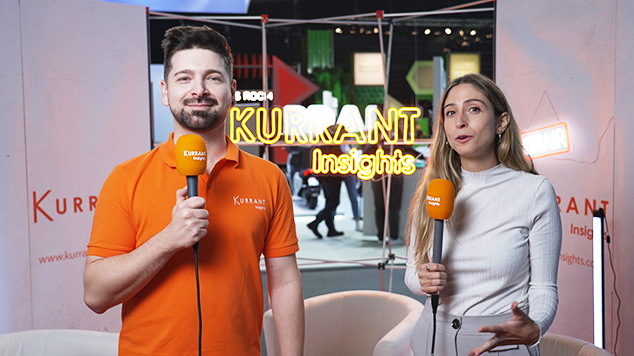
Day one of the Smart City Expo World Congress has come to an end.
A day in which we have noticed that this year’s edition is bigger than last year’s, because we’ve seen more exhibitors and more cities.
And today we wanted to find out since we’ve been seeing that a lot of investment is going toward platform-centric or software-centric solutions, we wanted to find out, is the smart city industry moving toward software solutions or is it still all about the hardware?
I think it's the platform they're focusing on while we are basically focusing on the use case itself.
So of course we bring a platform within our use cases, but the cities are free to select their sensors.
If a city needs a sensor, then we provide them with sensors which have been tested in other areas and by doing so we can ensure the use case solves the issue of the city.
First of all define some use cases, we provide consultancy, we provide, of course, the sensors if needed.
We can also bring data from our collection or data pool.
And then on top of that, we provide a platform.
Visualization for different stakeholders, for example for the citizens, for experts in the city.
Depending on the use case we can customize also specific analytics dashboards and applications, so we can cover the different needs of the city.
The software is limitless.
It can reach any bounds.
AI is predominantly today, the key to success.
But the hardwarehas to keep up.
So at the end of the day, for the time being, they’re hand in hand.
However, as AI solutions begin to take hold and you start eliminating certain hardware components I can't name right now, but certain hardware component that you can eliminate from use, then obviously it'll become more and more predominantly software, oriented technology.
What we want to be able to do, at least us internally at Ekin, we're developing AI solutions that are standalone, that don't require as many third party components so that we are not hindered in our growth, that we can continue to grow exponentially, two, three years at a time, so we can always have something else for the future.
Well, it is becoming more software centric, but the issue is that hardware is needed to be useful to actually measure the performances, the benchmark and to get the indexes.
For example, in our case without the hardware, the smart city application cannot work.
So I think that what is necessarily useful and has to be done is to have a blend, a good combination And, where the hardware is not needed just shift, obviously, to the software.
So it depends.
Obviously the less hardware you have the better it is for increasing appliaction, to promote it as well.
So we’re from the Smart City Infrastructure Fund and we invest in hardware.
So I would definitely say hardware is very important, but software is really driving the decisions of leaders.
So while the hardware gets the data, software analyzes it and provides a good foundation to make these decisions.
So, I think you can’t go one without the other.
From talking to different vendors, it seems like hardware is still necessary to collect certain data, but it’s seen more as a cost.
While software is where the value is and is what will drive the future smart city solution development.
More Smart City Expo World Congress Barcelona editions




Recent event coverage
See all



Latest Kurrant Originals
See all

Latest news
All news- eThekwini Municipality Plans Citywide Smart Water Meter Rollout Against 58% Non-Revenue Water2 Nov 2026
- The Australian Renewable Energy Agency Funds A$4.1M JET Charge V2G Trial2 Nov 2026
- TALQ Consortium Releases Edition 5 Tender Template For Interoperable Smart Street Lighting31 Oct 2026
- City Of Zadar Selects ELIPSA For €197,900 Design Of Intelligent Transport System Phase Two31 Oct 2026
Kurrant advisory
Planning a smart city or utility project? Talk to Kurrant.
Behind these interviews is Kurrant's advisory team, working with utilities, cities and the companies that serve them.
- Strategy AdvisoryKurrant is actively involved in resolving the challenges that cities, utilities and industry players are facing.
- M&A AdvisorySmart city and utility expertise for successful deals, turning insights into strategic gains.
- Engineering & ProcurementBetter engineering and procurement decisions, by identifying and developing digital and IoT solutions across use cases.
Or write to us: contact@kurrant.com
Send us a message
© Kurrant. All Rights Reserved. · Editorial Standards · Cookie settings
This site is protected by reCAPTCHA and the Google Privacy Policy and Terms of Service apply.