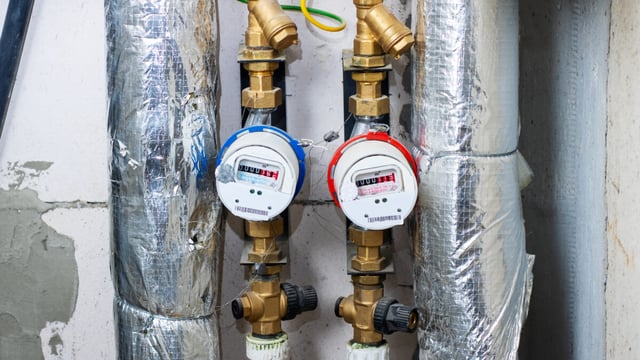
The European Public Prosecutor’s Office and Greek judicial authorities are examining the award of smart water meter contracts in at least 50 municipalities, in a procurement programme that To Vima reported on 8 October 2026 was backed by at least €500,000,000 in EU-linked funding. Investigators are said to be looking at alleged losses to public finances of more than €200,000,000, with individual meters reportedly priced at €200 to €300 in the projects under scrutiny against about €80 in Athens, Thessaloniki and Cyprus. The figures come from press reporting on investigative files and have not been tested in court, and the report names no supplier.
A Funding Call Published In December 2023 Produced 55 Projects
The money flowed through Greece’s EU-funded National Strategic Reference Framework programmes, after a call published in December 2023 by the special management authority responsible for the Environment and Climate Change and Civil Protection programmes. According to To Vima, 55 projects in 55 municipalities were approved, which averages about €9,000,000 per project and therefore places each award at a scale that few municipal water utilities would otherwise commit to metering alone.
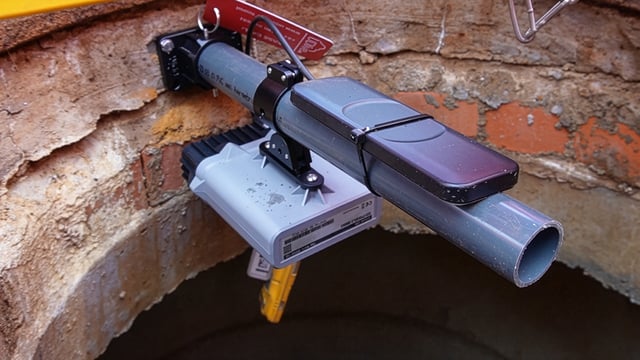
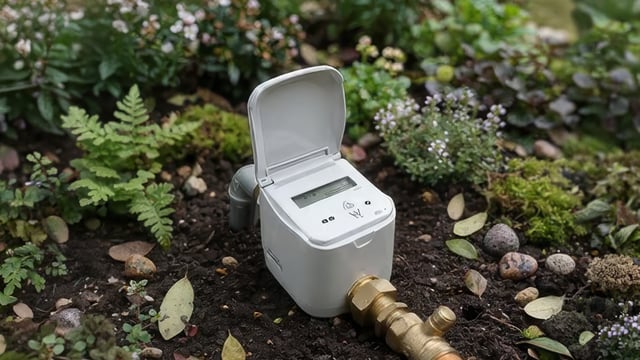
The programme covered smart meters and remote water-management systems, the category of equipment that transmits consumption readings wirelessly to the utility and is usually sold with a network, a software platform and installation services.
Track tenders like this
New smart water tenders across Europe, flagged daily with an AI summary.
The EPPO’s mandate covers financial crimes affecting the EU budget committed since its establishment in 2019, and its Greek office has been handling a large volume of complaints about the use of EU money that To Vima separately reported in July 2025 extend beyond agricultural subsidies to funds from the Recovery and Resilience Facility and the regional development programmes known as ESPA, with many cases still at an early stage.
Five Separate Bodies Are Now Working On The Same Tenders
The EPPO is examining mayors, municipal department heads and other officials after what To Vima describes as a months-long probe, while the Athens Court of Appeals prosecutor has received the file from Kilkis to establish whether individuals bear criminal responsibility. The National Transparency Authority has produced a report of roughly 140 pages on links between bidding companies, and a government auditor wrote a separate 28-page report alleging that officials who objected were ignored and then removed from their posts.
The Hellenic Competition Commission is the oldest strand. It carried out unannounced inspections at a large number of unnamed companies on 26 June 2024 as part of an ex officio investigation into possible bid rigging of public tenders for smart water meter systems, under Article 1 of Law 3959/2011 and Article 101 of the Treaty on the Functioning of the European Union, and it stated at the time that the inspections do not establish that any company acted anticompetitively.
Kilkis Supplied The First Complaint And A Per-Meter Price
The Kilkis case began with an anonymous complaint and one from a municipal councillor, and concerns a contract of about €2,500,000 for 10,350 digital water meters, which works out to roughly €241 per meter on the reported figures. That sits inside the €200 to €300 range the report attributes to the contested projects, although the contract value may include installation, software and communications, so the per-meter comparison with the €80 benchmark is indicative rather than like for like.
A separate investigation in a municipality in the Larissa region reportedly found what the report calls suspicious evidence, although the article gives no contract value, bidder or date for that case, so its relation to the Kilkis file is not established.
Bidder Behaviour Is The Core Allegation
The Transparency Authority’s report, as described by To Vima, points to bidders forming groups of three or more companies in which the same company repeatedly won, with some firms linked through a shared corporate group, a shared postal address or common board members. The red flags listed are consecutive protocol numbers, same-day bid submissions and similar prices across competing offers, patterns that procurement analysts treat as indicators of coordination rather than proof of it.
To Vima also reports meetings between municipal service representatives, particularly in northern Greece, and company officials, and says that political figures have been mentioned but that their alleged involvement does not appear in official documents or testimony. The alleged overpricing is put at 200% to 300% above benchmark.
The sequence matters for the timeline: the Competition Commission’s inspections took place about six months after the December 2023 funding call, which means the first enforcement action preceded most of the later reporting by more than two years, and the Kilkis contract, the 140-page transparency report and the auditor’s findings have all surfaced since. The report does not say whether the 2024 inspections and the EPPO inquiry examine the same bidders, and it cites no findings from the Commission.