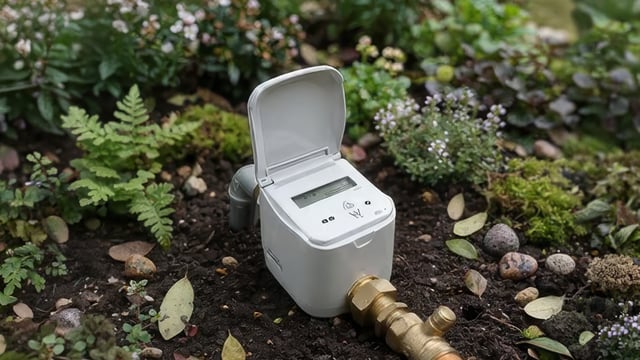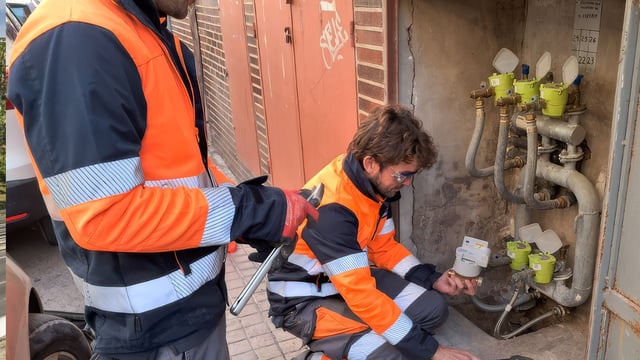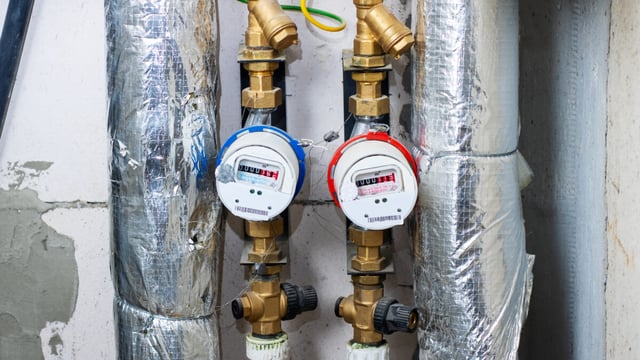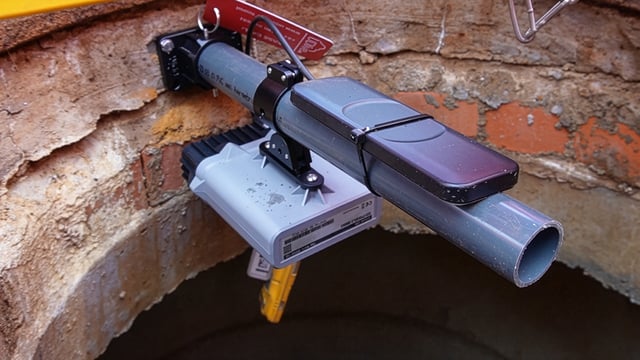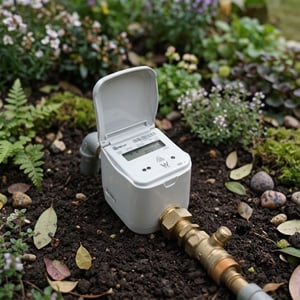
Amper, S.A., the Spanish defence and energy technology group headquartered in Pozuelo de Alarcón in the Community of Madrid, announced on Thursday 17 September 2026 that its subsidiary AIoTWaves has closed an order worth approximately €4.8 million with the meter distributor Geconta. The order covers 150,000 water metering devices: 99,000 clip-on units that add remote reading to meters already in service, and 51,000 complete meters. Amper says the equipment is destined for several projects and clients, none of which either company has named.
The order averages €32.00 per device across that mixed basket, although the split in value between retrofit readers and full meters was not disclosed, which prevents any direct comparison of unit prices for either product.
A Repeat Buyer Returning At Three Times The Volume
Geconta is not a new customer, since Amper’s November 2023 announcement recorded an order from the same distributor for 50,000 NB-IoT clip-on devices valued at €1.3 million, or €26.00 per unit.
Track tenders like this
New smart water tenders across Europe, flagged daily with an AI summary.
The new contract triples the device count and adds complete meters to what had been a retrofit-only relationship, and the value has risen by a factor of roughly 3.7, a gap consistent with the higher cost of a full meter relative to a clip-on reader.
That 2023 release also said more than 150,000 Amper clip-on units had been installed for Aqualia, the water arm of FCC, in cities including Vigo, Santander, Toledo and Cáceres. A further 2,000 units of the Bridge model were running at Aguas de Valencia, and the group now puts its cumulative installed base above 550,000 devices, a vendor-supplied figure that has not been independently audited.
Why A Diehl Distributor Is Buying Retrofit Readers
Geconta Medidores de Fluidos, S.L. is a wholesale meter distributor based in the Los Álamos industrial estate in Dos Hermanas, in the province of Seville, and it began trading in 2003 with the catalogue of the German manufacturer Wehrle and added Diehl Metering products in 2007.
Its remote reading offer is built largely on Diehl’s IZAR radio system, which covers walk-by and drive-by collection as well as fixed networks, and the company belongs to the Spanish meter manufacturers’ association ANFAGUA and to the water utilities association AEAS.
That catalogue explains the shape of the order, because the AIoTWaves WM1091-NB clip-on datasheet describes a reader designed to fit the Diehl Metering range, so a distributor with a large installed Diehl base can move customers onto cellular remote reading without digging out and replacing the meters themselves.
Neither company has said which model makes up the 51,000 complete units, although AIoTWaves markets an integrated NB-IoT meter, the WM4000-NB, rated IP68 and capable of firmware updates delivered over the air.
Connectivity Choices Left Unstated
Amper describes its water and gas metering portfolio as running on NB-IoT and LoRaWAN. The AIoTWaves smart water pages list Wireless M-Bus as a further option, alongside an installer app and a cloud platform that relays data to the utility’s own systems.
NB-IoT uses licensed mobile operator spectrum, which spares a utility from building its own gateway network, but ties each device to a recurring connectivity contract and to indoor coverage in basements and meter chambers, whereas LoRaWAN shifts that cost into gateways the operator has to deploy and maintain.
The announcement does not say which technology the 150,000 devices will use, nor does it give battery life or reading frequency, the two variables that most directly determine the lifetime cost of a deployment for the water operator that ultimately pays for it.
A Small Contract For A Group Pivoting Towards Defence
For Amper the order is financially modest, since the group reported first-half 2026 revenue of €126.0 million, down 24.8% after the sale of its industrial services business, alongside EBITDA of €24.8 million, up 52.8%, and an order book of €676.2 million.
On those figures the Geconta contract equals about 3.8% of first-half revenue and about 0.7% of the order book. Against the group’s 2026 budget of €335 million in sales, reported by Investing.com, it represents roughly 1.4% of expected annual revenue.
Defence and national security accounted for €58 million, or 46% of first-half sales, according to Lighthouse analysis reported by Merca2, and Amper files its civil IoT products under the communications line of that defence division rather than under energy and sustainability.
Spain’s Metering Gap Meets The End Of Recovery Funding
The domestic market remains largely undigitised, since ANFAGUA president Patrick Schoch told iAgua in December 2025 that only between 4% and 18% of Spain’s installed water meter fleet has remote reading capability.
Much of the recent deployment has been financed through the PERTE for the digitalisation of the water cycle, approved by the Council of Ministers on 22 March 2022, which planned investment above €3,000 million, of which €1,940 million is public money and €1,120 million comes through public-private formulas. The execution window for funded projects closed on 30 June 2026.
Completed projects give a sense of scale, with Aguas de Burgos reporting 18,000 smart meters installed between October 2024 and the first half of 2026, which makes the Geconta order equivalent to more than eight deployments of that size.
Manufacturers argue that the programme has permanently reset procurement. “We believe that, after the PERTE, Spain will not again install meters that are not digital, with remote reading capability,” said Alfonso Corbalán, chief executive of Hidroconta, in an April 2026 interview with iAgua, translated from the Spanish.
The Geconta order was announced eleven weeks after that funding window closed, which leaves one question open: who is paying for the 150,000 devices. If the undisclosed projects run on utility tariffs and concession budgets rather than residual grants, the order is evidence that demand has outlived the subsidy. If they do not, it may prove to be the tail of it.