 in Barcelona
 3 to 5 Nov 2026
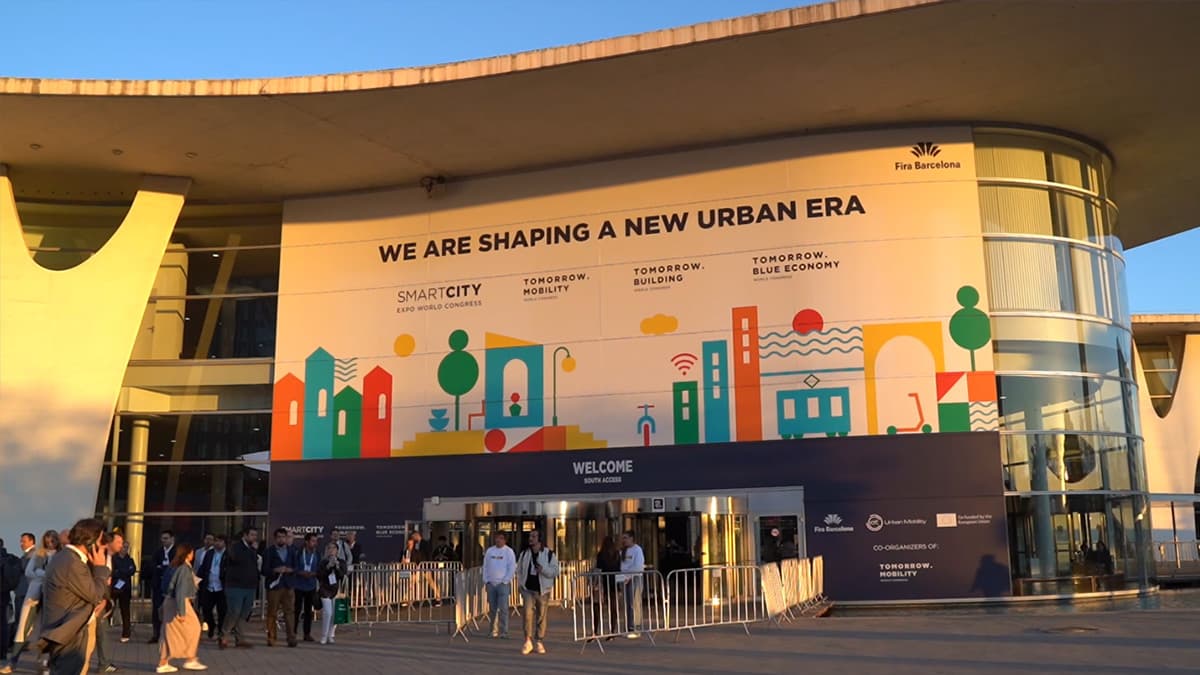
Smart City Expo World Congress Barcelona 2026
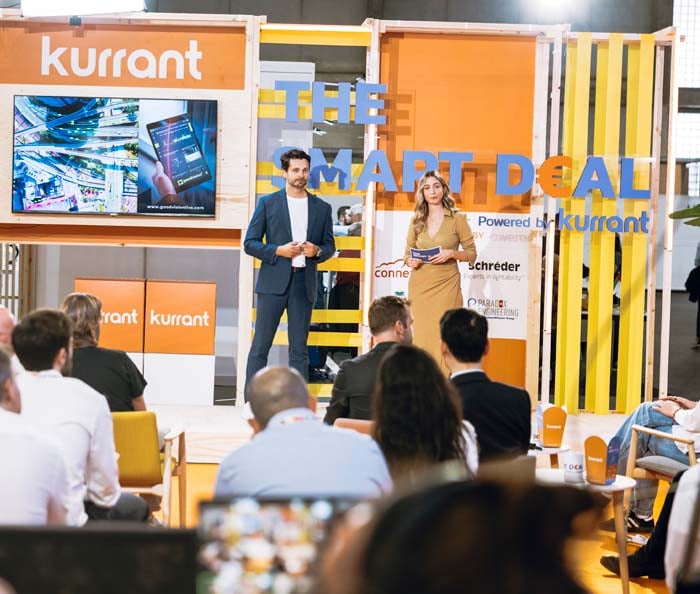
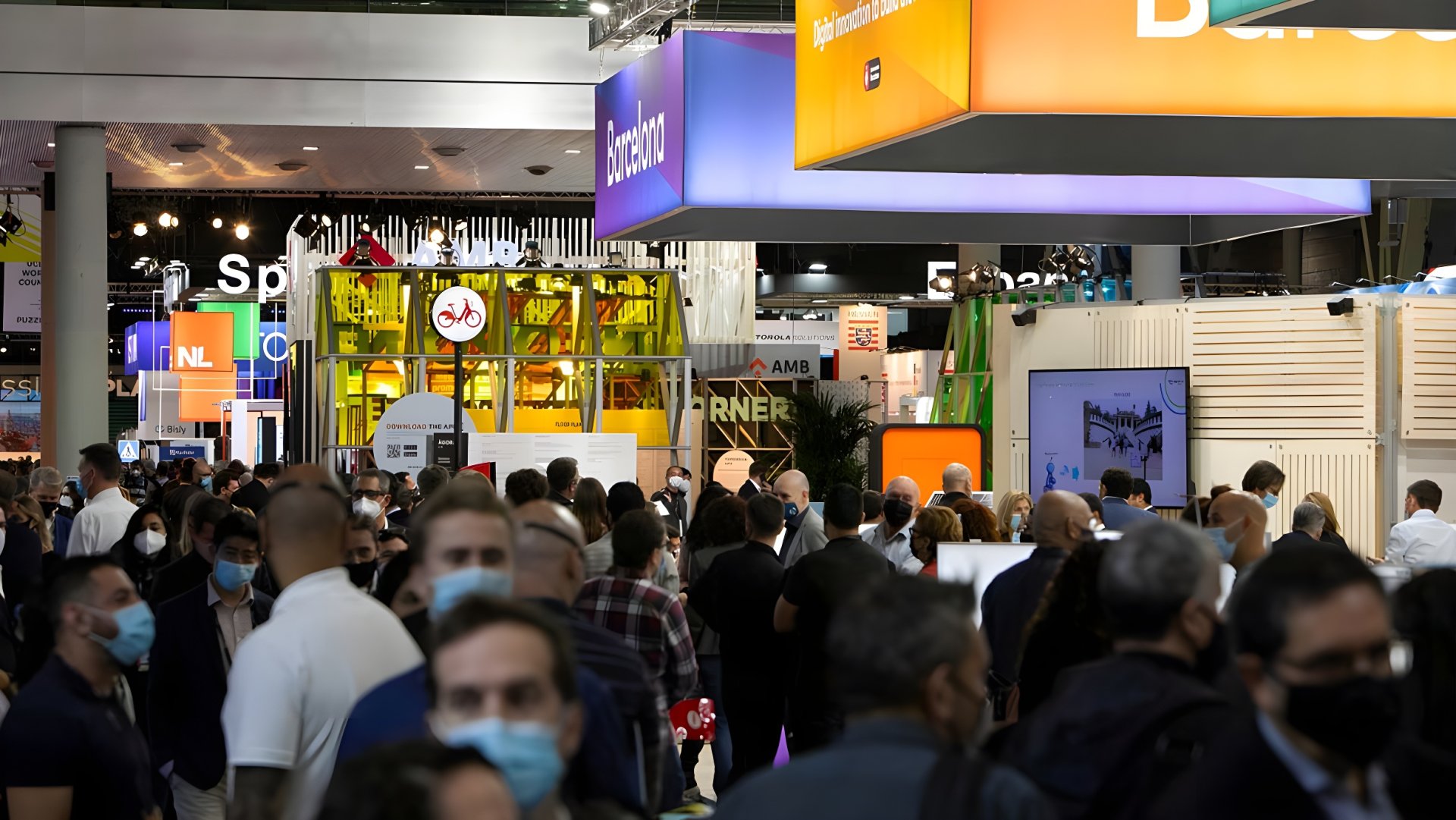
Smart City Expo World Congress 2026, Barcelona, 3 to 5 November. Kurrant films the expo floor, interviews with city and utility leaders and the companies that work with them, and The Smart Deal live pitches at Booth D151 in Pavilion 3. Videos are added here as we film them.
Aleksander Rajch, PSNM: the CEE Smart Cities Mobility Sprint 2026
Aleksander Rajch, Vice President of PSNM and of E-Mobility Europe, presents the CEE Smart Cities Mobility Sprint 2026, a study of 18 cities in Central and Eastern Europe by PwC Central Eastern Europe, PSNM and EIT Urban Mobility. Two years after the first edition, he finds that most cities have made real progress, but that their mobility plans often have no budget behind them. He explains where the money could come from, what is already working on the ground, and what would show a real change by 2030.
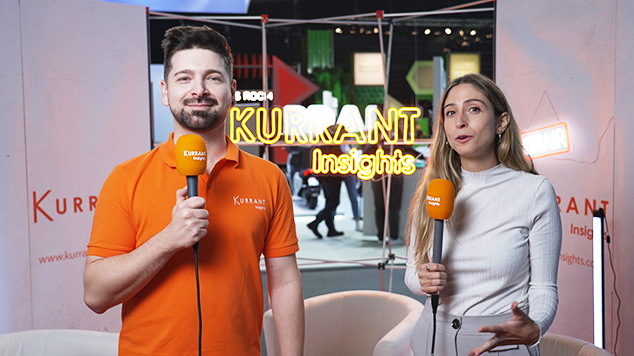
Interviewed by Emma Lozano Doogan on the Kurrant booth at Smart City Expo World Congress 2026, Barcelona.
📖 Read Video Transcript
He is the Vice President of
PSNM and Vice President of
E-Mobility Europe, and we're
going to be talking about the
newly published CEE Smart
Cities Mobility Sprint 2026.
Welcome back.
For the— some of you
may not know this,
but it's our 3rd interview together.
So, my first question is,
obviously you've recently published
this study examining 18 cities
across Central and Eastern Europe.
What surprised you most
about the findings,
and how would you describe
the region's progress towards
healthier and more
accessible urban mobility?
If you could also
explain the study a bit.
First of all, it's, it's a study that
was developed by 3 organizations:
PwC Central Eastern Europe, PSNM,
and our partner EIT Urban Mobility.
So the 3 of us assembled together
and joined forces to get the best
information we could from the whole
region of Central Eastern Europe,
which by the way is defined within
the study as more than just the EU.
So it extends all the way to
Georgia and the Near Caucasus.
So we wanted to come
back after 2 years
and see, okay, is there any progress?
Are there new challenges?
Perhaps now the CEE is, you know,
ahead of some of the old EU markets.
So that was really the goal here.
So what surprised us
most is, first of all,
many of the challenges did change.
So where some cities, for
example, had problems with
developing railway solutions like
trams for urban mobility topics,
they managed to overcome
with electric bus
fleets or some other solution
that would be applicable.
Some of them that had
problems with low emission
zones now had a different
angle of the problem.
So for example, it was no
longer the inhabitants that
had any problem with the
actual LEZ being deployed,
but it was, for example,
the city leadership that
changed meanwhile and now
was suddenly against it.
So things flipped,
but now the majority
of the cities really progressed a lot.
And especially in that
EU strip, so to say,
so from the Baltic States
to the Balkan States.
So this was really— it was
surprising because we saw there
were so many challenges, so many
different complex issues to overcome,
and within 2 years so many
of them were resolved.
And in this study, one of the most,
I would say, striking findings was
that 15 of the 18 cities have a
sustainable mobility plan or roadmap.
but they don't have a
budget dedicated for it.
Why is there such a large gap
between planning and implementation,
and what needs to change
to close that gap?
Well, I think, you know, all these
countries and member states and
cities have these plans, so we
know the situation hasn't changed.
We still have over
460 low emission zones
in, let's say, the Western EU states.
We have, I think, around 4 to
5 in Central Eastern Europe.
So the disproportion between
budget and deployment or
implementation comes from the
fact, for example, you have 13 low
emission zones planned in
Romania, but they don't have a
monitoring station to establish
where they should be deployed.
And that is often the problem.
And, you know, some— and
the problems vary as well.
So it's very difficult to take
the region and have dialogue with
the commission or with other
institutions and say, okay,
this is the problem we're going
to focus on for the next 5 years,
because in Poland it's low
emission zones and cycling lanes.
In Slovakia, it's fleet
electrification because they have
around 200 kilometers of
cycling lanes in Bratislava,
which is a smaller city but
with so many cycling lanes.
So some of these cities
excel in one thing,
but they are delayed in another.
Yeah.
So that's difficult.
Where can the money come from?
The solution is very easy and
it's a very controversial issue.
So it's the ETS2.
The ETS2, which will provide
the Social Climate Fund.
An example of Poland, my home country,
you're going to get €11 billion
from the Social Climate Fund for
mobility exclusion, which is often
pertaining to exactly the problems
that this Sprint is talking about.
The only thing you have to do,
approve the ETS2 and deploy it.
Very difficult thing to do,
and Poland is against it.
Italy too, incidentally.
If the goal is to
make cities healthier, right,
do we need to keep thinking of success
in terms of congestion and traffic,
like reducing it, or do we
need to think more about
how we measure success when it
comes to transport and mobility?
I think the measurement or the measure
of success in mobility is the comfort.
Okay.
So if you find it convenient
in getting from point A to B,
if it's very affordable,
if it's a technology
that you like and you enjoy,
then we achieved success.
That's important because, yes,
the overall goal of changing
mobility in general is to
reduce the number of vehicles,
to make them shared, and
to make them autonomous.
So in the end, it is
reducing the number
of vehicles, not only
them being electric.
The second step is having access to
any mode of transport you would like.
That's also a part of comfort.
If you feel like going
by bicycle, it should
be possible to do that
easily and everywhere.
So that's the measure of success.
And all this, that's what
we're talking about here,
because the whole change of
making cities for citizens and not
for cars as they were
made after World War II,
which was natural, you know, car
mobility was the new big thing.
So all cities were
reconstructed in a way
that would accommodate
a lot of vehicles.
We're reversing that process now.
And you see that happening in the
Netherlands and the UK and France.
You're actually seeing it happen as we
speak in Central
Eastern Europe as well.
So that's the goal.
You want to make the
city for the citizens.
So where are cities in Central and
Eastern Europe making genuinely
useful progress with these
tools, and where is technology
being deployed without enough
evidence that it improves mobility?
Well, I think, yeah,
the first step would
probably be fleet
electrification for buses.
So that's step one, and
this is happening immensely.
So CEE cities are becoming
very good with electric buses.
The second thing is
other technologies.
So we see now that
hydrogen technologies
for buses, probably not a good idea.
So all in all, it's an expensive
and difficult technology.
Cities are not overly
wealthy as market players.
Cities are, especially
in CE, building a lot,
a lot, a lot of cycling lanes.
So even a city we took here
to Barcelona because we're at
the Tomorrow World Mobility
Smart City Expo, we took a city,
Białobłocka from Poland,
a name you will not be
able to probably pronounce,
a city of 50,000 inhabitants.
4 years ago, it had 5
kilometers of a bicycle lane.
It has 50 kilometers today.
That's 10 times more.
It's a small city.
That's already incredible.
Yeah.
And you see that across
other CEE states,
and it's progressing really nicely.
So this is another element
that we really like.
The third thing is the deployment of
AI technologies and smart software
technologies in integrating public
transport cards and systems.
Ticketing systems, timetable
systems, and then also the safety
of the kids and of the bicycle
lanes and of the crossings.
That's all deploying incredibly well.
Central Eastern Europe
is much more digital
than Western Europe, I
can assure you of that.
And you were talking about the cost of
electrification and that
cities don't have money.
So as European air quality
requirements become stricter,
because they do, how
can Polish cities reduce
transport emissions without
making mobility more
expensive and therefore less
accessible for residents?
So yes, we're really
ramping up the targets.
We're reducing the WTO targets
from 40 to 20 micrograms of NO2,
for example, which is huge, huge
as a target, very ambitious.
In terms of the actual
citizens and their access
to some of these
solutions, I think scale.
Scale is the key word here.
So the more cities and the more even
rural municipalities, so smaller,
very small dwellings, invest in
these kinds of technologies with
the availability of external funding,
the more it will become affordable
for the citizen that actually
uses some of these technologies.
And as I said, key thing here,
and this is really important
as a message and it
needs to be regarded so,
is the approval of ETS2 and
deployment of the Social Climate Fund.
Okay, and then, so what
are the biggest practical
obstacles they face today,
these Polish local governments?
Charging infrastructure,
public transport investment,
funding, regulation,
or public acceptance?
All of the above?
All of the above.
In general, it's always, you
know, the public acceptance
and approval that these
things need to be done.
Not always so easy.
People don't like change,
especially in their front yard.
So this is a difficult topic.
Yeah.
Second, and I think this is
always the most difficult.
In Poland, our second
biggest city of close to 1
million inhabitants,
you got a mayor who was
recalled because he introduced
a low emission zone.
So this is very serious, in
effect, politically also.
So that's the thing
they need to overcome.
The second thing is the
availability of funds.
I wouldn't say charging
infrastructure is the problem here.
I would say selecting the right
technology is always a problem
because they're being bombarded
with different information, offers,
proposals, and, you know, visions
of how things should be done.
And they need to select the
best one for their city,
usually in a very tight timeframe.
And let's go back to the funding.
So the CEE study highlighted
the importance of financing,
and around 70% of the
cities surveyed rely on EU
funding as a strategic
source for mobility projects.
Is this creating a system
where cities can fund projects,
but then they can't keep up
with them with the cost of it?
That's the example of hydrogen,
because if you look at the
example from one of the Polish
cities in the north that
couldn't introduce any other
rail solutions, you had a cost,
and I will quickly do the
currency exchange in my head.
About €0.10 for a kilometer
was a TCO for an electric bus.
About €0.25 was for a
diesel, and about €1
was 1 kilometer with
a hydrogen powertrain.
Meanwhile, they actually
enrolled and got
approved for a grant
for hydrogen buses.
They got the financing.
Yeah.
And, you know, at the
first— at first glance,
let's say it went really well.
But then when that €1
per kilometer got shifted
fully to the city budget,
then it became a problem.
So I would say in terms of financing,
this is the key consideration,
is how to make the technology
you deploy sustainable.
and looking towards 2030,
which I know is quite close.
What would convince you
that Polish and other
Central and Eastern European
countries or cities
have genuinely transformed
their mobility systems
What would convince me?
Did I hear that right?
Yeah, yeah.
But, you know, what would convince me?
I think what would convince
me is if you really had a
15-minute city in at least
every city of more than 300
inhabitants in the Central
Eastern European region.
Because I think— and
this is something that,
you know, Paris has done
and many other cities have
tried to do— this 15-minute
city idea is, I think,
one of those symbols of
convenience and comfort.
Okay, well, thank you so
much for this conversation.
About Smart City Expo World Congress Barcelona 2026
Smart City Expo World Congress 2026, Barcelona, 3 to 5 November. Kurrant films the expo floor, interviews with city and utility leaders and the companies that work with them, and The Smart Deal live pitches at Booth D151 in Pavilion 3. Videos are added here as we film them.
More Smart City Expo World Congress Barcelona editions

Latest Kurrantly News
All news Intellihub Acquires Taggle Systems For A$50M To Add Water Metering Network And Aqualus Software
 Quincy Replaces 50 Flock Safety License Plate Cameras With Axis Hardware Running OdinEye
 Modaxo Acquires Brazilian Traffic And Tolling Supplier Fiscaltech
 Aléria Closes €793,236.52 Street Lighting Renovation Backed By State, Corsican Agency And EDF
 Hameln-Pyrmont Tenders Open Source Urban Data Platform
 Landkreis Hof Opens TauSENSE App To Public Using Data From 130 Road Dew-Point Sensors
Latest Kurrant Originals
See all

Kurrant advisory
Planning a smart city or utility project? Talk to Kurrant.
Behind these interviews is Kurrant's advisory team, working with utilities, cities and the companies that serve them.
- Strategy AdvisoryKurrant is actively involved in resolving the challenges that cities, utilities and industry players are facing.
- M&A AdvisorySmart city and utility expertise for successful deals, turning insights into strategic gains.
- Engineering & ProcurementBetter engineering and procurement decisions, by identifying and developing digital and IoT solutions across use cases.
Or write to us: contact@kurrant.com
Send us a message
© Kurrant. All Rights Reserved. · Editorial Standards · Cookie settings
This site is protected by reCAPTCHA and the Google Privacy Policy and Terms of Service apply.