 in Barcelona
 3 to 5 Nov 2026
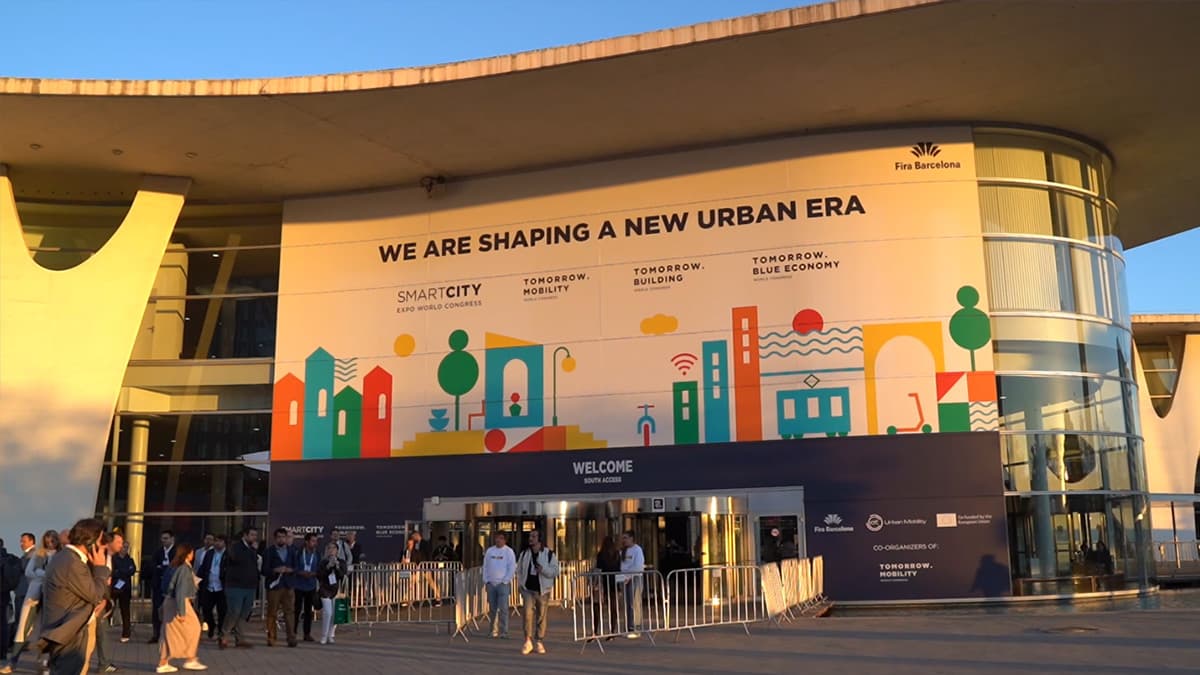
Smart City Expo World Congress Barcelona 2026
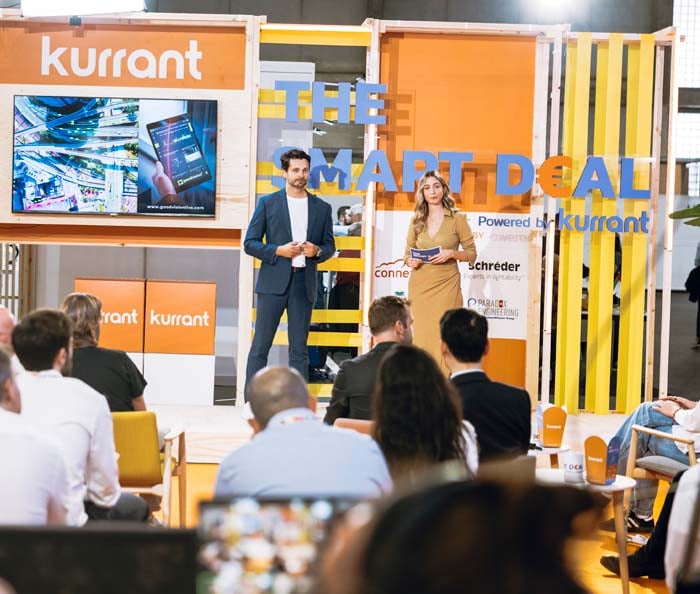
Smart City Expo World Congress 2026, Barcelona, 3 to 5 November. Kurrant films the expo floor, interviews with city and utility leaders and the companies that work with them, and The Smart Deal live pitches at Booth D151 in Pavilion 3. Videos are added here as we film them.
Cristian Canton, Barcelona Supercomputing Center: AI and supercomputing for cities and utilities
Cristian Canton, Associate Director at the Barcelona Supercomputing Center, explains how AI and supercomputing let cities and utilities connect the large, scattered data they produce and turn it into information for decisions. He gives two examples: the AI that will control most of Barcelona’s water system, and a digital twin of Mexico that runs on MareNostrum 5 within seconds of an earthquake. He also talks about where digital twins still fall short in modelling how people behave, what he calls pragmatic sovereignty for European cities, keeping the energy use of AI in check, access for smaller cities, and why people should stay in charge of critical city services in 2035.
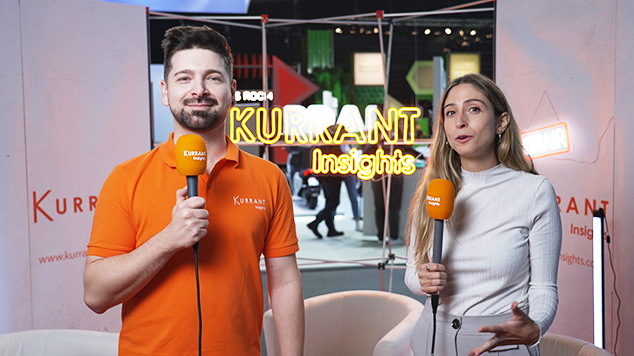
Interviewed by Emma Lozano Doogan on the Kurrant booth at Smart City Expo World Congress 2026, Barcelona.
📖 Read Video Transcript
AI can transform cities and utilities.
2
That's what we'll be discussing
here today with Cristian Canton.
3
He is the associate director of the
Barcelona Supercomputing Center.
4
Welcome.
5
Welcome, thank you.
6
Thank you.
7
So looking at what's happening
today, where do you see AI making
8
the biggest difference in how
cities and utilities operate today?
9
A few years ago AI was
still in its infancy.
10
Nowadays we see that like
there's been a huge boom on AI
11
and that implies the processing
of massive amount of data.
12
The ability to be
connecting a lot of dots,
13
sparse dots on like the
multiple inputs that we get from
14
cities that in the past
was almost impossible.
15
So now we can connect those dots,
creating sites that are able to
16
provide information for decision
makers, so to be making the
17
right decisions or informed
decisions with respect to the cities.
18
That ability was missing some
years ago, and that's thanks to
19
the marvelous kind of explosion
of the AI that has happened
20
in the recent, not 20 years,
but I would say in the last two,
21
three years, we've seen a
massive change that has allowed
22
us to be doing this transformation
of cities through AI.
23
And what about supercomputing?
24
What can supercomputers
reveal about cities that
25
traditional sensors and
data analysis can't?
26
And how can that lead
to better investment
27
decisions for cities, for utilities?
28
Great, so AI, I mean supercomputation,
it's the enabler of AI.
29
Here we have, as you mentioned,
like a lot of sensors.
30
A city produces an incredible amount
of data every second, every day.
31
The ability to collect this data,
the ability to understand that
32
the different granularities on
like an hour, a day, a year,
33
a month or a decade, this is
something that we could not do before.
34
And because the amount
of data is so vast,
35
we really need supercomputers
here, like the—
36
Here's where like Barcelona
Supercomputing Center has
37
excelled and has provided the
technology, the core, of course,
38
like the software
computation capabilities,
39
but also the AI to be building
digital twins for the city of
40
Barcelona and some other
projects that we are considering.
41
Me give you an example.
42
Many years ago in the
processing of waters
43
in Barcelona, it was mostly manual.
44
Some operators were changing bulbs or
45
operating what opens,
what closes, etc.
46
This was a time-consuming process.
47
We built some neural
networks at the time,
48
and those have evolved to nowadays,
where you can control most
49
of the water systems in
Barcelona through some AI.
50
This is a project that
we will be landing
51
very soon, but this
will allow a way more
52
efficient process on
how you handle water.
53
And before we started the
interview, you were telling me about
54
a project in Mexico with the
digital twin and earthquakes.
55
Can you tell me a bit about that?
56
Because you said that in one
minute or under one minute,
57
it can basically save
millions of lives.
58
If there were to be an
earthquake right now in Mexico,
59
what will happen is like
all the seismic data of the
60
country will be sent immediately
to the Mare Nostrum 5,
61
our supercomputer at the
Barcelona Supercomputing Center.
62
That will trigger an
emergency process where
63
everyone is going to be
kicked out of the system.
64
The system will become
fully available.
65
We'll be loading a digital
twin of the whole country,
66
but in particular of the major cities.
67
And we will try to forecast where
the waves of this earthquake
68
are going to percolate, how
fast, and which buildings
69
might be at risk, which
facilities, what might happen in
70
those five critical minutes
that will be really important
71
to make the right decisions
to avoid a major catastrophe.
72
It will take a few seconds
because we're going to be
73
using all the power we have,
and then it's going to be
74
sent back all to the emergency
centers in the country.
75
We have never experienced
a real case, with a lot of
76
like mock tests and simulacrum,
etc., and it worked.
77
So we're not expecting
to see that live.
78
We hope like that we'll
never have to use that.
79
But that's a unique capability
of building a digital twin
80
for a city where you really
can show the power of AI
81
and supercomputation, because
you could like measure.
82
Without this, you will
not be able to evacuate
83
that hospital or that bridge
or something fast enough,
84
because you don't
have the information.
85
With this kind of like
digital twins for emergencies,
86
we can really be doing something
that very few are not doing after—
87
And since we're talking
about digital twins,
88
so cities are investing
in digital twins.
89
But how do we move from sophisticated
simulations to real decisions?
90
Like where to invest in flood
91
protection or transport
infrastructure?
92
So the things that are
deterministic, there's a lot of rain,
93
how the streets are going to
be flooding, it's a problem.
94
How if there's like a, I
don't know, a heat wave,
95
how which streets or which part of
the city are going to be hotter,
96
so you need to be paying more
attention to those neighbourhoods.
97
Those are more deterministic problems.
98
The beautiful part of a
city is that it has people,
99
and people will behave in ways
that that are really hard to model.
100
Really, really, really hard.
101
How is people going to behave
when there's a blackout?
102
We witnessed that like a year ago.
103
And it was surprising to see that
some things were hard to forecast.
104
Think there's going to
be a gap where, like,
105
decisions makers will be able
to say, like, in 10 years,
106
Barcelona is going to be maybe
50 Celsius, which is really bad.
107
How are people going to react to that?
108
What can we start doing right
now so that we can mitigate this?
109
So behaving, the modeling of the
behavior, the city as a whole,
110
I think is one of the areas where we
still need to do a lot of research,
111
and that will allow decision
makers to make probably better
112
informed decisions for the people
and of course for the city.
113
And then let's talk about AI and
supercomputer, supercomputing.
114
How can they transform
the way utilities
115
plan and manage their networks?
116
So we were talking about cities.
117
What about utilities,
and what makes applying
118
them to critical
infrastructure so challenging?
119
So in terms of utilities,
you could start using digital
120
twins to maybe forecast or
maybe like to understand how you
121
can do a better use of your
resources in a global way.
122
Can we delay like turning on
the lamplights, the lampposts?
123
Again, supercomputation and AI
are just the glue to connect
124
a humongous amount of data
that is noisy, that is dirty,
125
that is sparse, and it's
even non-complete to make
126
decisions that have long
impact into the inhabitants.
127
And if European cities,
this is a topic that we're
128
discussing a lot now, that
people are talking about
129
it a lot now, is that if
European cities increasingly
130
rely on AI developed
by global tech giants,
131
what are the risks and what
alternatives can institutions
132
like the Barcelona
Supercomputing Center offer?
133
That's a question.
134
Actually like that a lot of people
are talking about, like autonomy
135
and sovereignty, and I have a very
clear answer to that one actually.
136
I'm giving a talk later on that, and
we call it pragmatic sovereignty.
137
Okay, so you cannot
fall into the autarky
138
where you built
everything by yourself.
139
Okay, I'm going to be building
the AI, I'm going to have
140
all the energy, I'm going to
be doing all the in-house.
141
You cannot do that.
142
We don't have enough resources.
143
Pragmatic sovereignty
means like I am in in a
144
position that I have the
autonomy to take decisions.
145
Yes, I'm gonna be taking the
dependency on Nvidia for my chips,
146
but I have a plan B, C, D,
147
and E for alternatives in case
there's like a shortage of this.
148
BSC will provide some capabilities,
149
but we cannot yet supply chips, okay?
150
That's something that
we are working on.
151
Maybe in five years we'll have
like chips made in Barcelona that
152
will supply the city, but in the
meanwhile, how do we start or
153
keep delivering on the needs of
the city without disrupting it?
154
So sovereignty, I think
it's a very broad term.
155
I would say like understand
what are the trade-offs
156
that we're making,
when are we doing them,
157
and where do we want to go,
and then we evolve on that.
158
But I think we need to be
very clear that we don't
159
have infinite resources, we
don't have infinite time.
160
We need to do the right
thing, what we have right now,
161
but have a clear north star
where we're going to go.
162
So there's sovereignty,
and then there's the
163
uncomfortable question
of sustainability.
164
Yeah.
165
So Europe is investing in AI
factories, but how can outweight
166
how can we find that balance in which
we see the benefits, but then also
167
we take care of sustainability
of— Yeah, something that
168
basically we've been working for,
we've been going towards that.
169
So how do we do that?
170
There's a few angles to that question.
171
So definitely like we
see that AI consumes a
172
lot of energy, a lot of
electricity, a lot of water,
173
and this happens with
all technologies.
174
I've been like doing technology
for the last 25 years.
175
You say like at the beginning,
in order to reach the
176
point where you want to be,
you spend a lot of resources.
177
Then we realize, hey,
we're spending too much,
178
can we make this technology
smarter so it consumes less?
179
The cycles now—
180
Important here is that we are
not dragged by the hype of like,
181
yeah, let's be building whatever
is built big as possible.
182
No, especially with citizens,
183
especially with like
limited resources.
184
Let's make sure we build what
we need for it, not more,
185
because we are then
spending too much resources.
186
And keep an eye, because
I really think that
187
at some point we might
be needing less energy.
188
I'm going to quote a
sentence that I got from
189
Bill Gates when I was
working at Microsoft.
190
He was always saying like, we
should, we should like always
191
play with the before last fashion,
not with the last fashion,
192
because the before last
fashion we know it works.
193
The last fashion, let someone test it.
194
So for things as important as
sustainability, as cities and
195
smart cities, like let's make sure
that we attach to things that work,
196
that are sustainable,
with an eye on how we make
197
them better in the right way,
but just not over accelerate,
198
because then you might need
to brake, brake and go back.
199
And then money.
200
Of course.
201
For I mean, that's...
202
So how can smaller cities
have access to, you know,
203
computing power when they
have small budgets or
204
they're being told you
need to reduce spending?
205
So how can smaller cities access it?
206
That's a great question.
207
I think having well-managed
cities with AI capabilities and
208
amazing digital twins should
not be a property of big cities.
209
As you mentioned, small cities
will have issues that maybe
210
can be solved very easily with
the right tiny digital twins.
211
Here's what I would expect
governments to make sure,
212
like, hey, we have a whole
idea about digital twins
213
or AI capabilities for
cities or supercomputations,
214
should be distributed with
the right governing policy.
215
Otherwise, again,
Barcelona might benefit,
216
but a tiny village will
always be out of the loop.
217
Also, it's important to
be building technologies
218
that are reusable and
open, open source.
219
Like, you're not building
just for Barcelona.
220
Let's build the ecosystem
that everyone can piggyback,
221
reusing as maximum as
possible without having
222
to reinvent the wheel
every time we do a city.
223
Okay, and then my last
question is, okay, in 2035,
224
will AI mainly support
human operators or could it
225
start managing critical
city services autonomously?
226
Have seen in the last few years
where we are delegating more and
227
more the mechanical routine kind
of tasks from humans to machines.
228
Don't need to be turning all
the lights of Barcelona by hand.
229
I'm sure there's a
system that can do that.
230
As systems evolve, you can be
granting more and more autonomy to
231
those systems to be taking on more
and more complex kind of tasks.
232
However, you cannot
remove the human from
233
the equation because
that's complicated.
234
There's always that black
swan kind of incident where
235
something not expected happens
and the machine is not ready.
236
Then you're in like
the human is like, no,
237
let me take the helm and be
doing the right maneuvers here.
238
I need always to have
this fallback on human.
239
But having like AI
to help us to augment
240
our capacities to be managing a city.
241
Oh yes, I think everyone is going
to be thinking along these lines.
242
But yeah, I think we will
be seeing more and more AI.
243
And the other important thing
is to keep in mind that we need
244
to be building this AI, keeping
in mind society in the loop.
245
How do we want our cities
to be managed and governed?
246
Again, the human should
always be in the center.
247
Although the cities are built
for humans, not for machines,
248
and this should be like this,
I hope, for the long future.
249
I think the best thing
would be to schedule an
250
interview for 2035 and see,
and see how we're doing.
251
Let's do it.
252
Well, thank you so much for your time.
253
My pleasure.
254
Thank you.
About Smart City Expo World Congress Barcelona 2026
Smart City Expo World Congress 2026, Barcelona, 3 to 5 November. Kurrant films the expo floor, interviews with city and utility leaders and the companies that work with them, and The Smart Deal live pitches at Booth D151 in Pavilion 3. Videos are added here as we film them.
More Smart City Expo World Congress Barcelona editions


Latest Kurrantly News
All news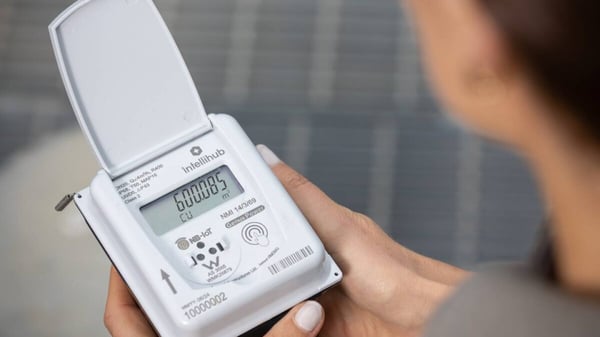 Intellihub Acquires Taggle Systems For A$50M To Add Water Metering Network And Aqualus Software
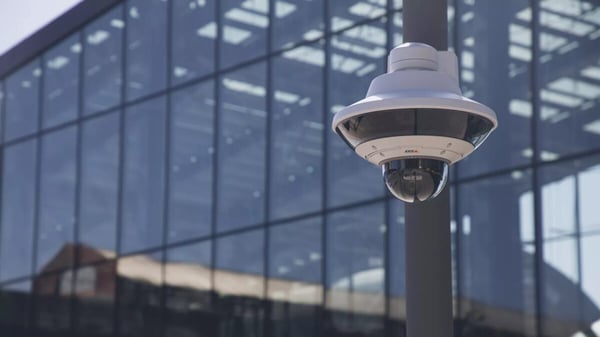 Quincy Replaces 50 Flock Safety License Plate Cameras With Axis Hardware Running OdinEye
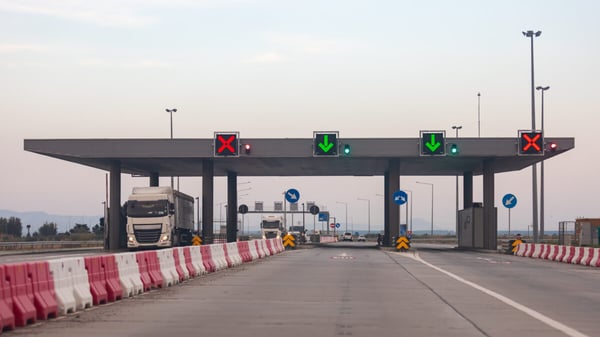 Modaxo Acquires Brazilian Traffic And Tolling Supplier Fiscaltech
 Aléria Closes €793,236.52 Street Lighting Renovation Backed By State, Corsican Agency And EDF
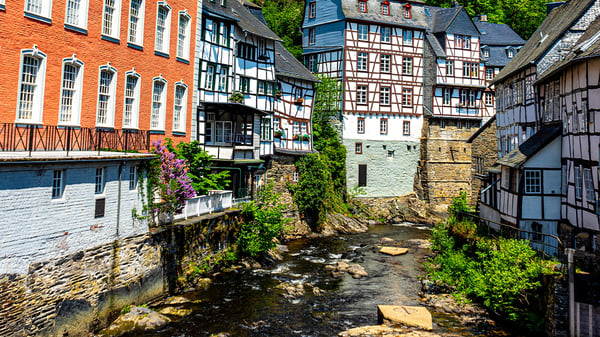 Hameln-Pyrmont Tenders Open Source Urban Data Platform
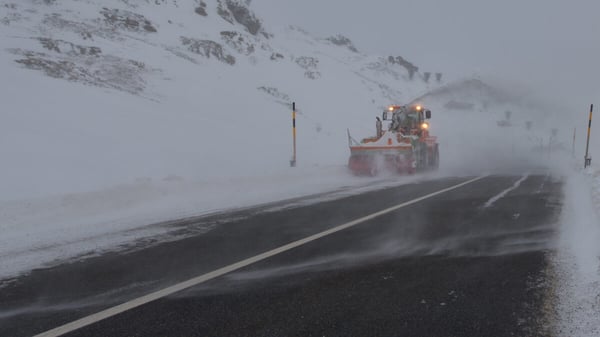 Landkreis Hof Opens TauSENSE App To Public Using Data From 130 Road Dew-Point Sensors
Latest Kurrant Originals
See all
Kurrant advisory
Planning a smart city or utility project? Talk to Kurrant.
Behind these interviews is Kurrant's advisory team, working with utilities, cities and the companies that serve them.
- Strategy AdvisoryKurrant is actively involved in resolving the challenges that cities, utilities and industry players are facing.
- M&A AdvisorySmart city and utility expertise for successful deals, turning insights into strategic gains.
- Engineering & ProcurementBetter engineering and procurement decisions, by identifying and developing digital and IoT solutions across use cases.
Or write to us: contact@kurrant.com
Send us a message
© Kurrant. All Rights Reserved. · Editorial Standards · Cookie settings
This site is protected by reCAPTCHA and the Google Privacy Policy and Terms of Service apply.