 in Barcelona
 3 to 5 Nov 2026
Smart City Expo World Congress Barcelona 2026
Smart City Expo World Congress 2026, Barcelona, 3 to 5 November. Kurrant films the expo floor, interviews with city and utility leaders and the companies that work with them, and The Smart Deal live pitches at Booth D151 in Pavilion 3. Videos are added here as we film them.
Hadrien Therond, ChargeUp Europe: upgrade the grid or manage EV charging?
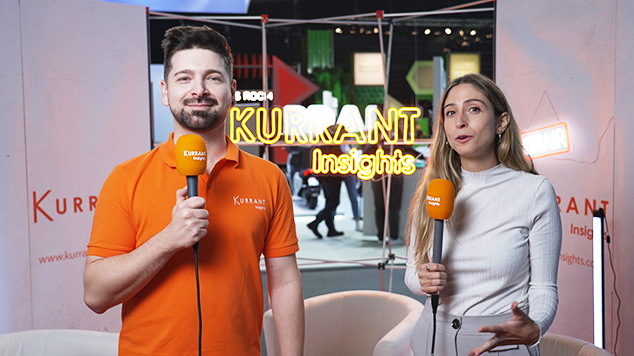
Hadrien Therond, Senior Policy and Technical Officer at ChargeUp Europe, discusses whether cities should upgrade the grid or manage EV charging instead. He argues that the question is no longer how many chargers Europe needs but how fast they can be connected, and that electrifying buses, taxis and public fleets gives charging a stable demand. He presents a study with EIT Urban Mobility of 64 European cities on how much grid reinforcement smart charging and EV load management can avoid, explains why time-of-use tariffs and smart meters matter for drivers, and points to vehicle-to-grid tests in Utrecht. Smart charging is not a silver bullet, he says, but it reduces the investment the grid needs.
Interviewed by Emma Lozano Doogan on the Kurrant booth at Smart City Expo World Congress 2026, Barcelona.
📖 Read Video Transcript
Hello from the Smart City Expo World
Congress 2026 here in Barcelona.
2
We're kicking things off
today with Hadrien Therond.
3
He is Senior Policy and Technical
Officer at ChargeUp Europe.
4
We are going to be
discussing should cities
5
upgrade the grid or manage
EV charging instead?
6
So Europe, we know that
Europe has invested heavily
7
in charging infrastructure,
but yet drivers still
8
struggle to, like, with
accessibility, availability,
9
or even reliability when
it comes to charging.
10
So is now, from your perspective,
is now the priority to
11
improve what we have, or is it
to have more infrastructure?
12
Well, thank you, Emma,
for the question.
13
I think right now at the moment,
EV charging infrastructure
14
is growing rapidly and
is growing as fast at
15
speed with the deployment
of EV vehicles on the road.
16
And then the question is not
anymore how much chargers we need
17
to put on the road, but mainly
how fast we can deploy them.
18
So it's a question about
reducing grid bottlenecks,
19
permitting new connections as
easy and faster as possible
20
to make sure that the growth
of electric vehicles on
21
the road is scaling as fast
as EV charging in Europe.
22
Okay.
23
And when it comes to
reliability, what's being done
24
to make sure that what
is out there is reliable?
25
So in the end, it's just a
question about business cases.
26
So it's more or less if like a
CPO, so charging point operator,
27
puts some station on the road, they
need to be used as much as possible.
28
And then if there is no business
case, if there is no EVs on the road,
29
then the CPO will close
its station in the end.
30
So it's mainly a question
within cities, for example,
31
to have clear deployments
of chargers because people,
32
of course, they cannot—
they would like, you know,
33
in a perfect world, everyone
would be able to charge at home,
34
but in cities it's most
complicated to do do that.
35
So having charging stations on
the road and making sure that
36
they are used is also a key
topic for electrifying cities.
37
But this is a part
for private vehicles.
38
But that's also a question for public
vehicles, so buses, public fleets,
39
taxis, etc., where there is a
clear demand and a constant demand.
40
So it's important that in
the cities we electrify
41
not only the private cars,
but also the public cars,
42
the public buses, etc., public fleet.
43
Because by electrifying,
we make sure that
44
we have a stable demand
in terms of energy.
45
So a stable demand in terms of
also EV charging infrastructure.
46
Okay.
47
And since we're talking about fleets,
we're talking about private EVs,
48
public EVs, we know that
they're becoming more popular.
49
So that means that cities,
utilities, they face
50
more pressure when it
comes to the electric grid.
51
Could smarter charging
management help cities avoid
52
some costly grid updates,
or is it unavoidable?
53
Yeah, that's a really key
topic at the moment because,
54
as you know, there are some
countries and cities where
55
there is quite big congestion
in terms of the grid.
56
The Netherlands is quite
an extensive example
57
here where you cannot
connect anything.
58
Could be like a charging station
or could be also companies
59
just having to require permits
to connect to the grid.
60
And there is a key topic
here to use smart charging
61
technologies. So EV load management,
for example, also as a way
62
to reduce the impact on the
grid, to make sure that we
63
are connecting and people are
charging when the peak loads
64
are the lowest, meaning
that when the electricity is
65
more available during the
day, for example, etc.,
66
and whether less people using the
electricity, then it's a moment
67
where smart charging can have
a big impact on the grid.
68
And recently we published
a study together with
69
EIT Urban Mobility on
this specific topic.
70
That shows that in Europe,
in the 64 cities that we
71
analyzed within the study,
we managed to highlight
72
that there is a reinforcement
need of €40.1 billion.
73
Okay.
74
With smart charging in place.
75
So with EV load management in place.
76
And this number of investments can
go up to €24.7 billion if we don't
77
have smart charging technologies
and EV load management in place.
78
And then we make the use of
the energy and the cars also,
79
we use the car as a battery on wheels.
80
So for example, with V2G
technologies, et cetera,
81
we use the car as a way to
reduce the pressure on the grid.
82
Okay.
83
And is that attractive to users?
84
For example, you were saying that
we can use the car batteries.
85
Is that something that's attractive
easy for, let's say, the end client?
86
Yeah, I mean, in the end, it's
just a question about the price
87
of electricity because people,
of course, they want to charge
88
when it's cheaper electricity
and make economy in the end.
89
And that's a good thing also with
electric vehicles is that people,
90
if they do smart charging and
they're smart when it's the
91
most convenient for them, they can,
for example, in some countries,
92
they can be paid to charge,
which is crazy in a way
93
because they have— they own a
vehicle, but they charge for free.
94
So it's a key topic.
95
And also for this, I think there
is quite some discussion at the
96
European level, for example, on
the topic of network charges to
97
make sure that people— there
is like a time of use prices of
98
electricity to make sure that
people are— the incentive for people
99
to charge when the electricity is
the lowest, when the electricity
100
is the highest, meaning that's
when the peak is the lowest.
101
So by putting different prices
depending on the time of use,
102
you can actually create incentive
for people to charge when it's—
103
when the electricity is more
available and is a cheaper one.
104
So would you say that
tariffs, the way they are now,
105
are encouraging flexible charging?
106
And then also there's
HEMS technology now.
107
So like, is it being
attractive in that sense?
108
I think at the moment it's
not made attractive enough.
109
There is some cases where,
for example, if you have like
110
contract with a CPO, etc.,
where you can charge and
111
make it more, like, more
incentives for you to do it.
112
But for example, there is
technology for when you're charging
113
at home called smart meters,
and there is a lack of
114
deployment in some European
countries in terms of smart meters.
115
And for example, in
Germany, it's quite a low
116
penetration rate in
terms of smart metering.
117
And the smart meter rollout is
a key topic in terms of making
118
sure that people are able to
know when they should charge
119
and when they should not, and
also make money on top of it.
120
So like reduce the amount
of money they use for
121
their electricity and
for recharging their car.
122
And for this specific topic,
I think at the European level
123
right now it's in discussion
with a future regulation on this.
124
But the question is
to make sure that it's
125
also reflecting the
specific cases of CPO.
126
So like making sure that also
people will be able to use public
127
charging and to reduce the amount
of, like, to be incentivized
128
to charge when the electricity
is more available, basically.
129
Okay.
130
And then if we can circle back
to the grid updates or upgrades,
131
which can smart charging, which
changes can they genuinely avoid?
132
Or is it always just a case
of putting it off till later?
133
So in the end, it's not a silver
bullet, meaning that we will
134
still have to do some grid
reinforcement, so physical one.
135
But with smart charging,
with EV load management,
136
we can actually reduce
this investment.
137
And this is a key topic
because it's not only like we
138
push a button and we put EV
load management on the road.
139
It's mainly putting
the right technology
140
and solution in place already.
141
So it can be smart charging,
can be deployment of
142
smart meters in homes.
143
And all of this technology and
possibility of digitalization
144
also makes it possible and enabling
smart charging on the road.
145
Okay.
146
And then when it comes to
electrifying, the way things are now,
147
can cities continue to
electrify both in terms
148
of the public fleets and in
terms of the general public?
149
Yeah, of course.
150
At the moment within cities,
I mean, I mentioned the
151
Netherlands, there is
some cases where it's more
152
complicated to put charging
stations in place, etc.
153
And this is where the EU but also
the national authorities have a
154
key role to play because they
can make sure that, for example,
155
we have an improvement of the
deployment of charging stations within
156
cities by putting permitting
processes faster and in an easier way.
157
And there is some cases at the
moment, I mentioned of course
158
V2G technologies, but there
is some cases, some testbeds,
159
for example in Utrecht in the
Netherlands, where they are trying
160
to decongestion the grid by using
this technology on the road.
161
And they, it shows that it's
actually possible to use electric
162
vehicles on the road. The more
electric vehicles you have on
163
the road within cities, the more
you are able to reduce the peak
164
in terms of the grid, the peak
load management of the grid.
165
Okay, so thank you so much
for this conversation.
166
I think my takeaway is what you
just said, the more electric
167
vehicles that are out on the road,
the more you can reduce the peak.
168
And then those big numbers
you mentioned about savings.
169
Thank you, Emma.
About Smart City Expo World Congress Barcelona 2026
Smart City Expo World Congress 2026, Barcelona, 3 to 5 November. Kurrant films the expo floor, interviews with city and utility leaders and the companies that work with them, and The Smart Deal live pitches at Booth D151 in Pavilion 3. Videos are added here as we film them.
More Smart City Expo World Congress Barcelona editions




Latest Kurrantly News
All news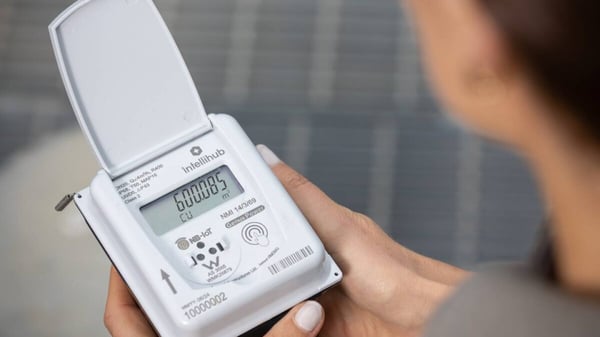 Intellihub Acquires Taggle Systems For A$50M To Add Water Metering Network And Aqualus Software
 Quincy Replaces 50 Flock Safety License Plate Cameras With Axis Hardware Running OdinEye
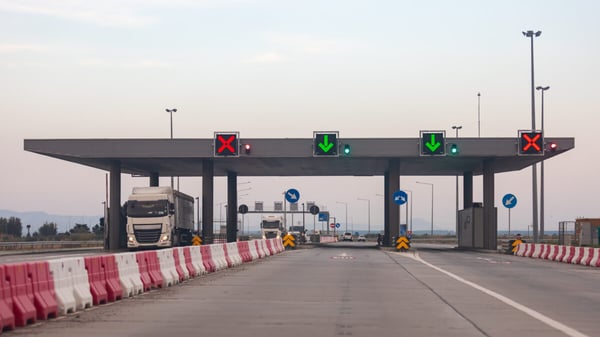 Modaxo Acquires Brazilian Traffic And Tolling Supplier Fiscaltech
 Aléria Closes €793,236.52 Street Lighting Renovation Backed By State, Corsican Agency And EDF
 Hameln-Pyrmont Tenders Open Source Urban Data Platform
 Landkreis Hof Opens TauSENSE App To Public Using Data From 130 Road Dew-Point Sensors
Latest Kurrant Originals
See all

Kurrant advisory
Planning a smart city or utility project? Talk to Kurrant.
Behind these interviews is Kurrant's advisory team, working with utilities, cities and the companies that serve them.
- Strategy AdvisoryKurrant is actively involved in resolving the challenges that cities, utilities and industry players are facing.
- M&A AdvisorySmart city and utility expertise for successful deals, turning insights into strategic gains.
- Engineering & ProcurementBetter engineering and procurement decisions, by identifying and developing digital and IoT solutions across use cases.
Or write to us: contact@kurrant.com
Send us a message
© Kurrant. All Rights Reserved. · Editorial Standards · Cookie settings
This site is protected by reCAPTCHA and the Google Privacy Policy and Terms of Service apply.