 in Barcelona
 3 to 5 Nov 2026
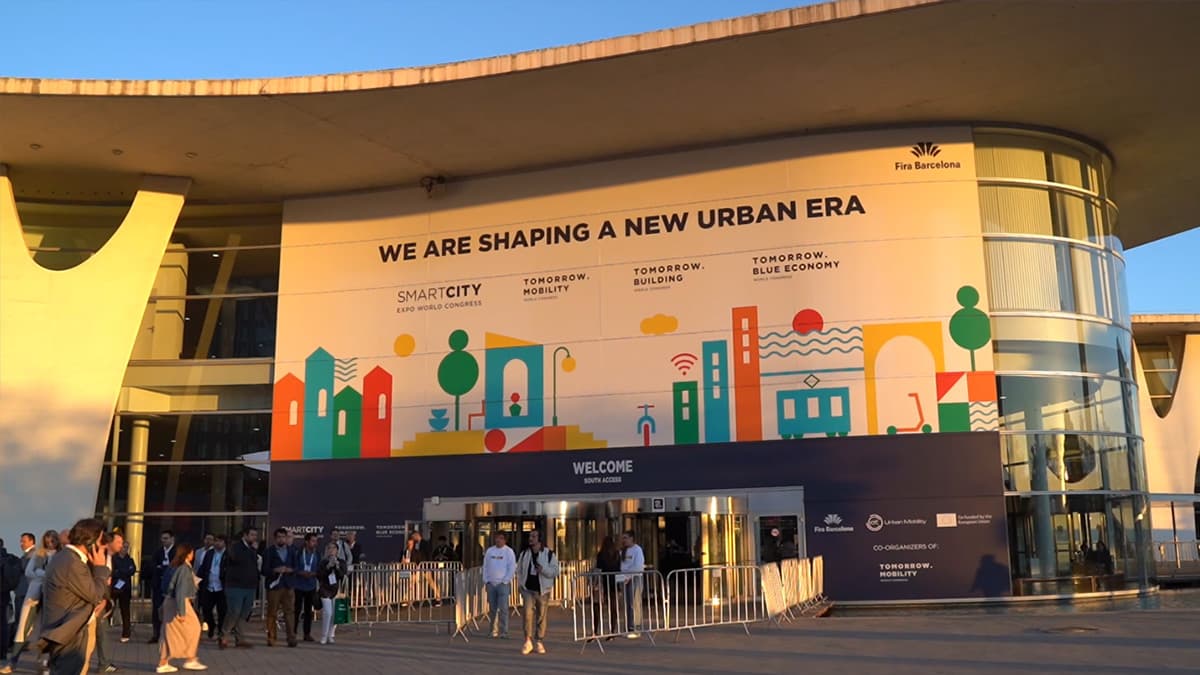
Smart City Expo World Congress Barcelona 2026
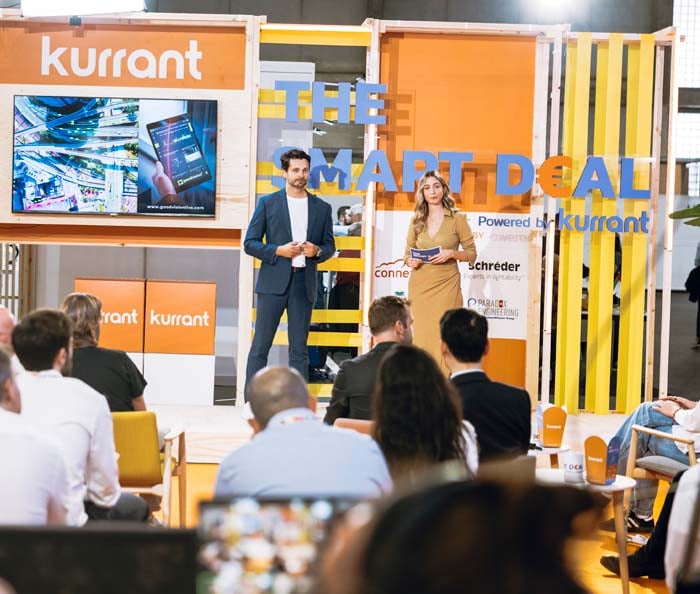
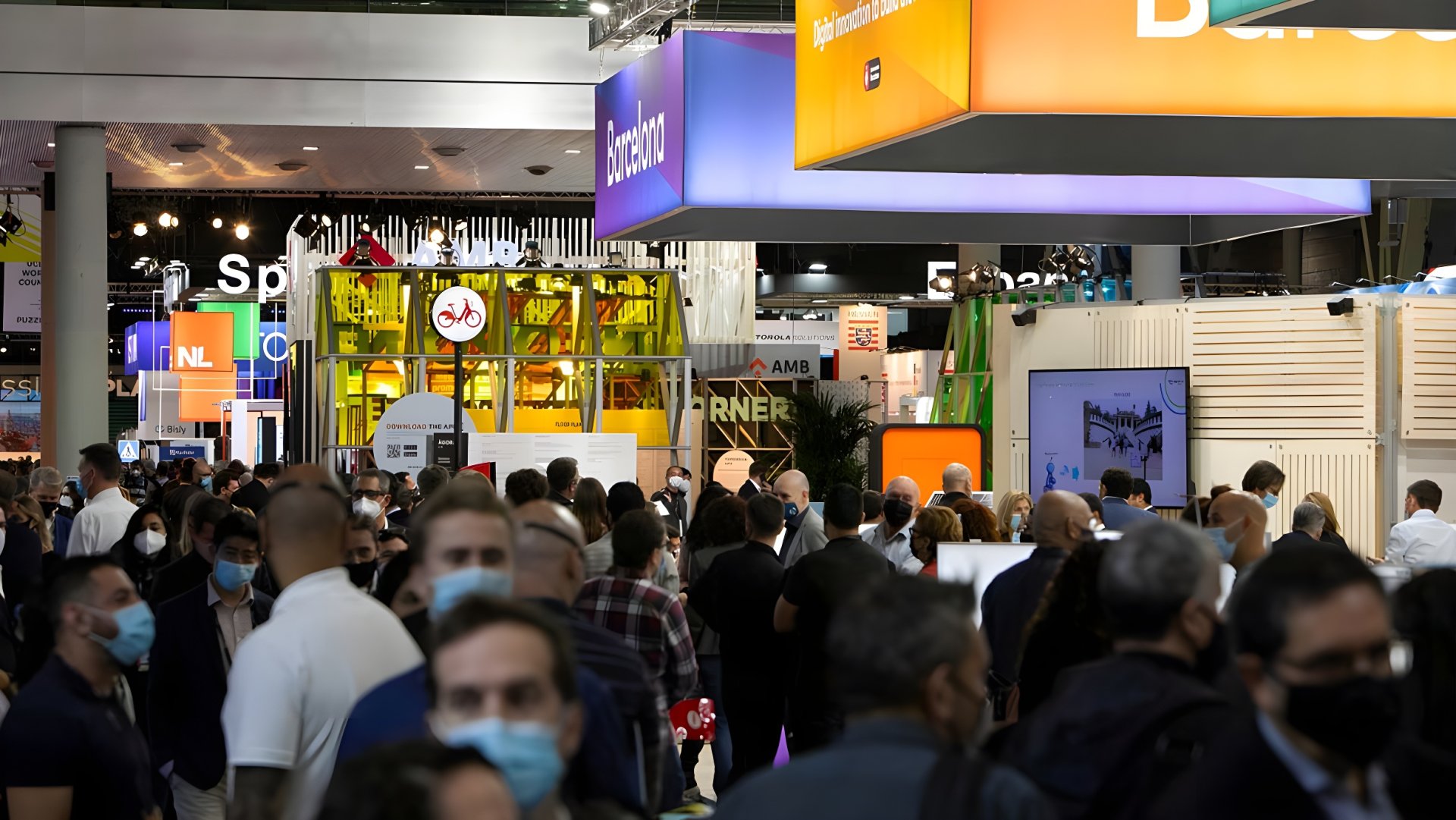
Smart City Expo World Congress 2026, Barcelona, 3 to 5 November. Kurrant films the expo floor, interviews with city and utility leaders and the companies that work with them, and The Smart Deal live pitches at Booth D151 in Pavilion 3. Videos are added here as we film them.
Kristine Bull Sletholt, City of Stockholm: who is ready for autonomous mobility?
Kristine Bull Sletholt, Innovation Manager at the City of Stockholm Transport Department, explains how Stockholm looks at connected, cooperative and automated mobility: autonomous vehicles and the services built on them have to fit the city’s existing goals for a sustainable, traffic-efficient and attractive city, where streets are also for people. She talks about the main obstacle, which is less the technology than shaping services that deliver value to society at system level, why the Swedish view is that intelligence belongs in the vehicle rather than in the infrastructure, and which data the city wants from operators, such as empty miles and kilometres driven. She also covers what a company has to show before a larger deployment, why a robotaxi service in Stockholm should complement public transport rather than compete with it, and what she expects to see by 2030, from hub-to-hub autonomous trucks to passenger services beyond a few test vehicles.
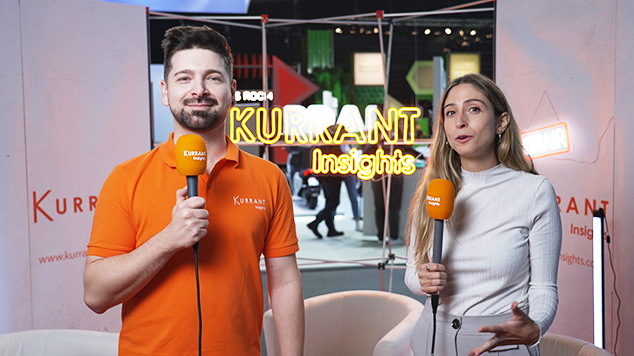
Interviewed on the Kurrant booth at Smart City Expo World Congress 2026, Barcelona.
📖 Read Video Transcript
the Kurrant at Smart
2
City Expo World Congress.
3
We're here once again, but this
time we're here with Kristine Bull.
4
She is Innovation
Manager at the Traffic
5
Office of the City of Stockholm.
6
Welcome.
7
Thank you.
8
We're going to be discussing who
is ready for autonomous mobility.
9
And the first thing I'd like to ask
is, you're working on connected,
10
cooperative, and automated
mobility in Stockholm.
11
What role does the city
ultimately want for
12
autonomous vehicles to play
in its transport system?
13
we're looking at our long-term
strategies and goals in general.
14
We're not thinking that automated
vehicles or the autonomous
15
system is something different
from what we want today.
16
So in Stockholm, we're working
for a sustainable city,
17
but also one that's traffic
efficient and attractive.
18
We've been working a lot with
rebuilding and rethinking the city,
19
having the streets for
more than just vehicles,
20
that the streets are also for
people, people to be and gather
21
and have more outdoor serving,
it's a more livable city.
22
So I think for us, the
autonomous vehicles and the
23
new services that are coming
needs to fit into that system,
24
into the transport system
that we have today.
25
Okay, perfect.
26
And I mean, a lot of attention
around autonomous vehicles
27
focuses on the technology itself,
but cities also need to prepare
28
their streets, their roads,
regulations, transport systems.
29
I mean, there's a lot
of work behind that.
30
What are the biggest obstacles
to deploying autonomous
31
mobility in a real urban environment,
32
and how can municipalities
overcome those challenges?
33
As you mentioned, it's really complex
with all these different system
34
dimensions coming together when
these autonomous services are coming.
35
I think one of the biggest obstacles
are getting— finding these services
36
that are actually meeting the goals
that we want, how to make sure
37
that they're tailored to the
needs that we have in the cities,
38
but also— and also get tools for the
cities to actually make sure that they
39
are contributing to that sustainable
and attractive city that we want.
40
So it's all these different
things coming together,
41
but ultimately it's like,
42
how do we actually— how do
you form these services?
43
I think hasn't been worked on enough.
44
So we need to still
be working on that?
45
Yeah, I think, you
know, I'm not thinking
46
that much of the
technical parts of it.
47
I'm thinking like how to
actually get it into the
48
environment that we're
working on, and not just that
49
the sensors can handle
the different situations,
50
I think that's like coming
anyway, but it's like how
51
to make it so it actually
gives value to society.
52
Okay.
53
And not just one bus,
you know, on one street,
54
but actually on the
system level scaled up.
55
Okay.
56
And so as autonomous
vehicles become more popular,
57
or more— I would say popular, but then
I would also say more sophisticated,
58
there's a debate about
how much they should
59
rely on their own cameras and
sensors versus information
60
from connected technology.
61
I mean, we've seen autonomous vehicles
62
crashing in San
Francisco, for example.
63
So I was wondering,
does Stockholm— like,
64
how does Stockholm approach that risk?
65
Do you want them to just rely on
their technology, or do you want
66
to also have technology on the
infrastructure to cope with it?
67
I think the baseline is to
rely on their own technology.
68
We usually say in Sweden
that intelligence should
69
be in the vehicles and
not in the infrastructure.
70
So I think for it to function,
it should function itself.
71
You know, it should handle the
traffic environment, the physical one,
72
but also like the dynamic
environment that cities have.
73
But I think, of course, it's
interesting to look into,
74
can it be improved
with different kinds
75
of data that we could
share to these vehicles?
76
I think, you know, for the
safety case itself, you know,
77
we shouldn't rely on data
coming from the city.
78
It should be some kind
of extra or a bonus.
79
Okay.
80
Would you say that, yeah,
that then also it would be
81
interesting for them to collaborate
and not just focus on one?
82
The important thing
is the collaboration?
83
Yeah, definitely.
84
I think we need a lot of
collaboration in this area as well.
85
And like, speaking of
data, like, we want— and are
86
interested in getting a
lot of this data as well.
87
So of course we need to collaborate.
88
Okay.
89
And then you've participated,
or Stockholm has participated,
90
in initiatives such as
DeployEMDS to improve mobility
91
data sharing for connected
and autonomous vehicles.
92
What information do cities and
operators as well need to exchange?
93
Haven't decided.
94
We don't really know exactly
what kind of information
95
that we want or need
and what's relevant.
96
I think now, like, it's still in
the early stages, I would say.
97
So it's still about seeing
what gives us value.
98
But we do want to follow up on the
specific, you know, like deployments.
99
Are they going according to the plan,
you know, the safety metrics as well,
100
which is mainly on the
national level in Sweden.
101
But still, it's interesting
for us to follow.
102
But also on the system level, it
would be great for us to understand,
103
you know, what kind of environment
are these vehicles creating?
104
Are they contributing to the
goals or going against it?
105
So different kinds
of data such as empty
106
miles driven, that's
always interesting.
107
But also kilometers generally
driven in the city is interesting.
108
Since we do have quite high goals
of reducing driven kilometers.
109
So it'd be nice to get even more
data to see how that's going.
110
And then we've seen
autonomous shuttles,
111
robotaxis tested in
cities around the world,
112
but I would say the complicated
part is scaling them.
113
The testing is hard, but
scaling them is even harder.
114
What lessons has Stockholm learned
from exploring automated mobility?
115
And what would a company
need to demonstrate before
116
the city supports a large
deployment that scale?
117
It's a good question and something
that's always moving as well.
118
It's not like it's decided.
119
I think first of all, we need
to see that it's contributing
120
to the societal goals, that
it's actually creating value.
121
And then we're talking
more like the business
122
case or like the service
implementation itself.
123
On the national level, and
of course for us as well,
124
the security aspects,
that they actually can
125
handle the situation,
that they've proven that.
126
And I'm sure there'll be
some kind of like staircase,
127
like moving up from a
few vehicles to more.
128
But from the city perspective,
the main thing is societal value,
129
but also that they can operate
in the city with rescue and
130
assistance and like these more
ambulances, like all the things
131
that are happening in the city,
that they're not in the way.
132
So companies such as Waymo
are demonstrating advanced
133
autonomous driving capabilities,
but what works in one
134
city may not work in another
city because obviously,
135
for example, San Francisco
isn't the same as Stockholm.
136
They're each very different.
137
What would it take for a robotaxi
service to operate in Stockholm?
138
Is it the same as what you
were mentioning before,
139
or do they have to go
through more hoops?
140
I think in general, like, Europe is
not the same as the US, you know.
141
In a lot of the European
cities, we do have a totally
142
different public transport
system that's the backbone
143
of how people, you know,
move around in cities.
144
And we also have really
good infrastructure
145
for walking and biking as well.
146
So it needs to fit into that context.
147
Specifically about
robotaxis, we would like
148
to see the integration
with public transport.
149
And that doesn't necessarily mean
being procured by public transport.
150
We mean more like the
public-private partnerships, like,
151
can we use these vehicles
during certain times to
152
complement public transport,
also to strengthen the
153
areas of the public transport system
which isn't as efficient today,
154
where the buses are running maybe half
155
full or not as full as they
should be or not as often.
156
Can we use smaller
kinds of vehicles to
157
fill these gaps in
the transport systems?
158
Because there's great
potential for that,
159
and we do have a lot of needs
in the transport systems
160
where smaller vehicles
could also play a big part.
161
Yeah.
162
Now it's my last question.
163
If you look at the future,
looking towards 2030,
164
which applications of
autonomous mobility do you
165
realistically expect to
see operating in Stockholm?
166
Because obviously we
know it's not going to be
167
flying cars that are
completely autonomous.
168
So what is something that
you do expect to see in 2030?
169
It's not that far until 2030.
170
I think freight is a
really interesting one.
171
Maybe not in the urban area, but more
172
like the hub-to-hub,
like the motorways.
173
I think it's a really interesting
area to look into autonomous trucks.
174
I think for the city we do
already have these like smaller
175
robots delivering food, so
there's been testing as well.
176
But I think more like passenger
transport will be in place as well.
177
We'll see like how
big the scale will be,
178
but I think it'll be more than
just like a few test vehicles.
179
I think it'll be more than
that, hopefully contributing
180
to the safe, sustainable,
and attractive city.
181
Thank you so much.
182
Thank you.
About Smart City Expo World Congress Barcelona 2026
Smart City Expo World Congress 2026, Barcelona, 3 to 5 November. Kurrant films the expo floor, interviews with city and utility leaders and the companies that work with them, and The Smart Deal live pitches at Booth D151 in Pavilion 3. Videos are added here as we film them.
More Smart City Expo World Congress Barcelona editions

Latest Kurrantly News
All news DCC Extends Arqiva’s Northern Smart Meter Network To 2037, Sensus To Supply New Base Stations
 Oman Water Ministry Signs Nama Deal For LoRaWAN Smart Meters On 1,000 Groundwater Wells
 Via Verde Opens 12-Point, 400 kW Ultra-Fast Charging Hub in Portugal
 Rematics Runs Waste-Recognition Cameras On 70+ Collection Trucks As MOBA-Backed Pilots Expand
 Suez And Cornerstone Host Wize Water Meter Network On 100 UK Mobile Towers
 TIM Brasil And Smart Luz To Connect Over 12,000 Rio de Janeiro Lighting-Pole Cameras Over 5G
Latest Kurrant Originals
See all
Kurrant advisory
Planning a smart city or utility project? Talk to Kurrant.
Behind these interviews is Kurrant's advisory team, working with utilities, cities and the companies that serve them.
- Strategy AdvisoryKurrant is actively involved in resolving the challenges that cities, utilities and industry players are facing.
- M&A AdvisorySmart city and utility expertise for successful deals, turning insights into strategic gains.
- Engineering & ProcurementBetter engineering and procurement decisions, by identifying and developing digital and IoT solutions across use cases.
Or write to us: contact@kurrant.com
Send us a message
© Kurrant. All Rights Reserved. · Editorial Standards · Cookie settings
This site is protected by reCAPTCHA and the Google Privacy Policy and Terms of Service apply.