 in Barcelona
 3 to 5 Nov 2026
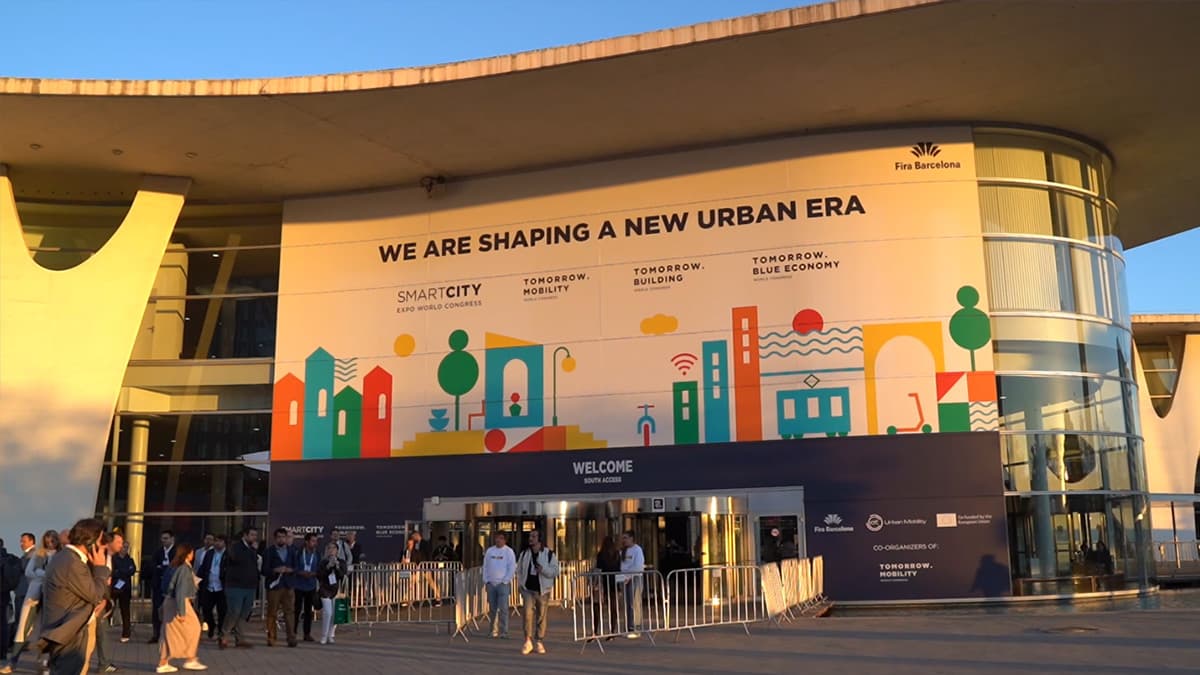
Smart City Expo World Congress Barcelona 2026
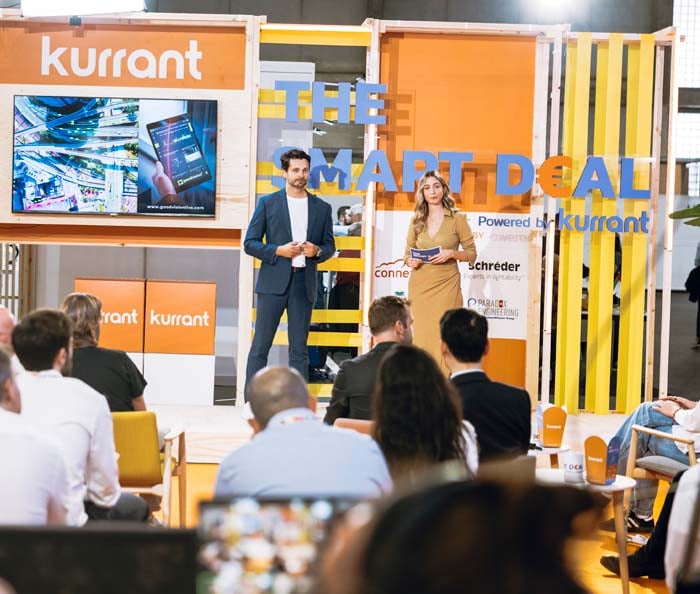
Smart City Expo World Congress 2026, Barcelona, 3 to 5 November. Kurrant films the expo floor, interviews with city and utility leaders and the companies that work with them, and The Smart Deal live pitches at Booth D151 in Pavilion 3. Videos are added here as we film them.
Hamid Nikvan, City of North Miami Beach: modernizing water with AI and new financing
Hamid Nikvan, Public Utilities Director at the City of North Miami Beach, explains how North Miami Beach Water uses smart technology, AI and new financing to modernize its infrastructure instead of raising rates. He covers the SmartFlow ecosystem and its procurement based on guaranteed energy, water and wastewater savings, which won a Project Innovation Award from the International Water Association, AI as an advisor with a human in the loop, preparing for floods and extreme weather, cybersecurity as a safety issue, why utilities must own their data and stay vendor agnostic, and where to start on a limited budget.
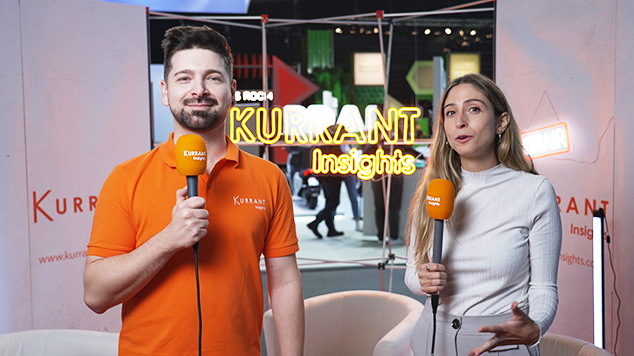
Interviewed by Emma Lozano Doogan on the Kurrant booth at Smart City Expo World Congress 2026, Barcelona.
📖 Read Video Transcript
booth with another interview.
I'm here with Hamid Nikvan.
He is public utilities director at the
City of North Miami Beach, which is
third largest municipal utilities
in the state of Florida.
And we will be talking about how
North Miami Beach Water is using
smart technologies, AI, and new
financing models to modernize its
infrastructure, improve resilience,
and protect critical systems.
Welcome to our booth.
Thank you, Emma.
It's a pleasure to be with you.
So the first question
I'd like to ask you is,
with aging infrastructure,
rising costs, climate risks,
what's the biggest reason water
utilities need to modernize today?
Good question, and the answer is
simple, because cost of waiting,
it's rising much faster than cost of
acting when it gets to infrastructure.
Compounding all these
challenges together when it gets
to utilities, it's very hard
to deal and it will create
a huge pressure on utilities,
and then we don't have
funds to manage all these or
address them appropriately.
Considering all these things,
there is no other way but to be
creative and think smart on how
we can attract or bring different
funding sources and mechanisms
to activate modernization.
If we want to treat the
utility as a business,
which it is business,
it's enterprise fund.
We are not working based
off taxpayer money.
Europe is a little
different, but in US it's
enterprise fund, so it's
based off ratepayer.
So would we go and start increasing
our rate as we face all these demands,
or we can be smart and come up
with different ideas on how to
address our infrastructure need by
developing and utilizing technology?
Pretty much that's the
core concept behind
the idea of a SmartFlow
ecosystem as well.
That's the most innovative way of
financing to be merged
with technology.
So you are actually integrating
a lot of technology,
smart meters, AI, digital
twins, water systems.
Why take this approach instead of
upgrading each system separately?
Rather than creating
silos of solutions
and then independently monitoring
or getting benefit out of them,
I think building an ecosystem
is a way to go because now
you can have visibility
across the entire system from,
in utility, from raw water
intake to treatment process,
water distribution, or
wastewater collection system.
Now there are millions of
solutions out there, right?
It's a matter of how we can integrate
them together and then bring
some cost-effective and resilient
solution on the table that can give
us full visibility and then
generate proper operational savings.
So the more you can shrink your
operational cost or expense,
the more you free up money to be
reinvested on your infrastructure.
And then North Miami Beach has
proposed a SmartFlow, I mean,
you mentioned it earlier in one of
your answers, SmartFlow procurement
based on guaranteed energy, water,
and wastewater performance savings.
Could this approach change how
utilities finance modernization?
And how do you establish which savings
genuinely come from
the technology itself?
I'm glad you asked that question.
I just came from International
Water Association.
This project won the Project
Innovation Award of the Year,
and I am the one who architected this
and designed it, and with
the help from my team.
Now what we did was
defining targeted measurable
KPIs and metrics such
as water loss reduction,
such as chemical saving, you name it.
Those are all realistic
metrics that you can define
and scope it for the
performance contractor.
How performance contracting works is
that you define the scope and say,
okay, these are all the metrics that
are, or KPI that I want to achieve.
Who can come and generate
all this saving and
guarantee that to put
it in the contract?
The beauty of performance
contracting is that we don't have
the upfront funding to fund
these huge capital projects.
So the performance contractor
can bring the funding as
an investor without us giving
up our operational right,
tied to their guaranteed
savings that they're
supposed to generate on the contract.
And it's going to be
long-term partnership under
state statutes, 15 to
20 years, I believe.
So it's going to be 20-year
active contract that
every single year we audit,
we verify those savings.
If it's been generated,
pretty much you offset the
repayment of that upfront
investment they did.
So they get paid by the
savings that they generate.
So that's the innovation behind
the financing side of it.
And now we define over, I think,
40 or 50 KPIs when it gets to AMI.
What is the most known KPI for AMI?
98 or 99% meter read rate.
You want something
like that, or you want
20 years of battery lifecycle, right?
Warranty.
Those are achievable.
You put it there.
If the meter fails in
year 5, guess what?
Contractor is responsible
to fix it because they
brought the money in and
they're under contract.
So that's the model.
It's a matter of how we can define it.
And the proposed SmartFlow framework,
it also includes
AI-enabled optimization?
Yes.
So how much control would
you be comfortable with
giving AI over water and
wastewater operations?
What safeguards are
necessary before automated
systems can influence such
critical infrastructure?
When you look at it
that way, we're not
going to let AI to manage everything.
We're regulated.
You in water plant in the US, you
need to have licensed operator on your
day shift to operate and sign off
on your monthly operating report.
It's not like Europe that you
have fully automated water
treatment plant because the
regulation is different.
So AI will act like an
advisor and also optimizer.
But at the end of the day, you have
human in the loop because you want,
and they have the right
to override the AI.
But now AI will do prediction
analysis, failure analysis,
And then we, there are
a lot of algorithms.
You run the deep
reinforcement learning off
of your water plant
distribution system.
Imagine you have GIS, you have
SCADA, you have AMI, right?
All those applications are integrated
under one digital twin application.
Now you have full
visibility across the
entire circulation of
water ecosystem, right?
So if the demand is high, your
treatment process gets notified
from AI and says, you know what,
it's time to turn off your high
service pump because you don't
need to produce that much water.
Forget about your operating habit that
you always turn this pump on at 11 PM.
It's not the right time for it.
So that's what's going to happen.
And now on top of that, we're gonna
also target AR, augmented reality.
So that will create engagement
between maintenance and community.
And that's a big deal too,
'cause now we give them 3D view
of their infrastructure that
are allowed for them to see.
And then you just simply
open your app, you just go,
you have a water leak, for instance,
front of your house, you
want to report it to us.
So we have customer service
team, we have a huge backlog.
AR will determine based off
that information that have
and I come
and said, you know what?
You're calling the wrong department
because that's not a water issue,
it's a sewer line issue,
for example, right?
And that example will reduce
the customer service backlog.
It will improve the
rate of satisfaction.
And you can measure it.
So that can be another
KPI, as simple as that.
It's a matter of defining
your area and then determining
how technology can help
us to take it to the next
level while we are addressing
our infrastructure needs.
Speaking about addressing
infrastructure,
so how are you preparing for
flooding, extreme weather,
saltwater intrusion, and has
better data, having better
data helped you know
where you have to invest?
I'm coming from Florida,
we're one of the,
you know, most challenging
states because we're
dealing with extreme
weather always, right?
Sea level rise, all those things.
So part of the technology that can
help us is full visibility dashboard,
real time, that can do
prediction analysis,
that can get connected to even
outside agency weather condition
monitoring and come and
said, hey, in next 48 hours,
don't wait for the news to show it to
us or email from XYZ agency, right?
There are some heavy
storm coming, right?
And now we need to see what is the
condition of our system real time.
Historically, a storm come
and then you deploy your
team or you may have some
monitoring system like
wet well at lift stations
and things like that.
But now you have a full detailed
visibility that can tell you,
hey, station number 3, it's
right at the edge of flooding.
So you better send your
crew out there immediately.
And it can be automated.
Create the work order, get the
response ticket to them, call them.
All these things can be automated.
Now staff are going
to be on top of it.
I think visibility is
a key when it gets to
monitoring the extreme
condition that we may face.
And then we've seen in
the US a lot of attacks,
like cyberattacks on utilities.
How are you protecting
your systems and which
cybersecurity measures
matter the most?
For me, as a utility leader,
we treat cybersecurity
as a safety issue rather
than an IT element.
When it gets to cybersecurity,
there are different regulations.
For instance, in US, America's
Water Infrastructure Act define
and regulate that you need to
have emergency response planning.
It means you need to do condition
assessment or
vulnerability assessment.
Cybersecurity is not always
about computer science.
Attack could come from
physical attack to one tank
and someone go on top of
your tank and drop a bottle
of unknown liquid that
you don't know what it is.
So what is your response to that?
Me as a utility director,
the first thing,
if I see someone on top of my
tank, I will shut down that tank.
I will drain it because I
don't know what he dropped.
And I don't have the time to go and,
you know, inspect it or take sample.
So we are responsible
to protect our community
because it's public
health safety element.
It's water.
And you don't want someone
to come poison the community.
Just as an example.
So we define all those through
vulnerability assessment
and then we safeguard
it with proper measures.
If it's computer, we go with
the multi-authentication system.
We take our SCADA off of
any internet access so
it's completely isolated
within the water plant.
So you minimize the vulnerable
point or the breach point.
And I think even technology
now, it can get it
to next level, 'cause you
can limit even access.
If you are mechanic, you
should not be able to access,
let's say, at your pump
chemical dosing room.
Unless it fails, you're not
operator, you're not licensed.
That's sulfuric acid.
You cannot walk into that room.
So how technology can help us develop
the simple access control system?
So your badge doesn't work there.
Sorry.
As simple as that.
Those are the metrics or
measures that we put in place.
Okay. And then if we go back to
procurement, with long-term technology
contracts and the way you've
done them, can utilities maintain
control over data, costs, and
future technology choices?
The way that I scoped
the project, and I advise
others to do that,
utility must own the data.
Even you have to design the system
to have your own network because
you want to add more IoT, you want
to add more future technology.
If you have a solid resilience
network infrastructure,
the rest is gonna be tapping new
technology under the
same umbrella, right?
So that's the key.
At the same time, we need to be
mindful of avoiding proprietary
application because you don't have
the resources trained and it's not
widely accessible to everyone to
address any potential future issues.
And you're going to be locked
into vendor that way solution.
And that's why I would always advise,
that's how I design my
application, vendor agnostic.
We spec, we own the data,
we manage everything.
At the same time, it's to
be able to be expandable.
There are a lot of future
implementations that are coming.
I think being interoperability
for integration, it's the key.
So as you develop it, year 2, you
may see another opportunity.
So you should be able to expand.
If a utility with a
limited budget came
to you and said, what
should I do first?
What should come first?
Smart meters, asset data, network
monitoring, integration, or AI?
First of all, do you know
any utility who have money?
So 90% of utilities to me would
come with the same mindset.
But they have limited budget.
For me, it started from AMI.
When we start, one key
thing that I did was
condition assessment,
rapid condition assessment.
And we define, and through
the assessment we identify,
okay, I'm losing a
lot of revenue and my
water loss through aging
metering system.
I need to replace my metering system.
AMI. Okay, what is the cost?
Turns out $20, $30 million.
I'm just making example,
$50 million, whatever.
And I don't have that.
And, you know, we don't
have such a reserve
that we can utilize it
for one application.
That was the moment for
me to sit and think,
I don't have that and I need that.
What should I do?
So I start developing the
solution and implementing it.
I would encourage everyone,
look at it system-wide.
Even if you have money that you
want to target one of your needs,
let's say AMI, water loss,
chemical, whatever, right?
If you think a little or
stretch your thinking a
little extra, you can
bring more things under the
same umbrella because you
can gain more benefit.
And that way you can
offset your upfront
investment, whatever method you use.
And that's how I see it.
I cannot prioritize because
every utility have their
own unique character and
their own unique need.
So it all depends on
that utility leadership.
Well, thank you so much.
It was a very
interesting conversation.
Thank you so much. I appreciate
for giving us time to be here.
About Smart City Expo World Congress Barcelona 2026
Smart City Expo World Congress 2026, Barcelona, 3 to 5 November. Kurrant films the expo floor, interviews with city and utility leaders and the companies that work with them, and The Smart Deal live pitches at Booth D151 in Pavilion 3. Videos are added here as we film them.
More Smart City Expo World Congress Barcelona editions


Latest Kurrantly News
All news DCC Extends Arqiva’s Northern Smart Meter Network To 2037, Sensus To Supply New Base Stations
 Oman Water Ministry Signs Nama Deal For LoRaWAN Smart Meters On 1,000 Groundwater Wells
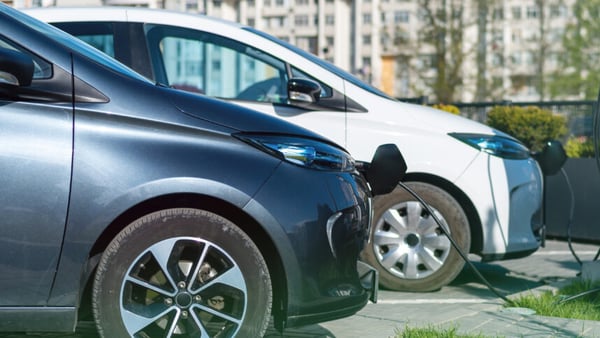 Via Verde Opens 12-Point, 400 kW Ultra-Fast Charging Hub in Portugal
 Rematics Runs Waste-Recognition Cameras On 70+ Collection Trucks As MOBA-Backed Pilots Expand
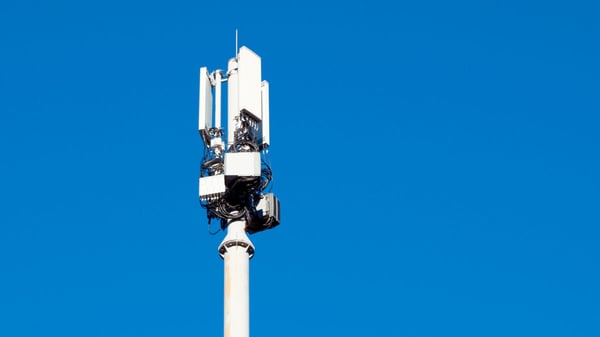 Suez And Cornerstone Host Wize Water Meter Network On 100 UK Mobile Towers
 TIM Brasil And Smart Luz To Connect Over 12,000 Rio de Janeiro Lighting-Pole Cameras Over 5G
Latest Kurrant Originals
See all

Kurrant advisory
Planning a smart city or utility project? Talk to Kurrant.
Behind these interviews is Kurrant's advisory team, working with utilities, cities and the companies that serve them.
- Strategy AdvisoryKurrant is actively involved in resolving the challenges that cities, utilities and industry players are facing.
- M&A AdvisorySmart city and utility expertise for successful deals, turning insights into strategic gains.
- Engineering & ProcurementBetter engineering and procurement decisions, by identifying and developing digital and IoT solutions across use cases.
Or write to us: contact@kurrant.com
Send us a message
© Kurrant. All Rights Reserved. · Editorial Standards · Cookie settings
This site is protected by reCAPTCHA and the Google Privacy Policy and Terms of Service apply.