 in Barcelona
 3 to 5 Nov 2026
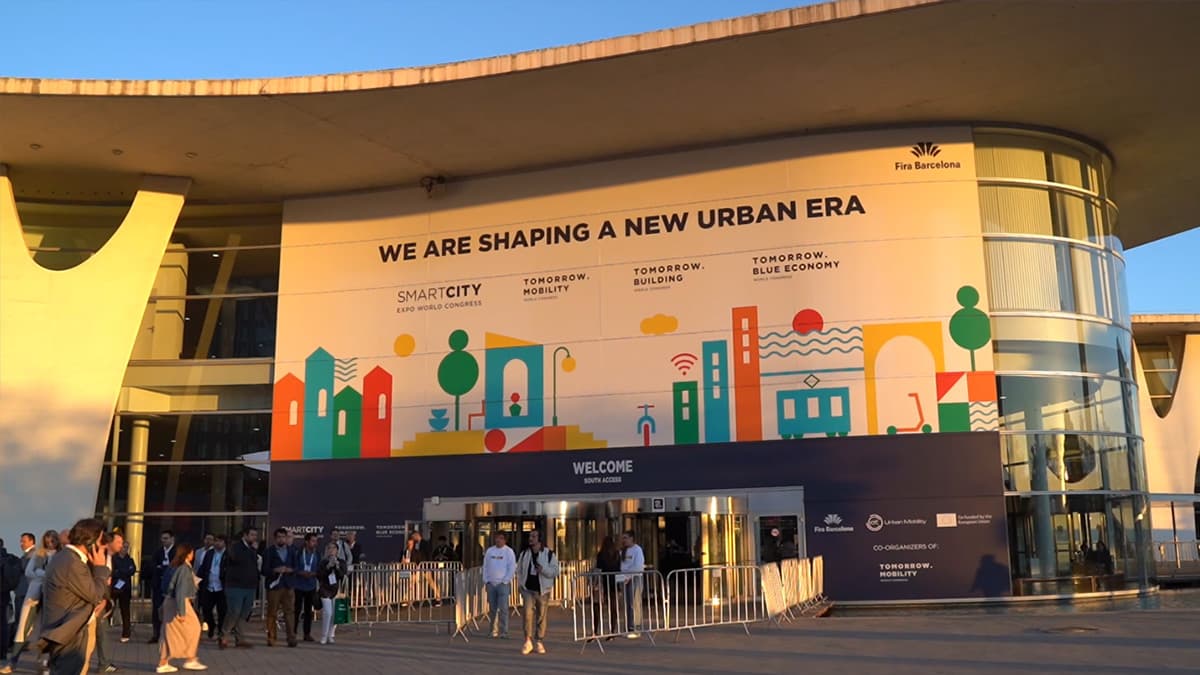
Smart City Expo World Congress Barcelona 2026
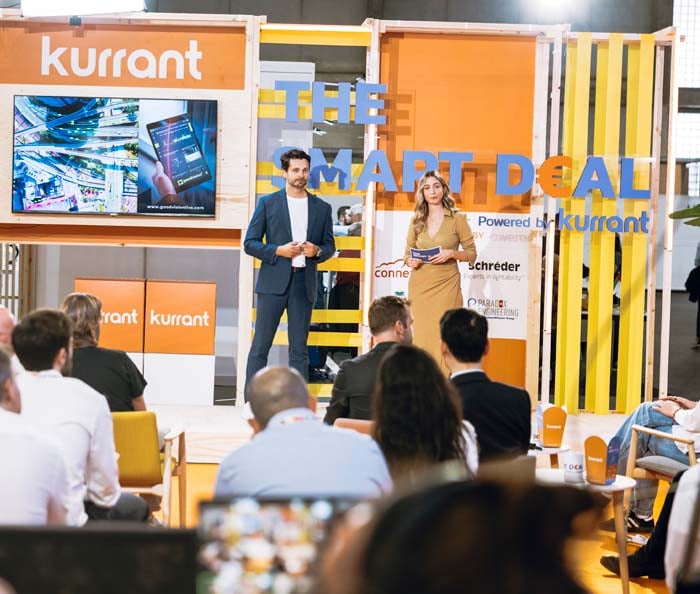
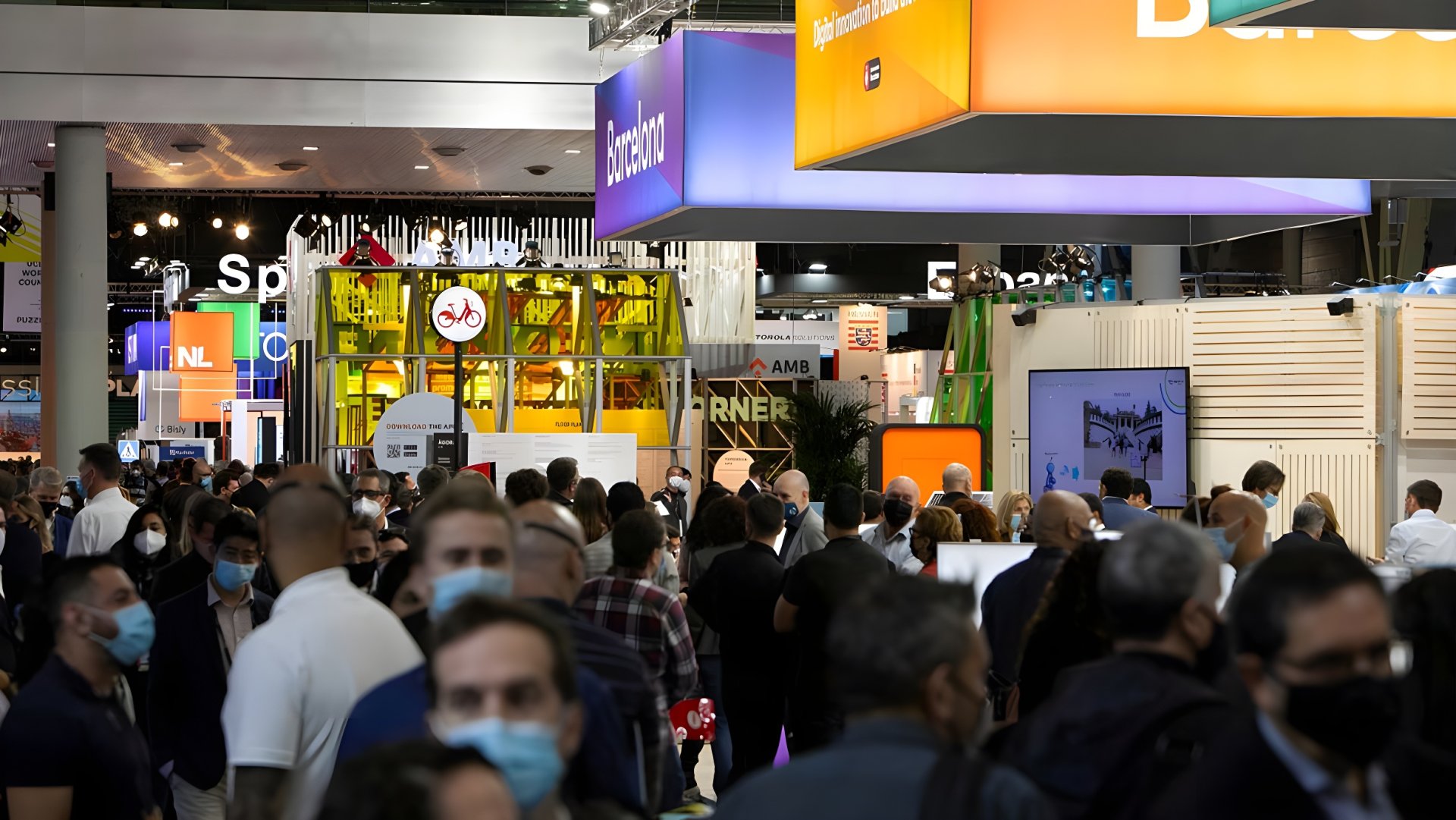
Smart City Expo World Congress 2026, Barcelona, 3 to 5 November. Kurrant films the expo floor, interviews with city and utility leaders and the companies that work with them, and The Smart Deal live pitches at Booth D151 in Pavilion 3. Videos are added here as we film them.
Ángel López and Loha Hashimy, Barcelona City Council and FACTUAL: finding high-polluting vehicles with DAVER
Ángel López, General Coordinator of Mobility Services at Barcelona City Council, and Loha Hashimy, Mobility Innovation Specialist at FACTUAL, present DAVER, a project funded by EIT Urban Mobility that Barcelona City Council set up with FACTUAL and Opus RSD to identify the individual vehicles that cause excessive pollution and noise. Barcelona has tested roadside emission sensing since 2018 and found that how much a vehicle pollutes depends less on its age or Euro standard than on its maintenance, faults or modifications: by its estimate 3 to 4% of vehicles pollute a lot. Loha Hashimy explains why city air quality monitoring shows the overall level of pollution but not which vehicles cause it, and how DAVER combines three layers: sensors that measure the exhaust of each passing vehicle by infrared and ultraviolet spectroscopy, acoustic cameras that measure noise, and an algorithm developed by Opus that reads the number plate and compares the vehicle’s emissions with the usual level for its type.
They describe the pilots, a fixed system measuring long-term on one road in Groningen, a flexible one in Thessaloniki and a semi-fixed one in Barcelona, and the three ways of buying the service that go with them: the city buys, maintains and runs the equipment; the city rents the equipment and pays only for the data; or the city builds fixed cabinets and moves a few devices between them. Ángel López compares today’s low emission zones, which ban vehicles by age (from 2028 a Generalitat de Catalunya rule bans about 18% of vehicles, those with the yellow B label), with targeting the 3% of high emitters among B and C label vehicles, which he expects to have the same effect. They close on the EU Roadworthiness Package, which would allow emission checks on the road, the national rules that would have to follow before cities can send letters, fine or ban, and the need to explain these technologies to cities and policymakers.
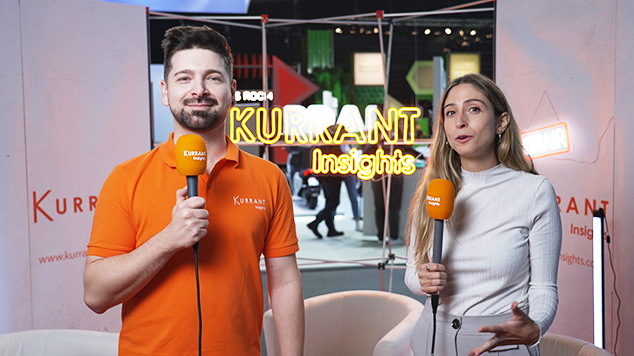
Interviewed by Emma Lozano Doogan on the Kurrant booth at Smart City Expo World Congress 2026, Barcelona.
📖 Read Video Transcript
We're back at the Kurrant booth
and I'm here with Ángel López.
2
He is the General Coordinator of
Mobility Services at the Barcelona
3
City Council and Loha Hashimy, FACTUAL
Mobility Innovation Specialist.
4
Welcome, first of all.
5
And we're going to be
discussing the DAVER project,
6
which is to identify
high-polluting vehicles.
7
The first question, Ángel,
is DAVER aims to identify
8
individual vehicles causing
excessive pollution and noise.
9
So what's missing from
the way European cities
10
currently monitor and
manage traffic emissions?
11
Well, from years ago that
we realized that a part of
12
the vehicles in the city is
polluting more than others.
13
It's not only a fact in
the age of the vehicle nor
14
on the Euro standard, but
also is more about the
15
maintenance or problems
in a particular vehicle.
16
From 2018, we are checking
this kind of
17
solutions on roadside devices
that allows us to know what is
18
the emissions, not emissions,
but emissions of vehicles.
19
And we arise that we need to
take some actions on that.
20
And that is for that we promote
with FACTUAL and Opus RSD a
21
project to make more formal
this kind of enforcement or
22
this kind of taking data from
real emissions from vehicles.
23
And then let's get into the technical.
24
Loha, DAVER combines gas sensors,
25
acoustic cameras, and
vehicle identification.
26
What can it detect that
traditional monitoring can't,
27
and how accurately can it
identify high-polluting vehicles?
28
As Ángel mentioned, most of the
cities are at— they've already taken
29
really good actions when it comes
to measurement of pollution.
30
But these measurements, in most cases,
they give an overview of the city,
31
the pollutants in the city,
not actually which individual
32
vehicles are polluting more or less,
or what is the exact measurement
33
of pollution for each one of the
vehicles or types of vehicles.
34
Because not just cars,
but also motorcycles and
35
and other types
of vehicles that projects
36
such as DAVER can measure
their pollution exactly at real
37
time with real traffic
into consideration.
38
And the 3 layers that you were
actually mentioning, DAVER combines
39
sensors which measure the emission
of the individual vehicle,
40
that is through infrared as well
as ultraviolet spectroscopy.
41
But also the cameras, the acoustic
camera, they measure the noise.
42
And then the last one
is this algorithm
43
that Opus has developed, which
automatically actually does this
44
matching of— it reads the
number plate of the vehicle and
45
then does the matching of
the type of the vehicle with
46
the type of emission that it
should— it should usually—
47
or the average of emission
that usually generates,
48
and then flags whether it's
emitting more or emitting less.
49
So what is the end goal of it?
50
Is it to improve low emission zones?
51
Is it to have different
zones where you
52
can't go in with that type of vehicle?
53
What is it?
54
We have no way to know which
are the high-emitter vehicles.
55
Air quality is clear that is
one of the worst things that is
56
making death in cities.
57
And we realize that it's not a
match in what we are measuring
58
in the— when you breathe,
the emissions, and what the
59
emissions of vehicles, the
theoretical emissions of vehicles.
60
And why?
61
Because some vehicles, many vehicles,
62
we say 3-4% of the vehicles
are polluting a lot.
63
So we need a technology
that can accurately
64
measure that on the trip, so online.
65
Then we need a regulation
that allows that.
66
to be forced and also to be
convinced that that is a way.
67
First, as you say, to communicate,
to try to convince people to
68
have a good maintenance of the
vehicle, not to modify the vehicle.
69
If we don't have this kind of
tools, we need to make some of these
70
low emissions zones where we are
banning vehicles just for the age.
71
An old vehicle
72
is bad, a new vehicle is good.
73
Maybe not.
74
Maybe some new vehicles are tampered,
are modified, are not well maintained,
75
and are polluting more than an
old vehicle very well maintained.
76
Okay, and Loha, DAVER is
being tested in 3 cities.
77
What have been the findings so
far, and have you seen if the
78
polluting vehicles are different
in the different cities?
79
One of the— we're on the
way actually to the lessons
80
learned because we are still
piloting in these cities.
81
But one of the things we
learned early on in the project
82
is that the needs of the
cities are quite different.
83
Some cities are more
advanced, such as Barcelona,
84
when it comes to measurement
of the pollutions.
85
And emissions, but some other
cities are less advanced.
86
In Barcelona, we have
got zero emission zones,
87
we have got labels around
environmental labels for vehicles,
88
but we also actually, we are using
the sensing systems and really
89
advanced sensing system in
order to measure emissions.
90
But some, in some other cities, we
still don't have those technologies
91
deployed and the stage of deployment
is so different that in some cities
92
systems such as DAVER they are
useful more for deployment of the
93
plans that already cities have in
mind in order to go one step further.
94
It's not just actually I'm
planning and I'm deciding
95
which areas, for example,
these polluting vehicles
96
can enter and which
areas they cannot enter.
97
It is rather I'm now targeting
specific vehicles,
98
not by type, a specific actually
vehicle with number plate,
99
individual vehicle, and probably I'm
sanctioning those vehicles, right?
100
But in some other cities,
still they don't have tools
101
even to plan actually
how to measure emissions.
102
Then we have got 3 types of actually
systems right now piloted in DAVER
103
One is fixed, one is semi-fixed,
104
and another one is completely
dynamic or flexible.
105
And that is based on
the needs of the city.
106
But then in cities such as Groningen,
107
we have installed a fixed system
that is measuring long-term
108
in a specific area, in a
specific street highway.
109
Measuring the emission of the vehicles
110
that passes or crosses that highway.
111
In Thessaloniki, we
have got a flexible.
112
In Barcelona, we have
got a semi-fixed.
113
Remember that DAVER is a project
funded by EIT Urban Mobility,
114
and we need finally
to have a framework
115
where this kind of products
could be commercialized.
116
I'm insisting always that
we have 3 different cities
117
with 3 different probable
ways to buy the system.
118
Groningen in one extreme will
be city buys the equipment and
119
maintains the equipment and exploits
the result of the equipment.
120
In the case of Thessaloniki, only are
121
interested in the data,
not in the equipment.
122
So the equipment is rented.
123
We are trying an
intermediate possibility
124
to assess the procurement
of other cities.
125
That is the case— in the case that
the equipment is so expensive,
126
we will put some fixed
places without the equipment.
127
And we buy some, many
equipments, 6, 8 equipments,
128
and we will move the equipment
inside these cabinets.
129
And then in terms of decision-making,
what is— because obviously
130
the end goal of any smart
city tech is that we have then
131
informed decisions to improve
services, improve life quality.
132
What are some of those
decisions that might take place?
133
I think DAVER is exactly trying to
address what you're saying in
134
in sense that it is not just
measuring the pollution,
135
but it's helping cities actually
to take better decisions,
136
decisions that are benefiting
the citizens, the society.
137
So systems such as DAVER they
can also help the cities in
138
order to first identify which
vehicles are emitting more,
139
but hopefully come up with
ways in order to limit the
140
use of those vehicles, so to
improve the health of the society,
141
because we know already,
as Ángel was saying,
142
that pollution is one of the
major causes of death in cities.
143
So DAVER is also kind of
promoting fairness in the sense
144
that now you actually are
penalized for your actions.
145
It's either tampering your
vehicle or not maintaining it
146
properly or having a specific type
of vehicle that is emitting much,
147
much, much more than—
we are talking about
148
98% or 97% more than any other
type of vehicle in the city.
149
And now we are only considering the
theoretical emissions from vehicles,
150
and we are taking decisions like,
like these low emission zones.
151
For example, in 2028, what is
provided by the regulation of
152
Generalitat de Catalunya, more or
less 18% of the vehicles,
153
so the B vehicles with the
yellow label, will be banned.
154
With these technologies,
with 3% of vehicles,
155
not only B label but also C label,
we will have the same effect.
156
So to take the decision who
must be banned in the city,
157
how we apply the low emission
zone, we need real data.
158
And this real data comes
from roadside devices.
159
Do you think because the goal
is to have it go to market,
160
have the solution go to
market, so could remote vehicle
161
emissions monitoring become
standard smart city infrastructure?
162
Is that the goal?
163
I don't know what is the
path to achieve this finally
164
commercialization of the
technology, but it's clear that
165
in the Roadworthiness
Package, where the European
166
Commission is trying to improve
the control of vehicles in
167
the laboratory, in the ITV,
but also is allowing
168
the case of the controlled
emissions from on the route.
169
And is there where this kind of
technologies can have a solution.
170
After that is approved, we hope
that that could be one year,
171
then all the states must translate
that in the own regulation.
172
And after that is in cities where
we can do something like to send
173
this letter or maybe to enforce,
maybe to ban, or maybe to fine.
174
For us, the technology is proved.
175
It's not only Opus RSD,
there is other providers.
176
So finally, the market in
Europe will have several choices
177
with the same idea, to know
what is the real emissions of vehicles
178
and to select who of them
are high emitters
179
And definitely regulation
is going to be an enabler,
180
one of the main enablers of these
technologies to be used in the cities.
181
But also at local level, I
think we need to promote it
182
further and we have to have
discussions at national and
183
local level in order to raise
awareness of cities and also
184
policymakers about these new
technologies and how these
185
technologies can help them
to take better decisions and
186
also come up with new enforcement
systems that are more fair,
187
much more sustainable when
it comes to environment.
188
Okay, well, thank you so
much for the conversation.
189
Thank you.
About Smart City Expo World Congress Barcelona 2026
Smart City Expo World Congress 2026, Barcelona, 3 to 5 November. Kurrant films the expo floor, interviews with city and utility leaders and the companies that work with them, and The Smart Deal live pitches at Booth D151 in Pavilion 3. Videos are added here as we film them.
More Smart City Expo World Congress Barcelona editions

Latest Kurrantly News
All news DCC Extends Arqiva’s Northern Smart Meter Network To 2037, Sensus To Supply New Base Stations
 Oman Water Ministry Signs Nama Deal For LoRaWAN Smart Meters On 1,000 Groundwater Wells
 Via Verde Opens 12-Point, 400 kW Ultra-Fast Charging Hub in Portugal
 Rematics Runs Waste-Recognition Cameras On 70+ Collection Trucks As MOBA-Backed Pilots Expand
 Suez And Cornerstone Host Wize Water Meter Network On 100 UK Mobile Towers
 TIM Brasil And Smart Luz To Connect Over 12,000 Rio de Janeiro Lighting-Pole Cameras Over 5G
Latest Kurrant Originals
See all

Kurrant advisory
Planning a smart city or utility project? Talk to Kurrant.
Behind these interviews is Kurrant's advisory team, working with utilities, cities and the companies that serve them.
- Strategy AdvisoryKurrant is actively involved in resolving the challenges that cities, utilities and industry players are facing.
- M&A AdvisorySmart city and utility expertise for successful deals, turning insights into strategic gains.
- Engineering & ProcurementBetter engineering and procurement decisions, by identifying and developing digital and IoT solutions across use cases.
Or write to us: contact@kurrant.com
Send us a message
© Kurrant. All Rights Reserved. · Editorial Standards · Cookie settings
This site is protected by reCAPTCHA and the Google Privacy Policy and Terms of Service apply.