 in Barcelona
 3 to 5 Nov 2026
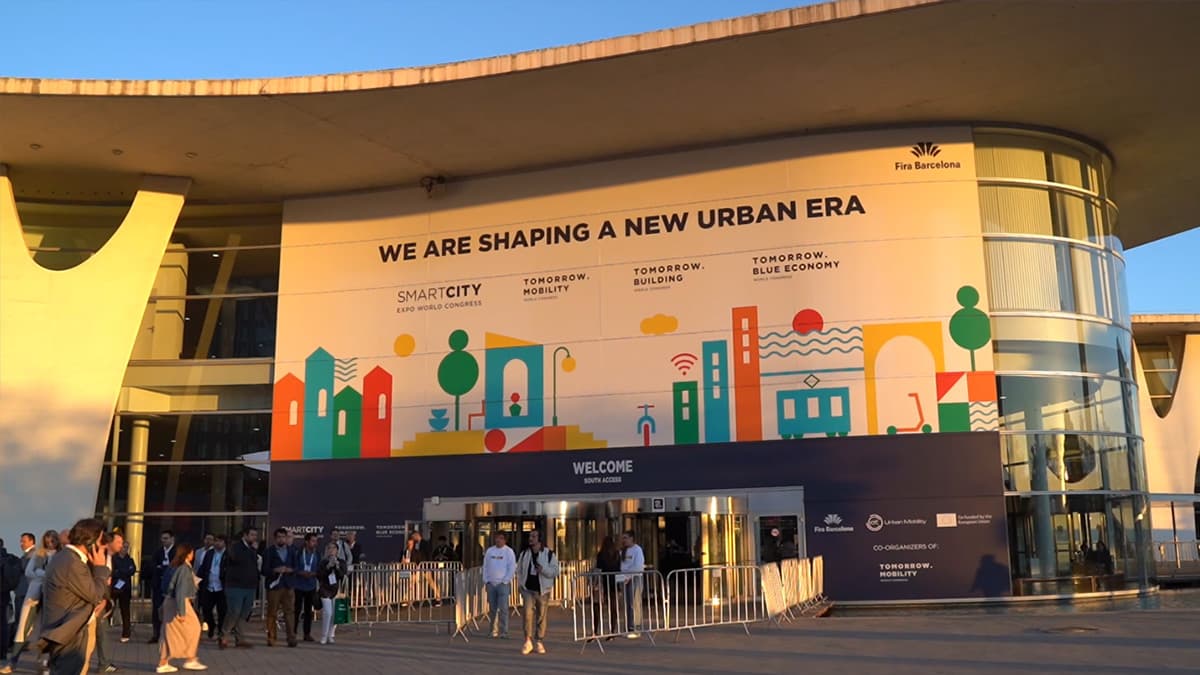
Smart City Expo World Congress Barcelona 2026
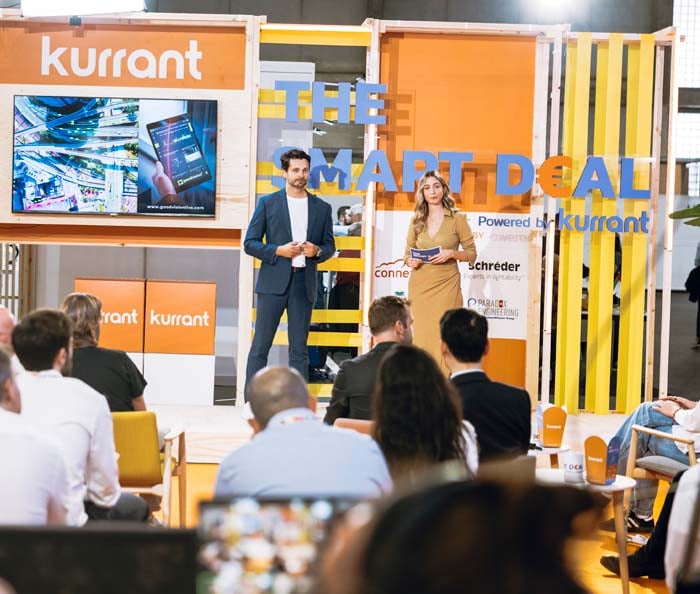
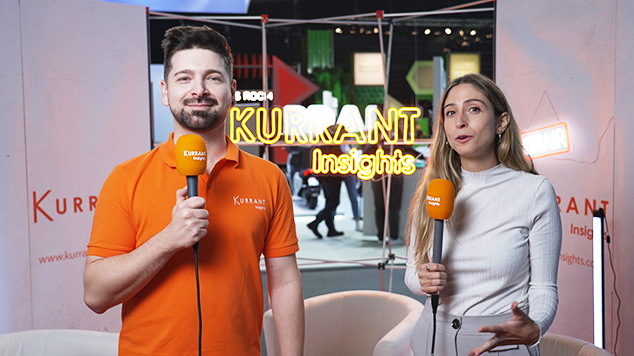
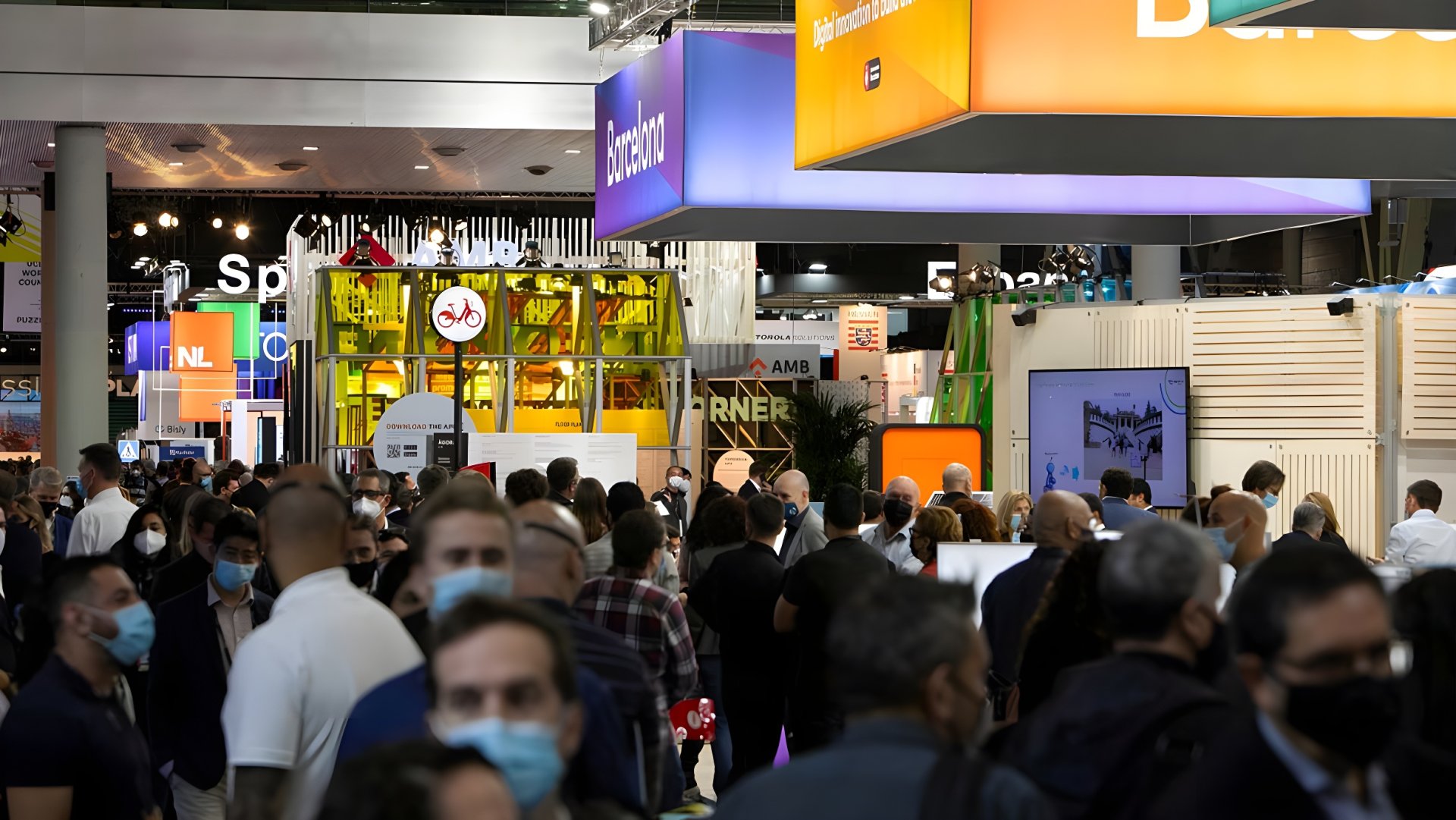
Smart City Expo World Congress 2026, Barcelona, 3 to 5 November. Kurrant films the expo floor, interviews with city and utility leaders and the companies that work with them, and The Smart Deal live pitches at Booth D151 in Pavilion 3. Videos are added here as we film them.
From Space to Streets: satellite data for cities (Highlights)
How do cities turn data from space into real improvements on the ground? On the Kurrant booth, four partners of SPACE4Cities, an EU-funded project testing five satellite-based solutions in 15 European cities, discuss what it takes: Valeria Catalano (EUSPA), Renske Martijnse-Hartikka (Forum Virium Helsinki), Eleonora Stragliotto (Latitudo 40) and Alex Gluhak (OASC). Emma Lozano Doogan of Kurrant moderated.
They explain why satellite solutions rarely reach cities, and how the project’s pre-commercial procurement narrowed 140 bids to five winners. They also show how the CLIMAPS platform lets planners test flooding and heat impacts in Amsterdam, Naples and Helsinki before investing public money, and what a mayor should do to start using satellite data.
Recorded at Smart City Expo World Congress 2026, Barcelona.
📖 Read Video Transcript
I think it's a really good,
exciting moment for them to try out,
2
dip their toes in,
and start using space tech.
3
Well, welcome all to the Kurrant
booth, and welcome to our panel.
4
Our panelists today are working
together on SPACE4Cities, an EU-funded
5
project testing five satellite-based
solutions across 15 European cities,
6
making them the perfect experts
to tell us about how we turn data
7
from space into real
improvements down here on Earth.
8
You've talked about
fragmentation in the market
9
for satellite-based solutions.
10
What does that mean in practice?
11
What's stopping cities from using
these technologies, this data,
12
and how is SPACE4Cities trying
to change that fragmentation?
13
So SPACE4Cities is for us
a very important project.
14
When we launch a call for proposal,
when we launch a tender,
15
we have noticed that there
are two important problems.
16
The first one is the composition
of the consortium,
17
in the sense that when some companies
have to create a consortium to apply
18
to our calls, the companies that are
part of the consortium are big
19
or small companies, research
institutes, but it's quite rare
20
that in the consortium there
are also end users, final users.
21
In the case of SPACE4Cities
22
there are five
municipalities that are part
23
of the team developing these
solutions that will be the users,
24
the final users.
25
In the case of the municipalities,
when I interact with them,
26
I notice that they are not aware
of the potential of the use
27
of the space data.
28
For this reason, it's important
to develop solutions
29
to showcase the big value
of space solutions.
30
And then, Renske, one way SPACE4Cities
is addressing this fragmentation is
31
through pre-commercial procurement,
and you've used this approach before
32
for autonomous buses and drones.
33
Why does it work for cities?
34
Indeed, for Forum Virium Helsinki,
we're the innovation organization
35
of the city of Helsinki.
36
It's the seventh PCP, pre-commercial
procurement, that we are involved in,
37
the fourth that we are leading, and
we love this type of project so much
38
because it's really like a co-creation
process, and that's quite rare
39
in EU projects.
40
And then we opened up a call
for tenders, which is usual for PCPs.
41
As a result, we got
an overwhelmingly large response,
42
140 tenders from all over Europe.
43
The majority, the large majority,
SMEs and startups, mostly startups.
44
We selected 20 out of those 140,
and then it's a phased process
45
in which each phase we dropped
50% of the companies,
46
from 20 to 10 to now the five winners.
47
And with each phase,
the budgets went up.
48
So a company that goes
within our PCP from start
49
to finish receives approximately
€400,000, a bit less,
50
which is for a small company
a significant amount of R&D money.
51
So Eleonora, let's look at what
these solutions can actually do.
52
Your CLIMAPS platform is being tested
in Amsterdam to address flooding
53
and urban heat.
54
What information does it give
city planners, and how does
55
that help them make decisions
they wouldn't be able to make if
56
they didn't have this?
57
CLIMAPS, actually,
and the platform we developed,
58
helps support the urban planning.
59
In what sense?
60
The urban planner receives
not only the raw data,
61
they receive an analysis and with KPI.
62
What is the added value?
63
Is basically the capacity to
understand which is the future impact
64
of a master plan, for example.
65
So apart from the platform,
but within the platform,
66
the urban planner can
upload the master plan
67
and to test before investing
public money, for sure,
68
in order to understand if this kind
of project, renovating project,
69
can really impact in a good
way or in a worse scenario,
70
leading to a worse scenario
from an environmental point of view.
71
Can I very shortly add what I
also forgot to mention:
72
the goal of the PCP, that it needs
to go beyond the state of the art,
73
it needs to be highly innovative.
74
So it's just that this solution and
the four others that are the winners,
75
it's not yet as such on the market.
76
So it's really going beyond
the state of the art.
77
It's part of the PCP and they've
been doing a great job.
78
SPACE4Cities isn't
just testing solutions
79
in the original pilot cities.
80
Ten more cities joined
in October, if I'm correct?
81
So yeah, basically we are
representing the demand side.
82
So there's a lot of, obviously,
suppliers of space solutions,
83
but often the problem is that the
potential buyers, like cities,
84
they don't actually know what the
solutions can do for them, right?
85
And OASC has a network of 200
cities, but we also reached out
86
to many other networks
and cities that we are aware
87
of to educate them first.
88
Eventually we then launched a call
for replicators, and we are very glad
89
to confirm we have now ten additional
cities joining us, and they're all
90
from different geographies,
from Spain all the way to Lithuania,
91
or from Greece all the way
to France.
92
Latitudo 40 has worked with
Naples for years and Helsinki
93
on monitoring greenery.
94
How do you adapt the same
satellite technology to two cities
95
with such different
climates and priorities?
96
For example, the tool
and the technology is the same.
97
Okay, so satellite data are the source
and the AI algorithms are the same.
98
And the case is
that for sure in Naples
99
we have heat stress during summer.
100
We have a lot of urban fabrics, less
greenery, and so the attention will be
101
for sure in land surface
temperature and parameters,
102
urban heat islands, for example.
103
From a city like Helsinki,
where the abundance
104
of greenery is very important instead
of the other Mediterranean cities,
105
let's say, the importance will be
more into understanding the life cycle
106
of the green, the green
health, and how also
107
it will impact the long winter
and snow coverage, for example.
108
So the information that will be
in the platform will be others, okay?
109
But then the pipeline
and the tool will be the same.
110
The necessity,
the priority are different,
111
but mainly the tool will scale
in the same way using the data
112
and transforming the data
into actionable insights,
113
and so also possible to understand
and to make urban planning on that.
114
Valeria?
115
Apart from the innovative
solution developed by Latitudo 40,
116
it's very important for us
to see how the startups
117
and the small companies are growing.
118
It's very satisfying for us
as EUSPA to see the growth
119
of these small companies
that want to scale up.
120
Just to add to that, I think
that's the real value for me,
121
is to have a safe environment
for her company to learn,
122
right, from customers,
and basically have these conversations
123
and also notice where are
problems, issues, barriers,
124
and then also find hopefully
an approach to overcome them, right?
125
So I think it's really
a mutual learning experience,
126
not only for the city
but also for the supplier.
127
So I mean, obviously there
is innovation out there,
128
but testing a solution
is one thing and using
129
it in everyday city
operations is another.
130
What does it take
to make that transition?
131
There will be KPIs,
132
there will be things agreed between
the supplier and obviously the city,
133
which hopefully will show what a good
outcome for a city would look like.
134
And once the pilots are over, we
review it and if those KPIs are met,
135
then the city itself has evidence
sufficiently to potentially invest
136
in this solution.
137
I wanted to add that if you ask
about barriers to wider uptake,
138
what we've heard as well
from the companies is that one
139
of the most difficult things
is to find the real end user.
140
And we can facilitate
that now through the projects,
141
and we do that for the replicator
cities, and we try to do it as well as
142
we can during the project lifetime.
143
But if the project has ended,
the companies need access
144
not to the EU project managers or to
the innovation department necessarily,
145
but really to the real end user.
146
And that's very tricky
after the project lifetime.
147
That's why we try to do as much as
148
we can now during the
project to help them.
149
Now we have seen that a lot
of these very innovative interesting
150
demonstrators developed with this
funding, they are not commercialized
151
because there is also the need
to provide funding for the last part,
152
the last mile to commercialization.
153
With just one sentence, what should a
mayor visiting the Smart City Expo do
154
next year to start
using satellite data?
155
I wish that there would be more
sessions in the official program
156
on this topic.
157
What I suggest is to ask
to the satellite for an answer
158
to their problem.
159
We will go further with the agents
also applied to the Earth observation
160
that are coming also,
this kind of technology.
161
And so for the urban officers,
they should start asking also
162
to the Earth observation.
163
It's not so far, even if they think
164
that the Earth observation is too
far still, but there are a lot
165
of use cases also down on Earth.
166
And if I can say just one thing,
is that not only Earth observation,
167
but there is also navigation with
the European GPS, that is Galileo.
168
What I would say to a mayor
is that the future is bright
169
for space technologies.
170
There's already so much interest I
can see from our project engagement.
171
We had more than 120 cities sign up
172
as follower cities throughout
our journey, right?
173
They've been informed
what's happening.
174
They showed an interest
in what's happening there.
175
And the potential already is now
evident as well in the applications
176
that we develop and the pilots.
177
And EUSPA and other
companies are investing
178
more and more into the space sector.
179
There will be more
capabilities available
180
to even do more great things.
181
Before we wrap up,
can I take a moment to say
182
that we have this innovation catalog?
183
So it's from the SPACE4Cities project.
184
It features the five winning
solutions and the lead city
185
and the two replicator cities
in which they will be piloted.
186
So if anyone wants
to read a little bit more,
187
we have the space4cities.eu website.
188
It's digitally available as well.
189
Thank you very much, and thank
you for the conversation.
About Smart City Expo World Congress Barcelona 2026
Smart City Expo World Congress 2026, Barcelona, 3 to 5 November. Kurrant films the expo floor, interviews with city and utility leaders and the companies that work with them, and The Smart Deal live pitches at Booth D151 in Pavilion 3. Videos are added here as we film them.
More Smart City Expo World Congress Barcelona editions

Latest Kurrantly News
All news DCC Extends Arqiva’s Northern Smart Meter Network To 2037, Sensus To Supply New Base Stations
 Oman Water Ministry Signs Nama Deal For LoRaWAN Smart Meters On 1,000 Groundwater Wells
 Via Verde Opens 12-Point, 400 kW Ultra-Fast Charging Hub in Portugal
 Rematics Runs Waste-Recognition Cameras On 70+ Collection Trucks As MOBA-Backed Pilots Expand
 Suez And Cornerstone Host Wize Water Meter Network On 100 UK Mobile Towers
 TIM Brasil And Smart Luz To Connect Over 12,000 Rio de Janeiro Lighting-Pole Cameras Over 5G
Latest Kurrant Originals
See all
Kurrant advisory
Planning a smart city or utility project? Talk to Kurrant.
Behind these interviews is Kurrant's advisory team, working with utilities, cities and the companies that serve them.
- Strategy AdvisoryKurrant is actively involved in resolving the challenges that cities, utilities and industry players are facing.
- M&A AdvisorySmart city and utility expertise for successful deals, turning insights into strategic gains.
- Engineering & ProcurementBetter engineering and procurement decisions, by identifying and developing digital and IoT solutions across use cases.
Or write to us: contact@kurrant.com
Send us a message
© Kurrant. All Rights Reserved. · Editorial Standards · Cookie settings
This site is protected by reCAPTCHA and the Google Privacy Policy and Terms of Service apply.