 in Barcelona
 3 to 5 Nov 2026
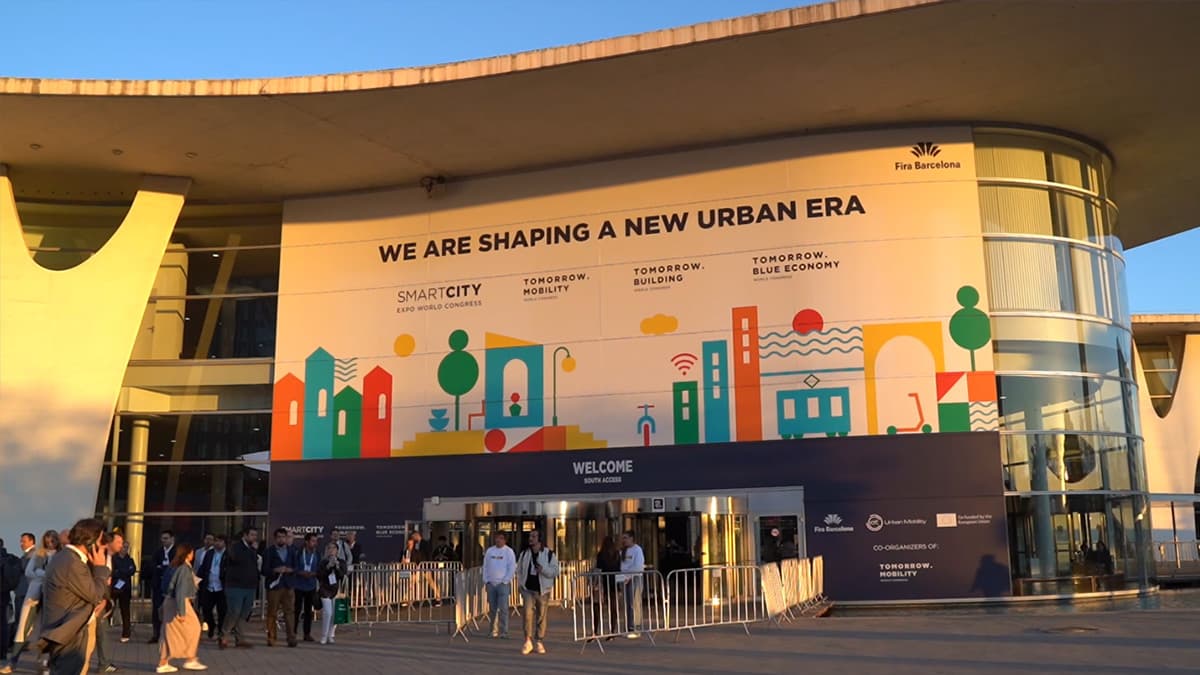
Smart City Expo World Congress Barcelona 2026
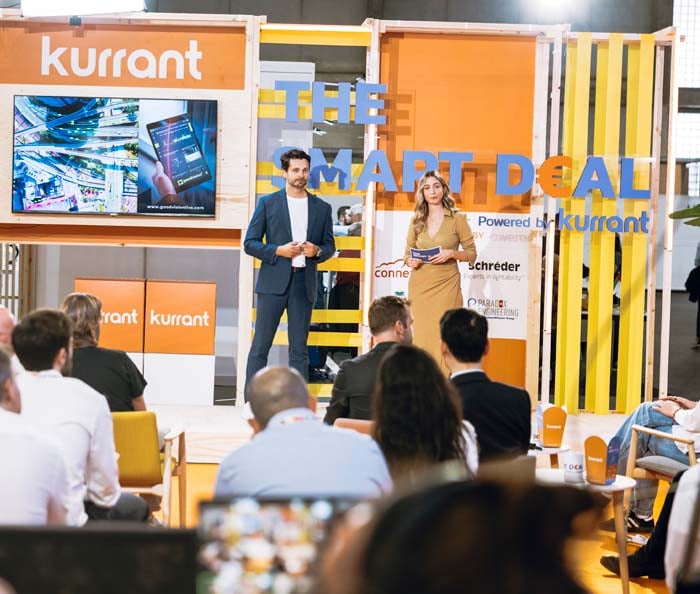
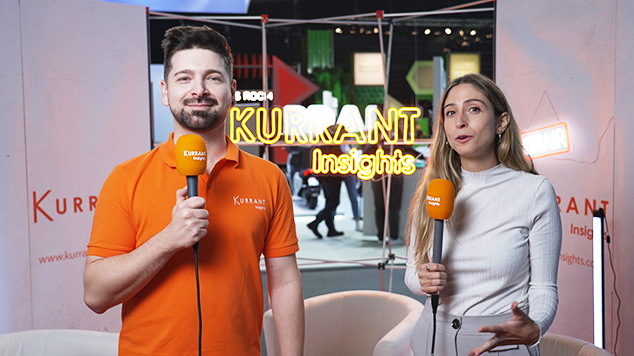
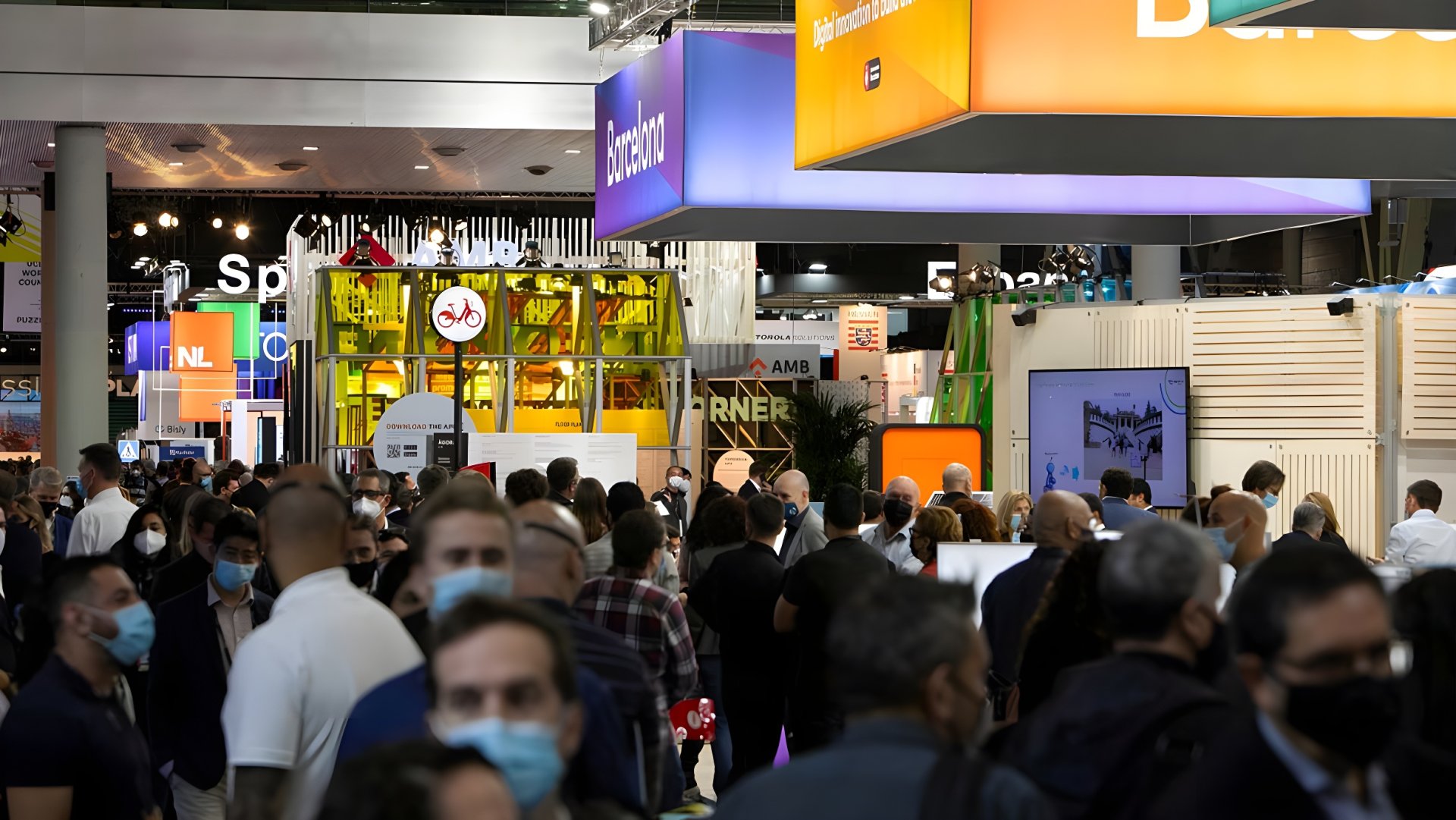
Smart City Expo World Congress 2026, Barcelona, 3 to 5 November. Kurrant films the expo floor, interviews with city and utility leaders and the companies that work with them, and The Smart Deal live pitches at Booth D151 in Pavilion 3. Videos are added here as we film them.
Roberta Righini, AMAT Milano: what the Winter Olympics changed for mobility in Milan
Roberta Righini, Mobility Planning Coordinator at AMAT, Milan’s mobility agency, looks at mobility before, during and after the Milano Cortina 2026 Winter Olympics. Milan had seven years to prepare Games spread over venues in the city and in the mountains, four hours apart, and unlike summer Games they took place while schools and workplaces were open, so the trips of athletes, workforce and spectators had to fit into a city with its own traffic. She explains how AMAT planned transport venue by venue to meet the requirement that all spectators could reach them by public transport, why the metro ran until 2 a.m. and what that meant for night maintenance and staffing, and how 60% of the 63,000 spectators at the opening ceremony arrived by public transport, against about 30% for a football match at the same stadium. She describes the communication campaigns and parking restrictions that made the difference, the longer metro hours and parking measures she would like the city to keep, and how visitors accepted walking long distances. She also presents an agreement to test autonomous vehicle services for vulnerable people, in phases, and her wish for the city to plan with real-time data.
Interviewed by Emma Lozano Doogan on the Kurrant booth at Smart City Expo World Congress 2026, Barcelona.
📖 Read Video Transcript
We're back at the Kurrant booth.
2
We're here with Roberta Righini.
3
She is the mobility planning
coordinator at AMAT,
4
which is Milan's mobility agency.
5
So we're going to be
talking about the before,
6
during, and after of
mobility during the Winter
7
Olympic Games that took
place this year in Milan.
8
So how did Milan prepare its transport
network for the Winter Games?
9
And what was the biggest
mobility challenge?
10
Yeah, I have to say
that we win the Olympic
11
Games in 2019, so we got
7 years to plan everything.
12
And this seems to be a long
period, but we have to do many
13
different things because this
was the first big event that took
14
place not only in one venue,
because we have many venues
15
in different places, some in
the city, some in the mountain.
16
And for example, if you
want to go from Milan
17
to Cortina, you have
to travel for 4 hours.
18
And this means that
we have to cooperate
19
with many different stakeholders.
20
And I think that the very particular
things of this event was that if
21
you compare Winter Olympic
Games with the Olympic Games,
22
the seasonal theme is very important
because during the Olympic Games,
23
normally the Olympic Games took place
in summer, so the schools are closed.
24
People are on holidays, so
cities are with less traffic.
25
But if you host the Winter Olympic
Games in a big city like Milan,
26
you have to face some
problems like children
27
that have to go to school,
people that have to go to work.
28
So the normal mobility that
characterizes the city,
29
and you have to integrate
all the system of
30
the athletes, of the
workforce, and you have to
31
try to include all these trips
that these people generate in a
32
city that has its own problem of
traffic, problem of transport.
33
So I think that this was the
goal, to include this event
34
in a city that works, in a
city that has its own life.
35
So that was the before.
36
This is the challenges you
saw, how you wanted to prepare.
37
But then during the games,
Milan extended metro hours,
38
increased services, and
adjusted traffic management.
39
Which measures worked best,
and what was something
40
that didn't actually
go as you had planned?
41
In Milan, we host different
venues because we have
42
some competitive
venues, 3 in particular,
43
but we also host the main
media center, the village
44
where the athletes live,
and also the IOC Club that
45
was the place in which
IOC make the interviews.
46
And each venue is different
from the other because
47
some were in the city center,
some in suburban areas.
48
So we plan a particular— we pay
particular attention to each venue.
49
We make a planning, a transport
planning for each venue, and
50
we try to understand the
specific things that characterize
51
these venues because,
you know, the IOC told
52
us that we have to plan
that 100% of spectators have
53
to reach these venues with
public transport system.
54
And this is not very easy because
55
we have competition in the morning,
56
in the evening, and in the afternoon.
57
We have many competitions
in the same place in
58
the same day, so we have
to organize everything.
59
And that's why we have to improve
our public transport system,
60
not also adding services,
but as you told,
61
as you said, increasing the
time that the subway were open.
62
And if I remember, I think
at 2 o'clock in the evening.
63
And this is a very
performant thing because
64
during night we have
to do maintenance.
65
So we have to change also
the program of maintenance.
66
We have to employ more people.
67
to compact all the operations
that we have to do.
68
But I can say that we have
a big result because a lot
69
of people use the metro
and the subways during the
70
night and also use in
general the public transport.
71
For example, we hosted
the opening ceremonies and
72
we have around 63,000 people,
spectators there.
73
And the 60% of them reach the
stadium just with public transport.
74
And this is very important because
normally when we have events there,
75
for example, soccer
or football events,
76
only the 30% of the spectators use
public transport to reach the stadium.
77
So this has shown us that if you
plan things in a very good way,
78
if you convince people
to use public transport,
79
because the cooperation with people,
with the city, is very important.
80
But if you convince
them, our infrastructure
81
can be able to transport
all these people.
82
And how did you make
it more attractive?
83
By increasing hours?
84
And how— but how
did you communicate
85
it to people that it
was going to be there?
86
Yeah, we make a lot of important
campaign with, using,
87
for example, social media,
or we're using the journal,
88
we use the newspaper, we
use a lot of different
89
way to reach people,
and we repeat in many,
90
many different ways that they
have to use public transport.
91
But of course, we close some
areas and we didn't give the
92
possibility to the people
to park their cars.
93
So they knew that they can't
arrive by cars, and so they,
94
that they were obliged
to use public transport.
95
Okay, and then what about the after?
96
What are some improvements that
97
that the Games have
actually left in Milan,
98
and which temporary measures
would you like to keep?
99
Of course, the improved
public transport.
100
I think that that will be
101
a very important measure for
the city, extend the hours,
102
and I think that if we will
be able to have subways,
103
maybe not all night long, but till
2 o'clock, 3 o'clock in the morning.
104
This could help people to choose
public transport also for nightlife,
105
for the guys that won't move
the car because maybe they,
106
they drunk, so they are not
safe if they drive.
107
And of course, I think that
another thing that could
108
be important is to be able
to avoid parking in some
109
specific area, because forbidding
the way of— forbidding parking,
110
it's something that could help people
111
to choose a different way
of transport and moving.
112
Okay, so you saw that
if there weren't— like,
113
you're thinking that if
cars aren't parked there,
114
then that maybe people
would rather walk as well?
115
Yeah, yeah, that's what we
saw during the Olympic Games.
116
They walk a lot.
117
Of course, a lot of people
came from other countries,
118
so they don't have a
car, so it was easier.
119
Yeah, I'm sure of this.
120
But what we saw is that they
121
accept to walk.
122
They cover long distance
walking and just
123
to reach a subway or public transport.
124
And it was safe.
125
You can see that people
were happy because
126
they walk together,
they spend time relaxing.
127
But what we saw is that if
you do many things to help
128
people to understand that
you can choose something
129
different from private car,
at the end they will choose.
130
And so I think it's nice.
131
And then now let's
change the subject a bit.
132
Milan, recently we saw
that they— you signed an
133
agreement with Newlinks to
explore autonomous mobility.
134
Can you tell me a bit
about that project?
135
Yeah, we saw— we signed this
agreement a few weeks ago and we
136
want to test autonomous vehicles
services for vulnerable persons.
137
So we decided to test this kind
of services to move this person,
138
for example, to the hospital,
to a place where they have to,
139
where they have to
go for their health.
140
And we are gonna test these
services in phases, 8 phases,
141
and the first phases will start,
you know, in a very few weeks.
142
And then for the future, if you could
choose something, a technology,
143
an idea, something for Milan's
mobility, what would that be?
144
Well, I think that
145
the dream is to try to work
with the real-time data and to
146
plan also using this real-time
data, because it's not very easy.
147
We are not ready to do this, but
I think that if it's possible
148
to spend money— first of all, money,
we have to be sincere— in something,
149
this would be the idea,
because there's a panel there
150
where you can see a perfect
city where everything works,
151
where you can control the traffic
lights, the queues, and everything.
152
This would be the future
that I'd like to see.
153
Well, they always say
if you want something
154
to happen, you have
to say it out loud.
155
So maybe it will happen
now that you've said it.
156
Okay, maybe.
157
We'll see.
158
Thank you very much.
About Smart City Expo World Congress Barcelona 2026
Smart City Expo World Congress 2026, Barcelona, 3 to 5 November. Kurrant films the expo floor, interviews with city and utility leaders and the companies that work with them, and The Smart Deal live pitches at Booth D151 in Pavilion 3. Videos are added here as we film them.
More Smart City Expo World Congress Barcelona editions

Latest Kurrantly News
All news DCC Extends Arqiva’s Northern Smart Meter Network To 2037, Sensus To Supply New Base Stations
 Oman Water Ministry Signs Nama Deal For LoRaWAN Smart Meters On 1,000 Groundwater Wells
 Via Verde Opens 12-Point, 400 kW Ultra-Fast Charging Hub in Portugal
 Rematics Runs Waste-Recognition Cameras On 70+ Collection Trucks As MOBA-Backed Pilots Expand
 Suez And Cornerstone Host Wize Water Meter Network On 100 UK Mobile Towers
 TIM Brasil And Smart Luz To Connect Over 12,000 Rio de Janeiro Lighting-Pole Cameras Over 5G
Latest Kurrant Originals
See all
Kurrant advisory
Planning a smart city or utility project? Talk to Kurrant.
Behind these interviews is Kurrant's advisory team, working with utilities, cities and the companies that serve them.
- Strategy AdvisoryKurrant is actively involved in resolving the challenges that cities, utilities and industry players are facing.
- M&A AdvisorySmart city and utility expertise for successful deals, turning insights into strategic gains.
- Engineering & ProcurementBetter engineering and procurement decisions, by identifying and developing digital and IoT solutions across use cases.
Or write to us: contact@kurrant.com
Send us a message
© Kurrant. All Rights Reserved. · Editorial Standards · Cookie settings
This site is protected by reCAPTCHA and the Google Privacy Policy and Terms of Service apply.