 in Barcelona
 3 to 5 Nov 2026
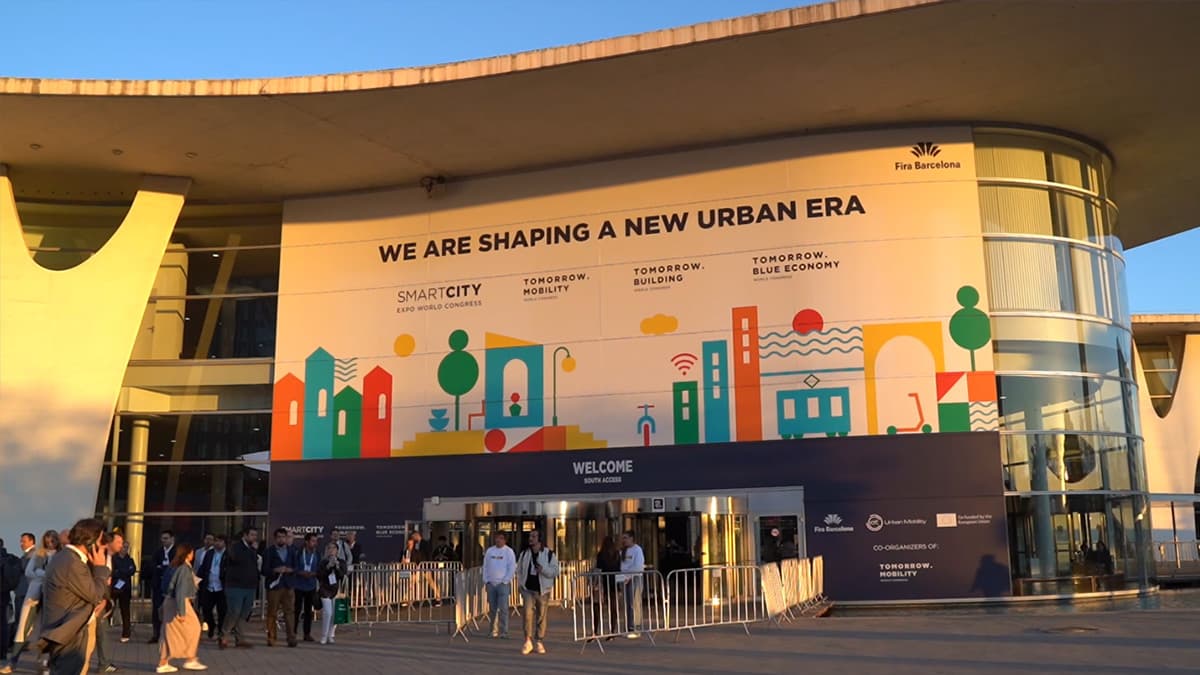
Smart City Expo World Congress Barcelona 2026
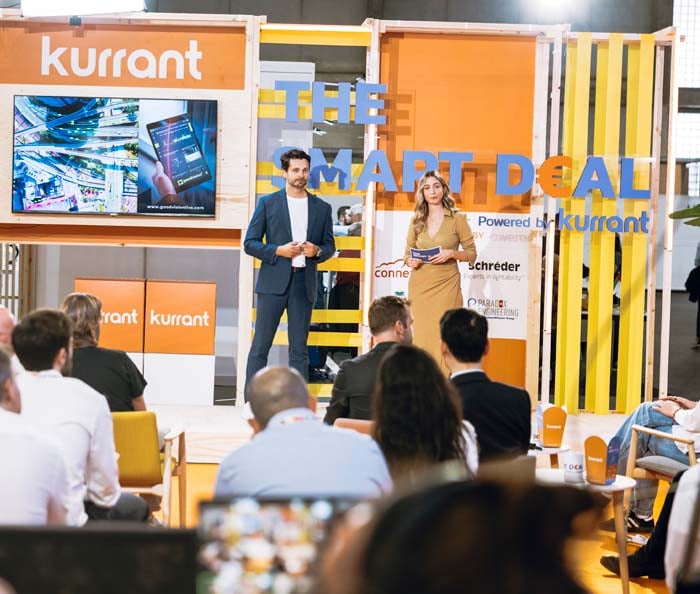
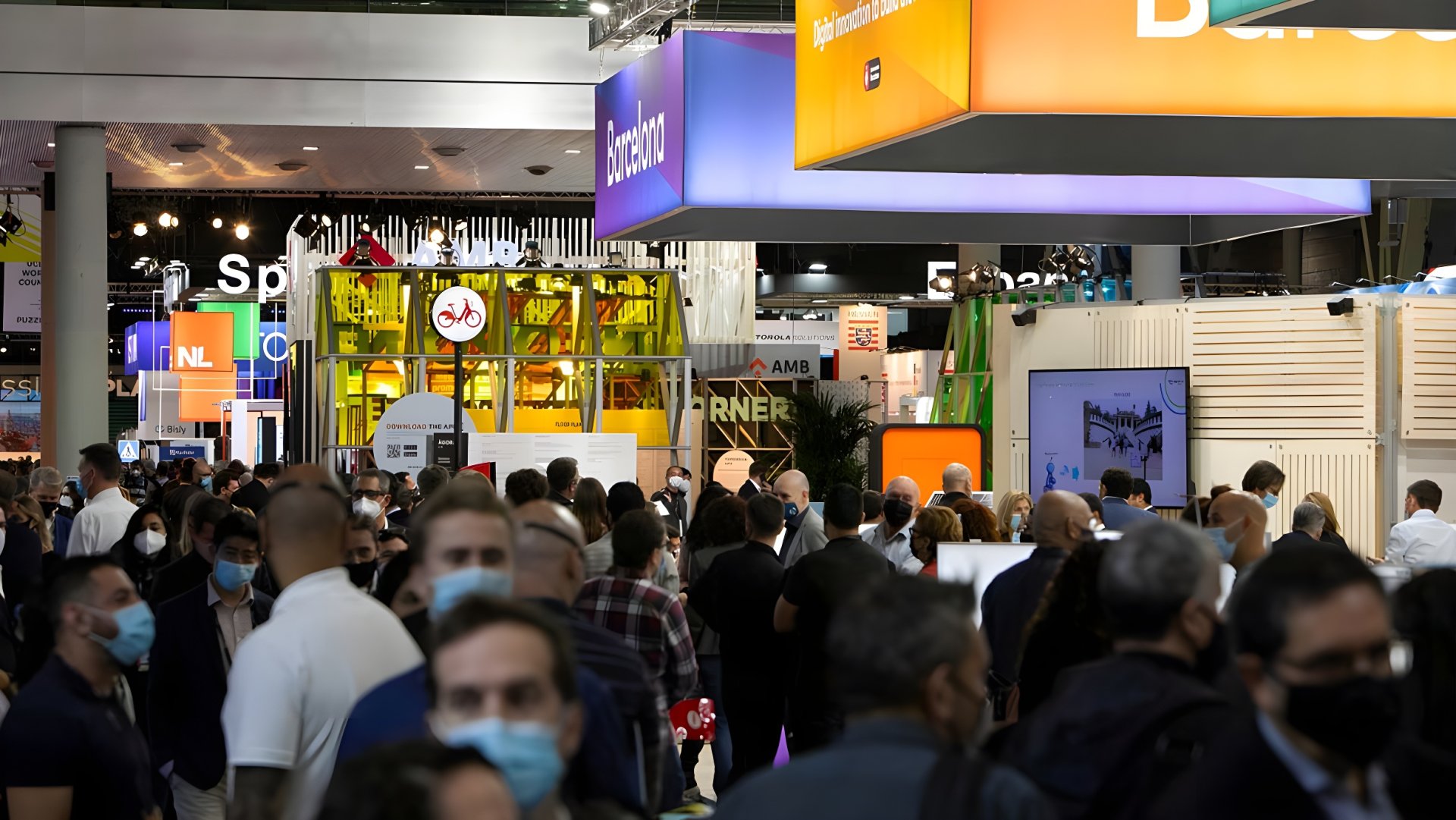
Smart City Expo World Congress 2026, Barcelona, 3 to 5 November. Kurrant films the expo floor, interviews with city and utility leaders and the companies that work with them, and The Smart Deal live pitches at Booth D151 in Pavilion 3. Videos are added here as we film them.
Briana Garcia, NYC OTI: inside New York City's Smart City Testbed
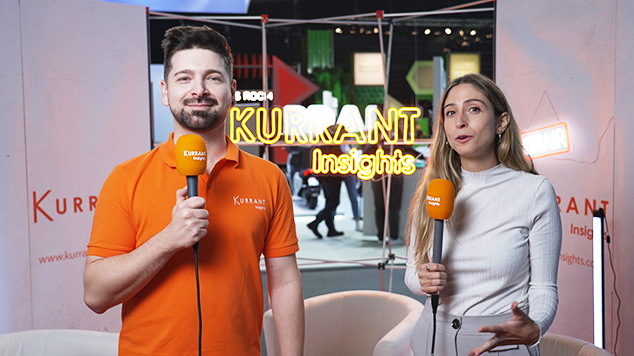
How does New York City decide which new technology is worth buying? On the Kurrant booth, Emma Lozano Doogan of Kurrant speaks with Briana Garcia, Program and Partnerships Manager at the New York City Office of Technology and Innovation (OTI), about the Smart City Testbed. The program tests emerging technology against the needs of more than 80 city agencies and offices, which serve 8.5 million New Yorkers, before the city buys it.
Briana Garcia explains that agencies bring the testbed their problems, from an old building stock that has to cut greenhouse gas emissions to streets, sidewalks and bike lanes. The testbed has used computer vision to improve bike lane conditions and drones with thermal imaging to check building facades for leaks. Its newest project, the Clean Construction Innovation Pilot in Queens and Staten Island, puts small and medium electric construction equipment on city job sites. The city wants to know whether it does the same job as diesel, where to charge and store it, what operators think of it, and whether it cuts noise and diesel emissions in parks, on beaches and wherever New Yorkers are.
She also covers how the findings are expected to inform New York City’s new climate plan, why vendors’ promises have to be tested on real job sites, and what happens after a pilot succeeds: the agency decides, and procurement takes time. A computer vision pilot with the Department of Transportation started with about 20 sensors and is now scaling to more than 100 through a federal grant. Vendors fund their own pilots, which lets the city move faster while staying open to companies of any size, and gives them direct access to the people who make decisions. Each pilot ends with an evaluation that is shared with other cities.
Recorded on the Kurrant booth at Smart City Expo World Congress 2026, Barcelona.
📖 Read Video Transcript
We're back at the Kurrant booth,
and I am here with Briana Garcia.
2
She is program manager at New
York City's Office of Technology
3
and Innovation, and we're
going to be talking about
4
their testbed, some of their
pilots. So my first question is,
5
well, New York's Smart City
Testbed has now explored
6
everything from AI-powered
infrastructure inspections to
7
urban sensors and zero-emission
construction equipment.
8
How has the program evolved and
what are the biggest technology
9
challenges city agencies are
asking you to help them solve?
10
Now, the Smart City Testbed program is
11
designed to evolve constantly, right?
12
We are a municipality. We
have a facility of over
13
80 agencies and offices
with about a 300,000-person
14
workforce serving over
8.5 million New Yorkers a day.
15
So our needs are constantly changing,
16
and it allows us to not only
be aware of what's happening
17
across city government,
but that allows us to also
18
have the need to be aware of
what's happening on the market.
19
So a lot of the times
city agencies will ask us,
20
what solution do you
have for this issue
21
or this challenge that
we're currently facing?
22
And that's part of our job, is
to understand the market trends,
23
where the market is going,
and through the New York City
24
Smart City Testbed Program,
really test and evaluate whether
25
or not these technologies can
meet our operational needs so
26
that we can provide better
services directly to New Yorkers.
27
So since you mentioned trends,
like you have to know the trends,
28
and is there a specific
technology or solution
29
that they are asking for
lately, cities, to help you?
30
Or is there a specific challenge
that lately is coming up more?
31
There are many challenges agencies
are always asking us for support on.
32
We do have a large
building stock, so a lot
33
of New York City's
buildings are quite old.
34
And so there's always questions
about how to innovate within
35
that portfolio to reduce our
greenhouse gas emissions.
36
There's also a lot of,
of course, work with our
37
city streets and sidewalks
and our bike lanes.
38
It's a lot of where we've done
a lot of piloting already.
39
We've used computer vision to
improve bike lane conditions.
40
We have looked at drones with
thermal imaging and cameras
41
to understand building facade
conditions and issues with regards to,
42
you know, leaks on the
membranes of buildings.
43
And then you've recently
launched the Clean Construction
44
Innovation pilot in
Queens and Staten Island.
45
Correct.
46
So why did the city choose
construction equipment as an
47
area for innovation, and what
are you hoping to learn that
48
couldn't be established
through conventional equipment?
49
The Smart City Testbed
Program is really designed
50
to deliver as much impact
in terms of testing
51
and evaluating across
all of city government.
52
And so when we were listening
to our city agencies' needs,
53
a lot of agencies were
like, hey, we would like to
54
test electrified construction
equipment on our job sites.
55
And so we said, all right, if
there's a lot of need across
56
government, let's launch
the Clean Construction
57
Innovation Pilot, which is
what we're talking about here.
58
From our perspective, we
want to see not only what the
59
market has to offer in terms of
small and medium-sized equipment,
60
but also what are the
real-world implications and
61
actual day-to-day usage of
using this equipment, right?
62
We not only want to
see, can the electrified
63
construction equipment
meet our operational needs,
64
but also what does it
look like to charge it?
65
Where do we store it?
66
Do we need to bring additional
chargers onto job sites?
67
What are the operational,
you know, users' feedback?
68
Do they like using the equipment?
69
And most importantly, not
only again is it improving
70
our operations or what
we hope it would do,
71
but also is it making it
quieter for New Yorkers?
72
Because we operate in
our parks, our beaches.
73
We want to make sure that where
we can, we are reducing our noise
74
pollution and direct diesel emissions
to New Yorkers where they are.
75
What do you expect will be the
highest obstacle to electrifying
76
municipal construction
equipment, the technology itself,
77
charging infrastructure, or the cost,
or the way city departments operate?
78
What do you think will be the hardest?
79
I think the first is always
80
understanding what
our agency needs are.
81
I mean, we have the Department
of Transportation, Sanitation,
82
Department of Design and Construction,
Environmental Protection.
83
They all have different uses
for these types of equipment.
84
So for us, it's: what is the actual
85
operational usage for these job sites?
86
And then also understanding
where we need to charge.
87
I think that's a big question is like,
88
can we leverage our existing chargers?
89
We do have a lot of them.
90
We're installing more
chargers every year.
91
But also, where do we need to
install additional chargers,
92
maybe outside of the normal
operational areas, to make sure
93
that we're not only charging the
equipment when they're rolling
94
up on job sites, but again,
storing them and understanding,
95
like, can these electrified
pieces do the same job as
96
their diesel counterpart, or
maybe can they do a better job?
97
And then the findings are expected to
98
inform New York City's
new climate plan.
99
How will you translate
the results of 6 machines
100
operating at some sites into
recommendations for a city?
101
I mean, it's a huge
city, it's New York City.
102
And what evidence would justify
a wider rollout to scale?
103
The testbed program is
directly aligned with Mayor
104
Mamdani's priorities, again,
of improving city operations
105
to deliver better services
directly to New Yorkers.
106
And so through the Clean Construction
Innovation Pilot, we are, yes,
107
test driving electrified construction
equipment, but really with the
108
goal of reducing our embodied carbon
emissions throughout the city.
109
So this pilot allows us to
advocate and support for that goal.
110
So that's the first part.
111
And as mentioned, like,
number 2, it gives us an
112
honest evaluation of whether
or not this works for us.
113
Like, vendors will always say the
technology can meet all these goals
114
that we have, and now we're
actually putting it to the test.
115
Like, can the machines
operate for 8 hours a day?
116
What do our operators
want to have more of?
117
Maybe it's a cup holder, maybe it's
a different charging mechanism.
118
You mentioned before like
bike lane inspections,
119
LiDAR for industrial traffic, and
sensors for pedestrian activity.
120
So in general, with all your pilots,
have you seen a big gap in that,
121
in what they promise and
what you actually need?
122
I would say I'm most surprised by
123
all the different creative emerging
technology solutions available.
124
I mean, we have done pilots
with vendors across the globe.
125
They're coming up with
innovative ways to solve our
126
most simple challenges
and also our most complex.
127
And part of the testbed program
before we even start a pilot is
128
thoroughly investigating whether or
not the company can meet our needs.
129
There's a set of
interviews that we do.
130
So by the time we get to the
actual pilot, we have a pretty good
131
understanding of what the technology
in theory can provide us.
132
And through this entire process,
it's really nice to see innovative
133
solutions in other cities that we
get to pilot in New York City and
134
also share out at the end of each
one of our pilots, by the way.
135
We write an evaluation.
136
So sharing out what we have learned to
137
other city governments in the process.
138
What happens after a testbed
project demonstrates good results?
139
Who decides whether to scale?
140
What barriers remain between a
141
successful trial and
an actual contract?
142
Right.
143
The City of New York will not procure
144
technology we first—
doesn't know work, right?
145
So that's the entire purpose of the
146
testbed program is
to test and evaluate.
147
When a pilot does succeed, it
comes down to the agency to
148
decide what they want to do
with the success of that pilot.
149
And it does take time to procure
with the city government, of course.
150
But we're already seeing
this model of testing
151
and evaluating work
for New York City.
152
We did a computer
vision pilot with the
153
Department of Transportation
a few years ago.
154
We started with a number of
sensors, I believe it was
155
around 20, and now we're
scaling to over 100 sensors.
156
And that is done
through a federal grant.
157
The City of New York is also testing
out a challenge-based model where
158
we're able to test and then procure
quicker through this new model,
159
the types of, you know, emerging
tech solutions from various vendors.
160
I think I've actually seen one of
the sensors on the Brooklyn Bridge.
161
Yeah?
162
I saw, yeah, I saw it and I
went, I know that's OTI's pilot.
163
We're very proud and we had
to say thank you to all of
164
our partners that made that
happen, especially at DOT.
165
And then the program
asks participating
166
technology providers to
fund their own pilots.
167
Does that help New York
experiment quicker,
168
or could it exclude smaller
innovators with promising solutions?
169
How do you balance what
the city needs to reduce
170
financial risk with the goal
of encouraging competition?
171
Yeah, the Smart City
Testbed Program has
172
operated on a rolling admission basis.
173
So any company, whether
it's a small, medium,
174
or big-sized company,
can apply to our program.
175
And because it's no
cost, it does allow us to
176
move a bit faster through
the actual process.
177
That's good for both the
vendors who are loaning
178
us their technology for
a short period of time.
179
So all of our data collection
is anywhere between
180
3 to 6 months depending
on what the technology is.
181
But we also want to be
respectful of vendors, right?
182
We want to say we understand
that you're loaning us this tech,
183
we're going to do our best
to evaluate thoroughly in
184
this short time frame whether
or not it meets our needs.
185
And it's a good way for us on
the city side to stay with the
186
pace of emerging technology
because it's changing so fast.
187
It's also a good way for
vendors to get to meet the
188
actual decision makers within
city government, to learn what
189
we're thinking about, what
we want to learn more about,
190
how we can adapt whatever their
platform might be to meet our needs.
191
And then my last question
192
What would you most like the testbed
to achieve in the next few years?
193
Our Chief Technology
Officer, Lisa Gelobter,
194
has this model of build,
measure, learn, right?
195
And I think that's what we're
doing within the testbed program.
196
We are constantly building internally
through our own operational,
197
you know, steps within
the testbed program.
198
We're building relationships across
city government and externally to
199
vendors and to networks, especially
here, like at the Smart City Expo.
200
And we're constantly learning
about the success of a pilot.
201
What can we do better?
202
And these learnings allow us to
iterate even further so that we
203
can test faster, so that we
can test more efficiently,
204
so that again, that we're truly
trying to deliver the most impact in
205
the shortest amount of time to
improve our city's operations.
206
Again, there's so many needs.
207
As a New Yorker myself, I want to
make it easier to live in my city,
208
to make it a little bit quieter,
to make it a bit more functional.
209
And the testbed program
allows us to do that.
210
Okay. Well, thank you
so much for your time.
211
I will keep my eyes
open next time I'm in New York.
212
I'll check and see
where the pilots are.
213
Yes, you can look around on our
street poles and see various sensors.
214
And again, if you've
got any questions,
215
feel free to always reach out.
216
We're at testbed@nyc.gov.
217
Thank you.
About Smart City Expo World Congress Barcelona 2026
Smart City Expo World Congress 2026, Barcelona, 3 to 5 November. Kurrant films the expo floor, interviews with city and utility leaders and the companies that work with them, and The Smart Deal live pitches at Booth D151 in Pavilion 3. Videos are added here as we film them.
More Smart City Expo World Congress Barcelona editions

Latest Kurrantly News
All news SWW Wunsiedel Hands Smart Meter Rollout For 14,000 Metering Points To Octopus Unit Energy Metering
 Moldova’s Deposit Return Operator Eco-Ret Picks Sensoneo To Build National IT Platform
 Lecce Pilots In-Ground Sensors To Flag Misuse Of 10 Disabled Parking Bays
 Jerusalem Completes Vehicle LiDAR Pilot To Build Digital Records Of Public Trees
 San Diego Council Suspends License Plate Readers And Rejects Smart Streetlight Camera Policy
 Marble Imaging Adds €6M From Cherry Ventures For German Very-High-Resolution Satellites
Latest Kurrant Originals
See all
Kurrant advisory
Planning a smart city or utility project? Talk to Kurrant.
Behind these interviews is Kurrant's advisory team, working with utilities, cities and the companies that serve them.
- Strategy AdvisoryKurrant is actively involved in resolving the challenges that cities, utilities and industry players are facing.
- M&A AdvisorySmart city and utility expertise for successful deals, turning insights into strategic gains.
- Engineering & ProcurementBetter engineering and procurement decisions, by identifying and developing digital and IoT solutions across use cases.
Or write to us: contact@kurrant.com
Send us a message
© Kurrant. All Rights Reserved. · Editorial Standards · Cookie settings
This site is protected by reCAPTCHA and the Google Privacy Policy and Terms of Service apply.