Meet  in Barcelona
 3 to 5 Nov 2026
Pavilion 3 · Booth D151
Our scheduleSchedule
Live from Barcelona · 3 videosLive
Book a meeting
in Barcelona
3 to 5 Nov 2026
Pavilion 3 · Booth D151
Our scheduleSchedule
Live from Barcelona · 3 videosLive
Book a meeting
← Back to all events
Smart City Expo World Congress Barcelona 2024
Eugenio Patanè Insights on Rome's Mobility Transformation
📖 Read Video Transcript
I'm here with Eugenio Patanè from the city of Rome.
He's the Deputy Mayor for Mobility.
My first question has to be, what are the main challenges that Rome faces regarding mobility?
Well, Rome is a very ancient city.
This year we are turning 2777 years of age.
And we have a lot of Rome in Rome because we have the historic center.
We have very narrow streets.
We have the consolidated city with a very big boulevard and that with a modern city, and limits of the city.
If you ask me what is the main challenge of the city, it is the number of cars.
We have a number of cars very high, and we have more cars than driving licenses.
What are the objectives for mobility?
The goals we want to reach are reducing pollution, reducing congestion, fighting climate change, and also, get more safety on the street.
That’s one of the most important problems that we have, because we have a lot of casualties during the year, and we want to reduce that.
So, to reach those goals and to do these things, we have to manage many tools that we have.
The first one is to transform this city that is a car centric city into a multimodal city.
How are you incorporating smart technology or platforms to face these issues?
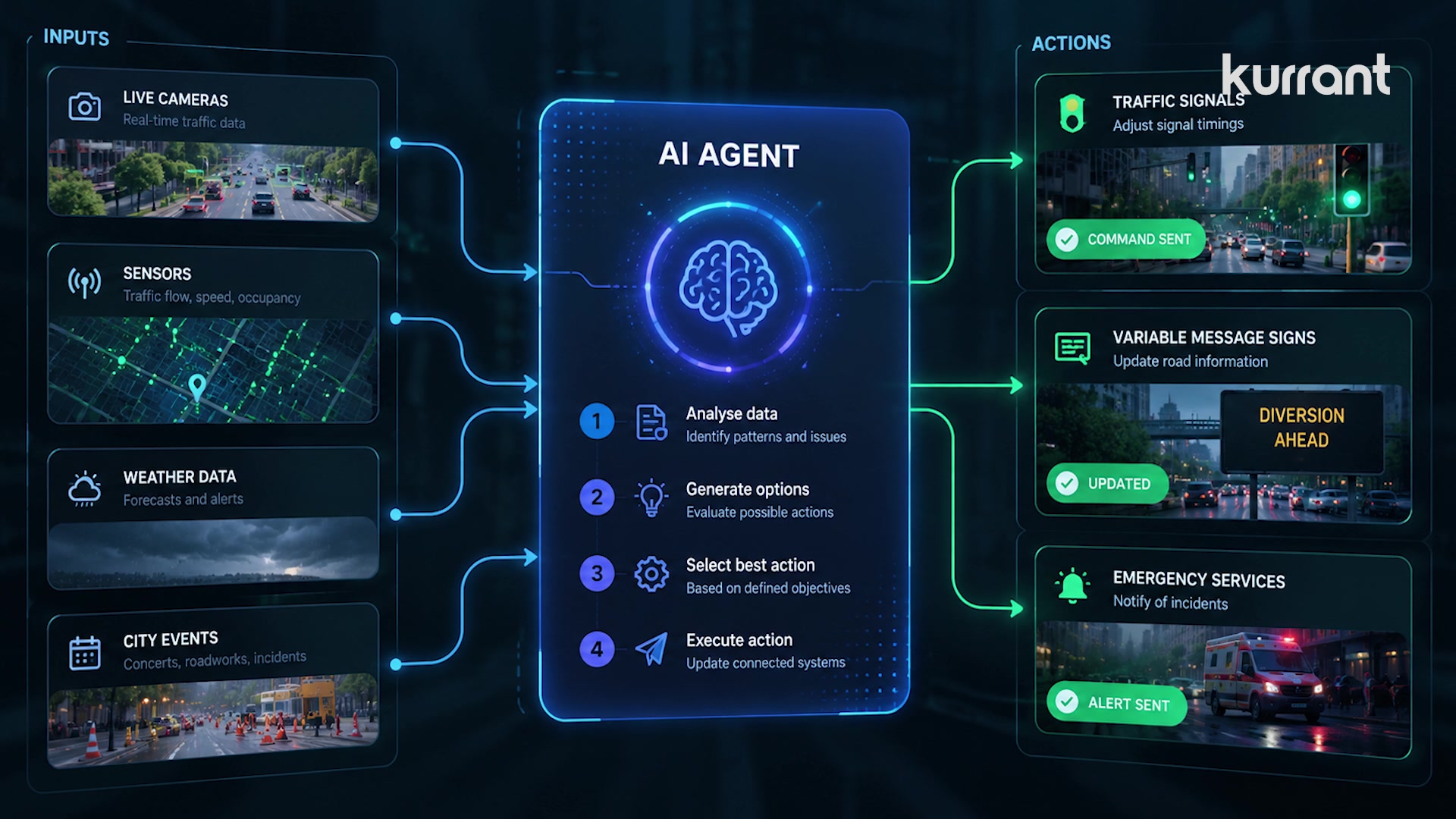
I'm very happy to say that Rome now is a step forward than the other cities, because we have our public agency, that is the Roma Servizi per la Mobilità that own our central traffic center.
There’s a place where we know every thing and we integrated every data, a smart control room where you have a video of each street of Rome in which you positioned cameras.
And in this room you have everything, you have if you want to see where is a bus or the public transport, you can see that if it's in late or if it's the right time, you can see that.
You can see if a scooter of the shared mobility is used or is not used if is in charge of is not in charge.
And this is very important because the data also of the private operators are now public.
And so we can share it with a citizen on open data or in the websites of Roma Servizi per la Mobilità.
And so, we are a step forward and we are very happy with this.
During the Smart City Expo World Congress, you signed a partnership with EIT Urban Mobility.
What is your goal with this partnership?
Sharing problems, sharing opportunities, sharing best practice with my fellow colleagues of other cities is so important.
And at the same time, we expected that with EIT, we can make it a positive lobby also versus European Union to change the rules when they have to change.
To also be paying attention to the cities because sometimes the national government doesn't help us to reach the goals that the European Union put on us.
So it's difficult.
The European Union put some goals to reach, national governments don’t understand the efforts we were doing.
And so European Union has to help us.
With economic resources, on operational cost and on investment that are very important to us because there's no investment if you don't pay attention also to operational cost.
More Smart City Expo World Congress Barcelona editions


Recent event coverage
See all



Latest Kurrant Originals
See all
Latest news
All news- eThekwini Municipality Plans Citywide Smart Water Meter Rollout Against 58% Non-Revenue Water2 Nov 2026
- The Australian Renewable Energy Agency Funds A$4.1M JET Charge V2G Trial2 Nov 2026
- TALQ Consortium Releases Edition 5 Tender Template For Interoperable Smart Street Lighting31 Oct 2026
- City Of Zadar Selects ELIPSA For €197,900 Design Of Intelligent Transport System Phase Two31 Oct 2026
Kurrant advisory
Planning a smart city or utility project? Talk to Kurrant.
Behind these interviews is Kurrant's advisory team, working with utilities, cities and the companies that serve them.
- Strategy AdvisoryKurrant is actively involved in resolving the challenges that cities, utilities and industry players are facing.
- M&A AdvisorySmart city and utility expertise for successful deals, turning insights into strategic gains.
- Engineering & ProcurementBetter engineering and procurement decisions, by identifying and developing digital and IoT solutions across use cases.
Or write to us: contact@kurrant.com
Send us a message
© Kurrant. All Rights Reserved. · Editorial Standards · Cookie settings
This site is protected by reCAPTCHA and the Google Privacy Policy and Terms of Service apply.