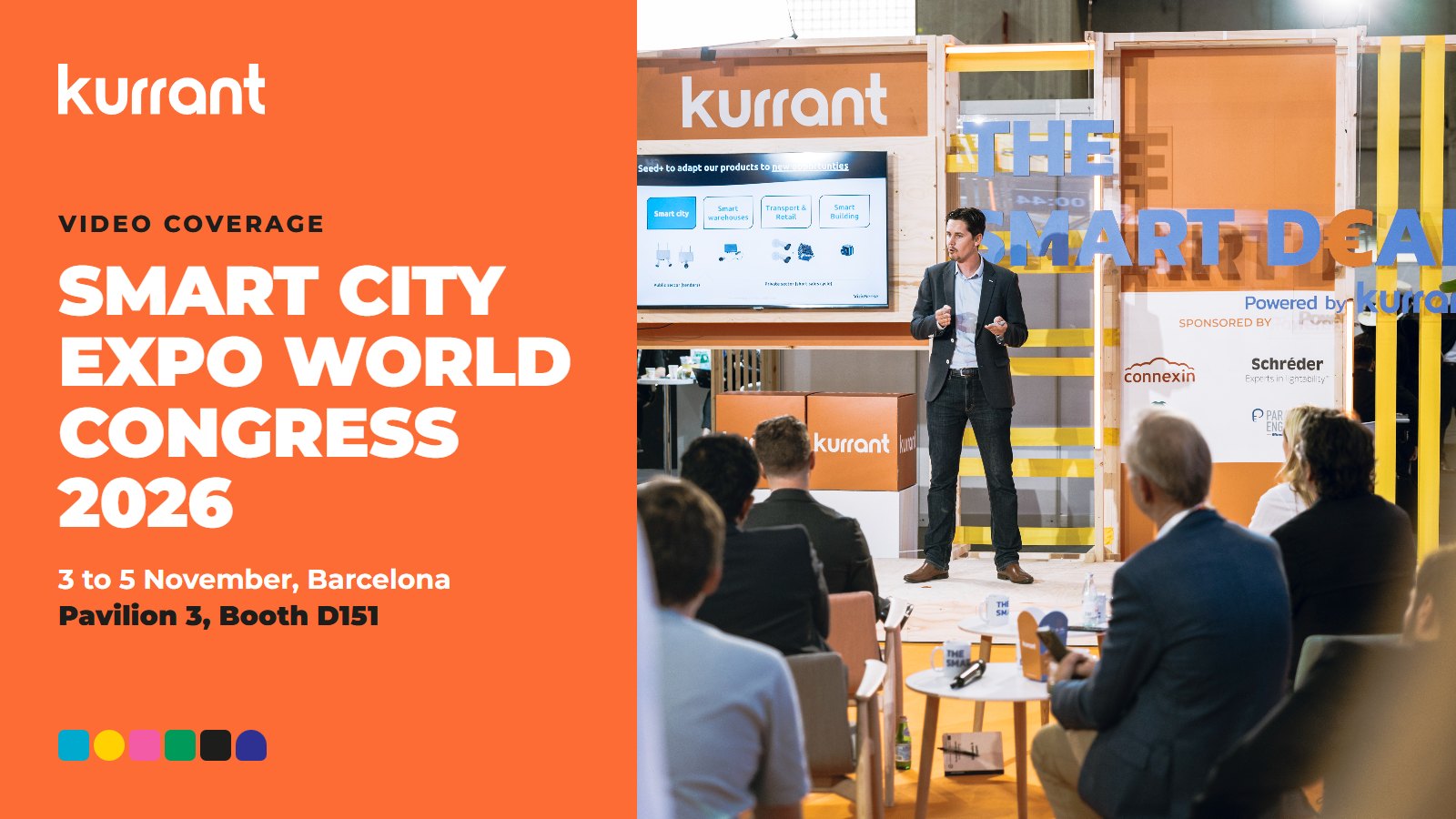
Meet  in Barcelona
 3 to 5 Nov 2026
Pavilion 3 · Booth D151
Our scheduleSchedule
Live from Barcelona · 1 videoLive
Book a meeting
in Barcelona
3 to 5 Nov 2026
Pavilion 3 · Booth D151
Our scheduleSchedule
Live from Barcelona · 1 videoLive
Book a meeting
← Back to all events
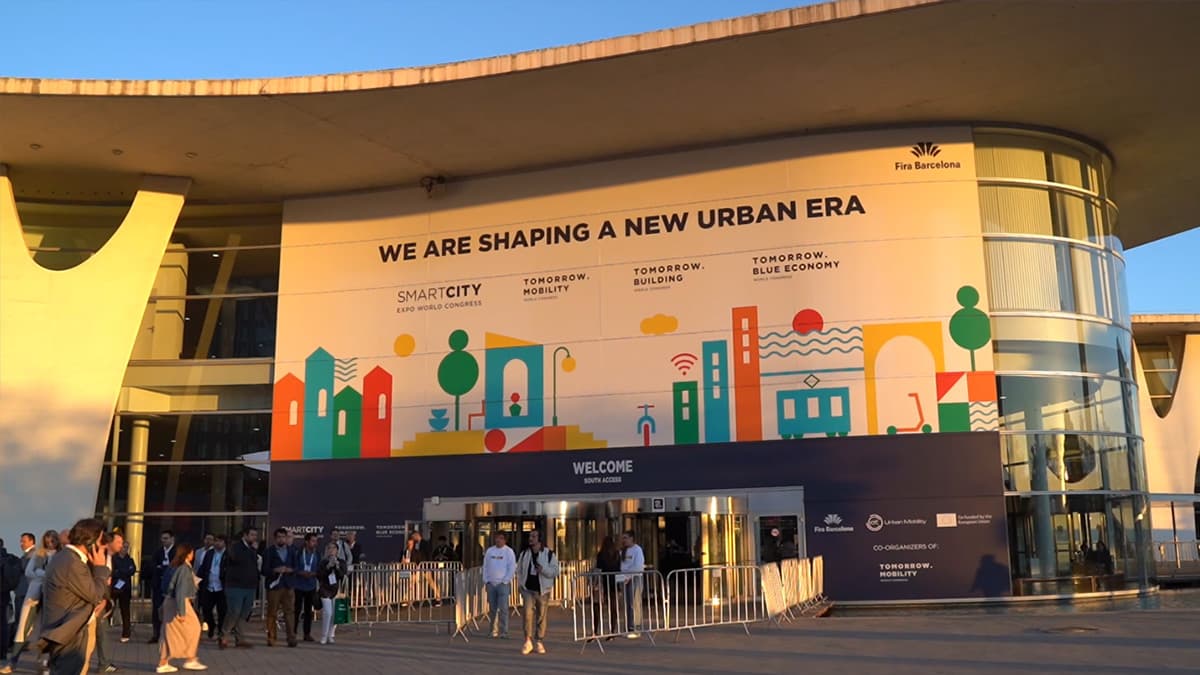
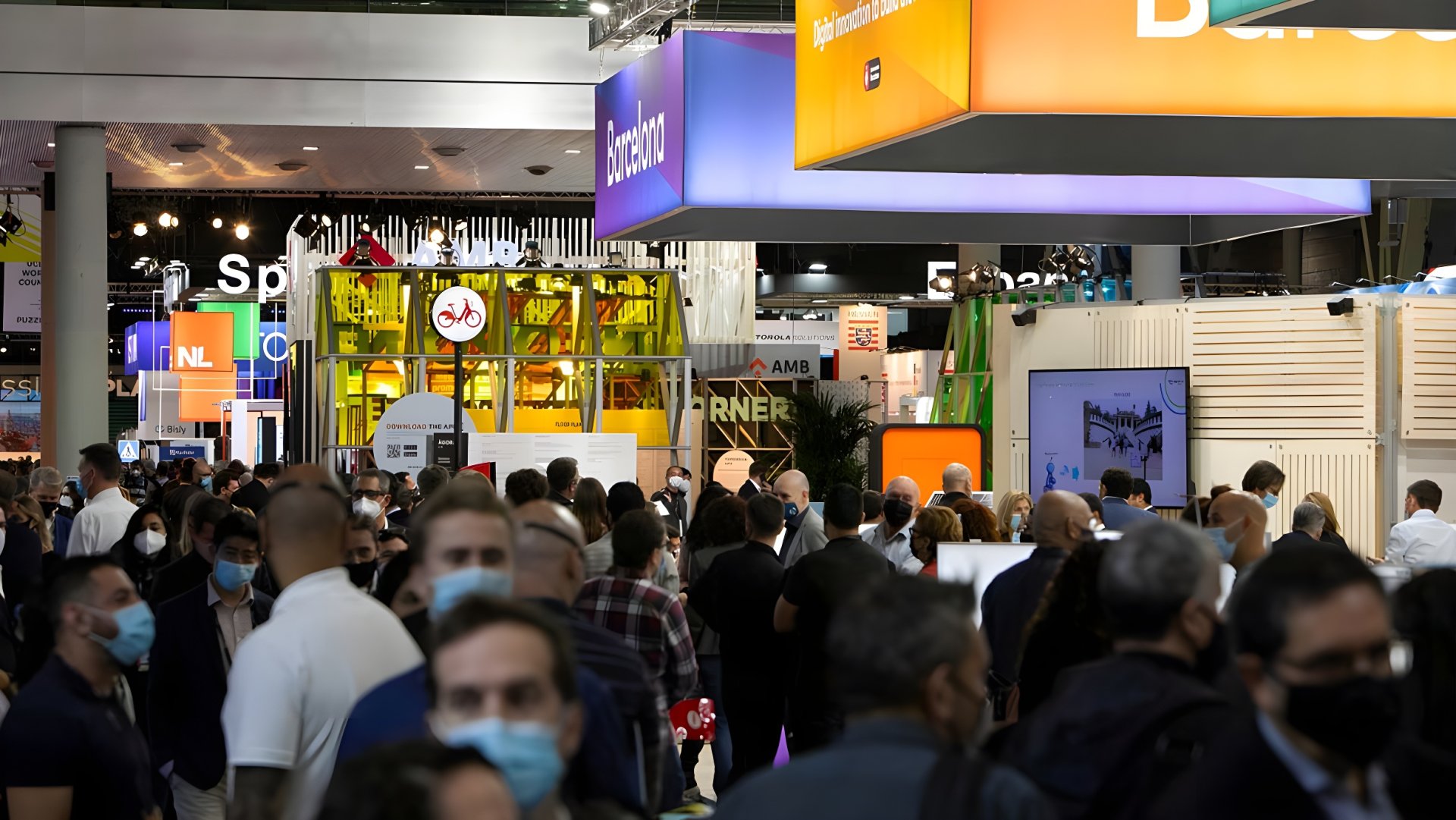
Smart City Expo World Congress Barcelona 2024
Driving Urban Mobility Forward: Insights with Bernadette Bergsma & Aleksander Rajch
📖 Read Video Transcript
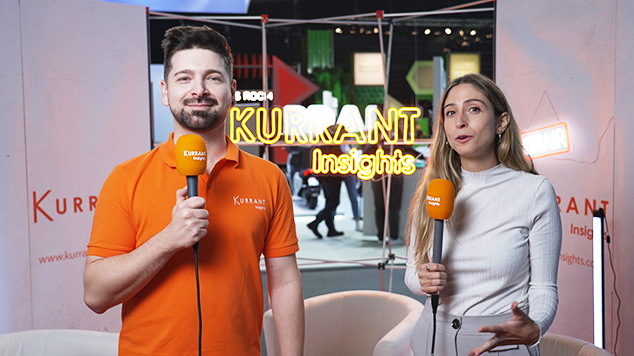
I'm back at the Kurrant booth, and I am joined by Bernadette Bergsma from EIT Urban Mobility and Aleksander Rajch from Polish New Mobility Association.
Alek, what is the Polish New Mobility Association?
Yeah, well, the Polish New Mobility Association is a trade or industry organization representing over 300 members from various industries of sustainable mobility, an ecosystem we call new mobility, so automotive companies, EV charging, hydrogen refueling, battery companies, various various technologies that all together, make this ecosystem.
We also have over 200 partners, including over 80 cities, academics, universities, NGOs, diplomatic institutions that we work with, and some of the projects that we do when we implement an average of 50 different ventures every year are some study and research projects, TCO analysis, pilot projects, big events like the New Mobility Congress, which is an event for 4000 people we organize in Poland, in center-eastern Europe.
And of course, we try to expand into the EU with partners such as the EIT Urban Mobility, to foster clean cities with sustainable transport.
So low emission zones, cycling strategies, really innovative solutions as well, to make city dwellers have a more comfortable and convenient life, but also generating economic and social value.
And what are the main issues that Poland is facing in terms of mobility?
I think Poland is, facing a lot of issues related to grid investments, really greening corporate fleets, making fleets electric in general, both the passenger fleet as well as the TSL, the heavy duty vehicles.
Poland has the largest fleets of heavy duty vehicles in Europe, with over 1,200,000 cars.
More than three and a half tons.
This is a huge challenge.
We need to electrify very quickly.
The charging infrastructure related to that is just another topic, which is enormous in terms of challenges.
But I think the key points of the discussion here in Barcelona at the Tomorrow Mobility Congress is what the cities have to do.
And this is a very, very, I think, profound topic with a lot of mobility solutions included.
So, first of all, the mentality change in the cities that have been under communist rule for 50 years, there's a whole different outlook on the ownership of personal vehicles, the Liberty ideas related to low emission zones.
So people wanting their own cars and not being restricted in any way.
And of course, our job all together with our partners is to show them that this is something that is made for comfort, for better health.
It doesn't limit anyone.
It actually increases, every day now, easiness to live in their cities and to, to live happily.
Bernadette, how are these challenges, similar to those that other countries in Europe face?
Well, it's actually very much linked to what he just said, because what we see, I mean we are at TomorrowMobility World Congress, there are more than 400 cities here.
And also talking to the different cities, what comes up all the time are problems of congestion and air pollution.
Now it's it's no other way. in the rest of the world, like, I mean, it's not only in Eastern and Central European countries, it's also in the rest of Europe, the problem, and the environmental, European Environmental Agency, for example, says that air pollution is the biggest environmental risk for Europe.
So it's something that we really need to work on because, now cities are working on cities, of course, are there to make a difference.
And there are.
And Europe, we see that there's over 300 low and ultra low emission zones already that are really solving.
Part of the problem is a very good example is London.
London has the biggest ultra low emission zone of the world, which covers 1500km² at 9 million people.
So it's huge and they have been able to decrease their emission levels half compared to if they would not have done this.
So, another good example is the city of Milan, where they have, access regulations in the city center as well.
And they have been able to reduce a lot of congestion as well in the past years.
So these are just a few examples of how cities can really make a difference and to how congestion.
And, air pollution are really at the top of our minds.
And, Alek, back to you.
What solutions are deployed to face these challenges?
I think it's pretty much, in line with what Bernadette said.
So, I mean, you know, London has a really good solution that it worked on for over 20 years.
If you take into account that out of the 100, most polluted in terms of air pollution, cities in the EU, 30 are in Poland.
We don't have 20 years, we have much less.
But we have good partners like EIT Urban Mobility and the many companies here in Barcelona today, but so many other partnerships across Europe that we can do this quicker.
We just really have to learn from each other and partnership is the key word here.
So I think that's one of the solutions, is already to establish a network who can work together to accelerate this process.
I think that the solution is also to know where we're placing the money.
So if we have big subsidies for vehicles, for charging, for hydrogen fueling, we need big subsidies for grid repairs, energy storage, to ramp up renewables and to really change the entire ecosystem and not just focus on very particular issues.
And then, of course, awareness building that I named is one of the biggest challenges.
And so I think all those solutions are available The 300 companies in our portfolio.
I think showcase that perfectly.
We have legacy companies that are showing the shift in the transition.
We have these innovative technology companies that bring along this kind of startup and innovative approach.
So I think all of that together, provides a very good horizon for solutions.
And this question is for both of you.
Can you tell me a bit about the CEE study and the cost and benefit study?
Yes, I can tell about, our latest study, which we are just launching now.
It's, the study on the cost and benefits for the urban mobility transition.
Study is actually setting out a roadmap for cities to implement urban mobility, sustainable urban mobility solutions to reach the EU Green Deal targets by 2030 and 2050.
So what we did in the study is actually set out 12 different city prototypes so different in size and geography, across Europe, and testing out, different scenarios.
So we have three different scenarios here.
One is more focused on the supply chain.
So supplying like, new, new and better mobility services.
The second scenario is focusing more on the demand side.
So demand management regulation, behavioral change here is very important as well.
And the other one is on zero emissions, which is basically a mix of all the measures that we could take.
Now, while testing and working on the different scenarios, there are some key takeaways.
Of course, as you already said, collaboration is key and collaboration is key, If you see that we need to invest in additional €1.5 trillion by private and public sectors to really make, this happen, to really reach the EU Green Deal targets by 2050.
Now, another finding is that technological solutions are key, so we can reduce 21% of the CO2 emissions by 2030.
Well that is not enough.
So cities really need to take the lead here, work together with key players, focus on active mobility, shared mobility, public transport and access regulations.
And then last but not least, I would like to highlight here public transport, which is really the backbone of sustainable urban mobility.
It's that measure that actually requires less investments compared to others.
While it is also the most inclusive measure, so, I would say that cooperation is key for wide investments, but still keeping in mind that if we invest for wide things, the benefits that we take from that are much bigger.
And I think it's very important, you know, really emphasize the economic and social value of this.
We looked at this kind of very ambitious scenario for Poland alone, and in 2035, we can add 5% of the Polish GDP just by really investing and working in all those sectors.
So this multimodality approach and sustainable transport approach.
So this is a huge economic value as well.
And this needs to be understood.
It's not just spending.
It's actually something that we're going to profit on.
In the future while also working for towards climate neutrality.
Bernadette, the last question is for you, how can we transform and push public transportation?
Yes.
So, as said public transport is key, it is the backbone of sustainable urban mobility and has a lot of, like, benefits.
Right?
It's it's economic benefits, societal benefits as well.
Improving air quality.
It's also providing more jobs.
And so it is a very key component of our work.
Now, how can we really push for that and make it happen that of course investments are needed.
So we need to make sure that transport networks are extended, that vehicle fleets are renewed when needed, of course.
But in addition, we should also look at other types of services like demand responsive transport.
How to link that also with new innovations like, autonomous driving, right?
Making parts of the public transport network autonomous and also data management of course is key.
So how can we make sure that it's connected, that connectivity is right, that we can, link it to it's car and car sharing, bike sharing?
I would say this is also not enough because at the end it's people.
People need to use it.
And it's not about only about the service quality.
It's also if I want to take a bus, I take the bus.
That's a service, right?
But it's also easy for me to go from A to B, so we need to make sure that it's not only affordable, accessible, but it's also very quick.
So you have to think of adding the right lanes so that busses can travel easily to cities.
More Smart City Expo World Congress Barcelona editions

Recent event coverage
See all
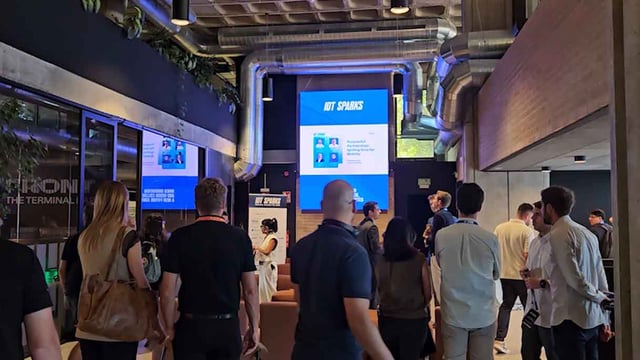


Latest Kurrant Originals
See all
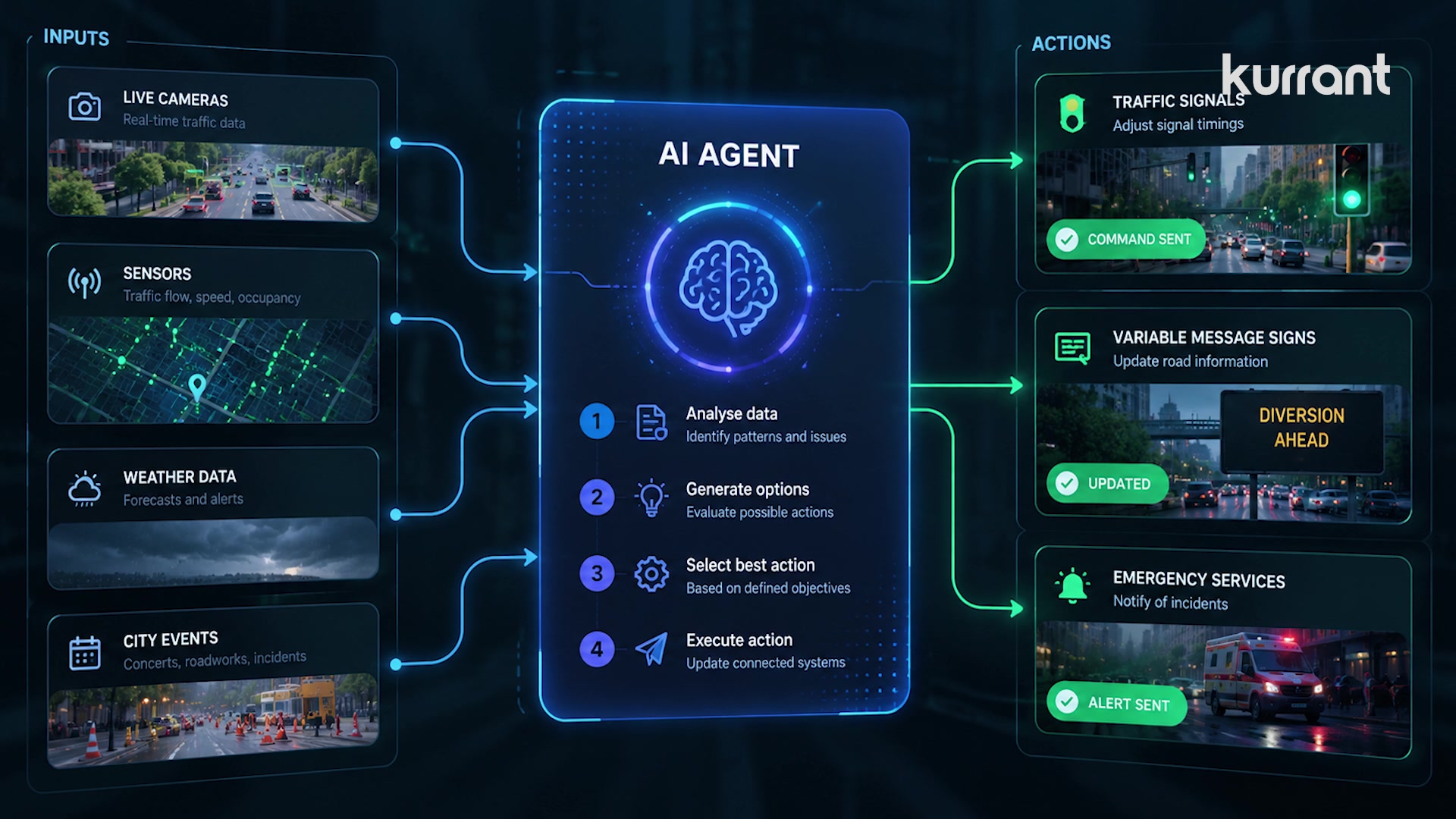
Latest news
All news- eThekwini Municipality Plans Citywide Smart Water Meter Rollout Against 58% Non-Revenue Water2 Nov 2026
- The Australian Renewable Energy Agency Funds A$4.1M JET Charge V2G Trial2 Nov 2026
- TALQ Consortium Releases Edition 5 Tender Template For Interoperable Smart Street Lighting31 Oct 2026
- City Of Zadar Selects ELIPSA For €197,900 Design Of Intelligent Transport System Phase Two31 Oct 2026
Kurrant advisory
Planning a smart city or utility project? Talk to Kurrant.
Behind these interviews is Kurrant's advisory team, working with utilities, cities and the companies that serve them.
- Strategy AdvisoryKurrant is actively involved in resolving the challenges that cities, utilities and industry players are facing.
- M&A AdvisorySmart city and utility expertise for successful deals, turning insights into strategic gains.
- Engineering & ProcurementBetter engineering and procurement decisions, by identifying and developing digital and IoT solutions across use cases.
Or write to us: contact@kurrant.com
Send us a message
© Kurrant. All Rights Reserved. · Editorial Standards · Cookie settings
This site is protected by reCAPTCHA and the Google Privacy Policy and Terms of Service apply.