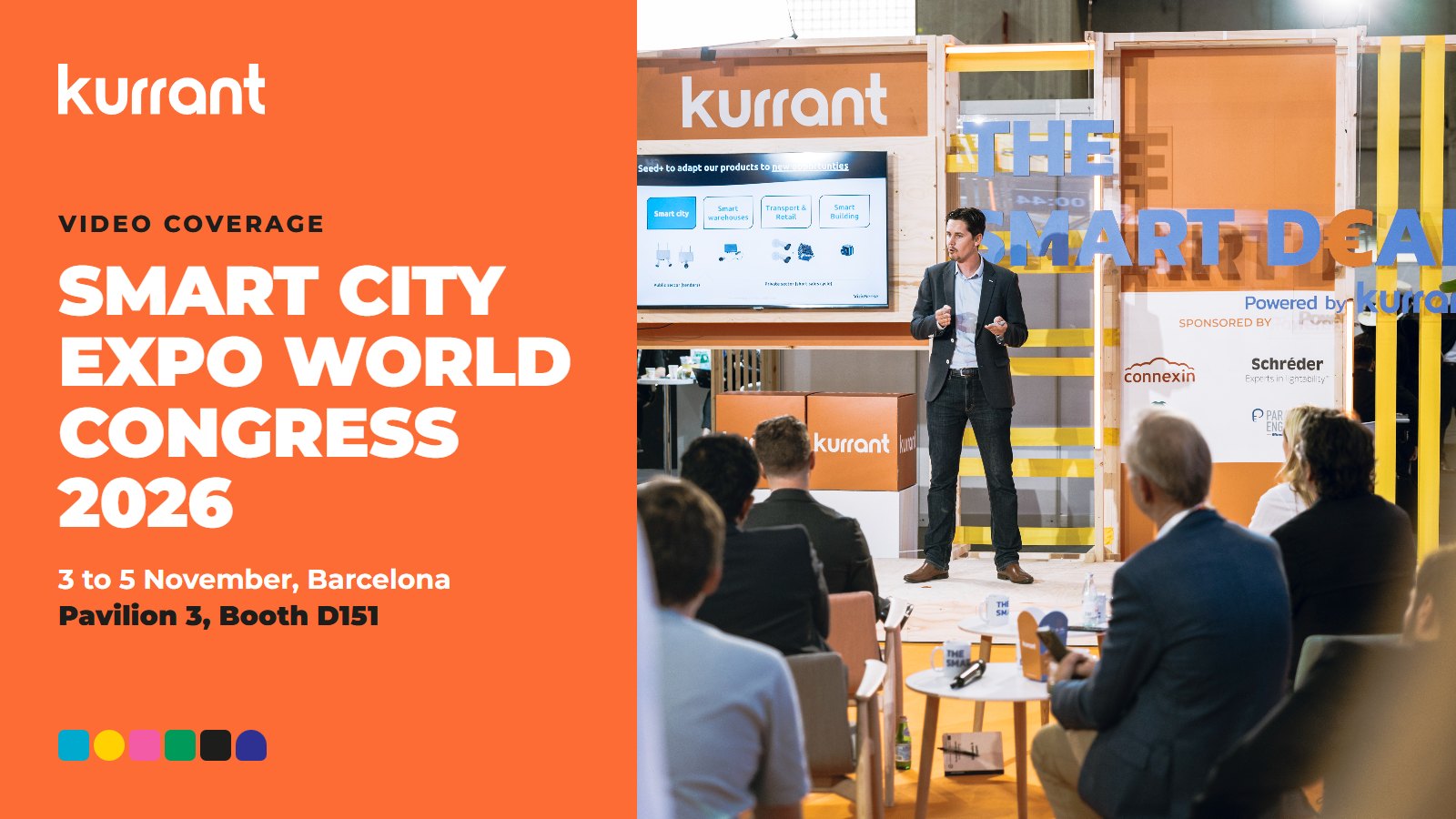
Meet  in Barcelona
 3 to 5 Nov 2026
Pavilion 3 · Booth D151
Our scheduleSchedule
Live from Barcelona · 1 videoLive
Book a meeting
in Barcelona
3 to 5 Nov 2026
Pavilion 3 · Booth D151
Our scheduleSchedule
Live from Barcelona · 1 videoLive
Book a meeting
← Back to all events
Smart City Expo World Congress Barcelona 2024
Francien Huizing on Amsterdam InChange Innovation, Citizen Ownership, and Public-Private Partnerships
📖 Read Video Transcript
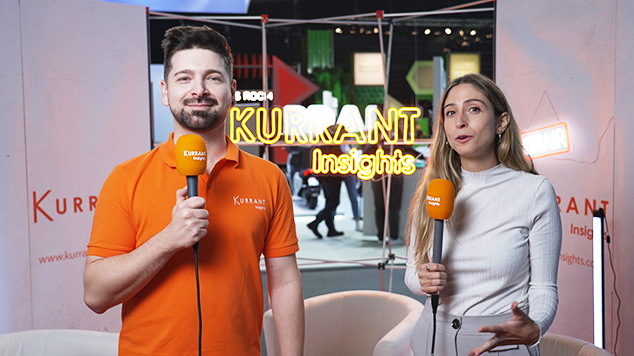
I'm at the Kurrant booth with Francien Huizing from Amsterdam InChange.
Francien, the first question would have to be what is Amsterdam InChange?
Amsterdam InChange is an open innovation platform for the Amsterdam region and beyond.
We bring together governments, knowledge institutions, societal institutions and companies to innovate together for a better future for all.
And we create an open and safe space for this cross organizational cooperation.
And from these different perspectives, we try to find new ways, for innovation and, for co-creation.
We were called Amsterdam Smart City.
And, we actually just launched our new name, Amsterdam InChange.
And that is because, the smart, cities was 15 years ago, maybe still a very magical and promising concept, but we know now that it also has negative, connotations and negative pitfalls.
And actually we work on realizing meaningful change with each other.
So we thought we need a name that reflects better what we stand for.
And that is in change.
We still use innovation and digitalization, new technologies.
But the focus is on the change.
In the past, we've seen Amsterdam city and the region focusing on mobility or smart grid projects.
What are some projects that they're focusing on now?
Well, the focus is still on these topics.
Mobility, energy, circular economy, digitalization.
But the next step is actually from citizen participation to really citizen or community stewardship.
And that means we want to give citizens ownership of their own mobility, for example.
Because if you have a place, where there's no business case for shared mobility, you can also give community ownership of their own mobility.
You give them decisiveness over what kind of mobility they need and want.
And also the ownership, and I think that's the next step.
It's really engaging citizens, not seeing them only as consumers.
But seeing them as city creators.
Actually, there are, energy cooperatives.
So neighborhoods or villages, in the region of Amsterdam having their own energy cooperatives.
But also mobility as a common, so in certain neighborhoods where mobility as shared mobility has no business gains.
We have now examples of communities, that have their own mobility common.
So, for example, one neighborhood decides, we need three shared cars.
They have ownership of those cars, and they share the cars.
You’re a public private partnership.
Why is it important to have these types of partnerships in order to advance digitalization of cities and regions?
Well, the tagline of Amsterdam InChange is innovation begins where boundaries fade.
The technological possibilities are beyond, are there.
So the problem is not that we don't have the technical opportunity or possibilities to speed up, but the challenge is in that cooperation between governments and companies, but also knowledge institutions and society.
I think there's where the challenge is.
And if you look around here on the expo, the technological possibilities go beyond your imagination, with artificial intelligence and what we all see here.
But how are we going to implement it with each other?
And that's where you need each other.
So it really begins where the boundaries between organizations fade.
What are some of the challenges that they face, these private public partnerships?
I think there's a lot of challenges.
Sometimes it's in rules and regulations.
For example, in the cooperatives or the commons, they also need, of course the validations.
They need to be valid, for the law, lawfully.
So sometimes the challenge is in rules and regulations.
It can also lie in the cooperation itself.
The difference in speeds and governments need to do tenders need to follow certain rules and regulations.
The start up or the scale up has to go fast.
In three months time, they're out of investment money maybe.
So it's a different pace, which is a challenge.
But it can also lie in, financing, or digitalization itself can be a barrier.
So there are a lot of challenges in this cooperation, but I think, if you're willing to spend time and understanding each other and looking, okay, where is your challenge?
How can I help you?
And how can we do it together?
We can make it work.
More Smart City Expo World Congress Barcelona editions

Recent event coverage
See all


Latest Kurrant Originals
See all
Latest news
All news- eThekwini Municipality Plans Citywide Smart Water Meter Rollout Against 58% Non-Revenue Water2 Nov 2026
- The Australian Renewable Energy Agency Funds A$4.1M JET Charge V2G Trial2 Nov 2026
- TALQ Consortium Releases Edition 5 Tender Template For Interoperable Smart Street Lighting31 Oct 2026
- City Of Zadar Selects ELIPSA For €197,900 Design Of Intelligent Transport System Phase Two31 Oct 2026
Kurrant advisory
Planning a smart city or utility project? Talk to Kurrant.
Behind these interviews is Kurrant's advisory team, working with utilities, cities and the companies that serve them.
- Strategy AdvisoryKurrant is actively involved in resolving the challenges that cities, utilities and industry players are facing.
- M&A AdvisorySmart city and utility expertise for successful deals, turning insights into strategic gains.
- Engineering & ProcurementBetter engineering and procurement decisions, by identifying and developing digital and IoT solutions across use cases.
Or write to us: contact@kurrant.com
Send us a message
© Kurrant. All Rights Reserved. · Editorial Standards · Cookie settings
This site is protected by reCAPTCHA and the Google Privacy Policy and Terms of Service apply.