Meet  in Barcelona
 3 to 5 Nov 2026
Pavilion 3 · Booth D151
Our scheduleSchedule
Live from Barcelona · 3 videosLive
Book a meeting
in Barcelona
3 to 5 Nov 2026
Pavilion 3 · Booth D151
Our scheduleSchedule
Live from Barcelona · 3 videosLive
Book a meeting
← Back to all events
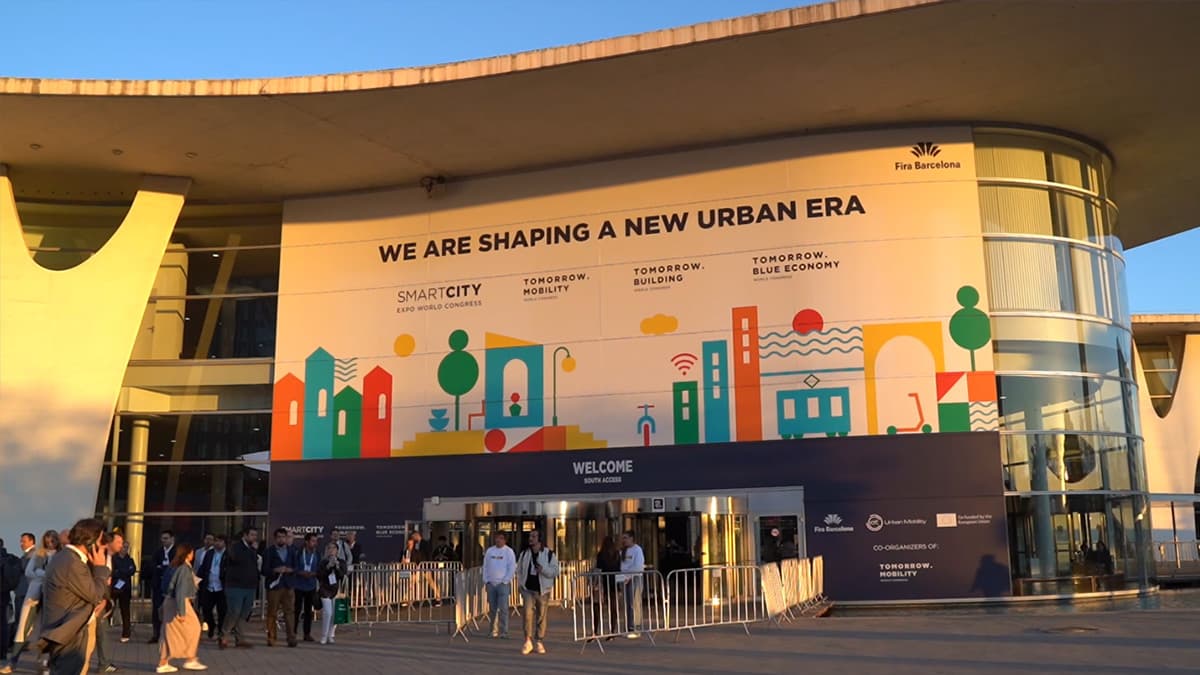
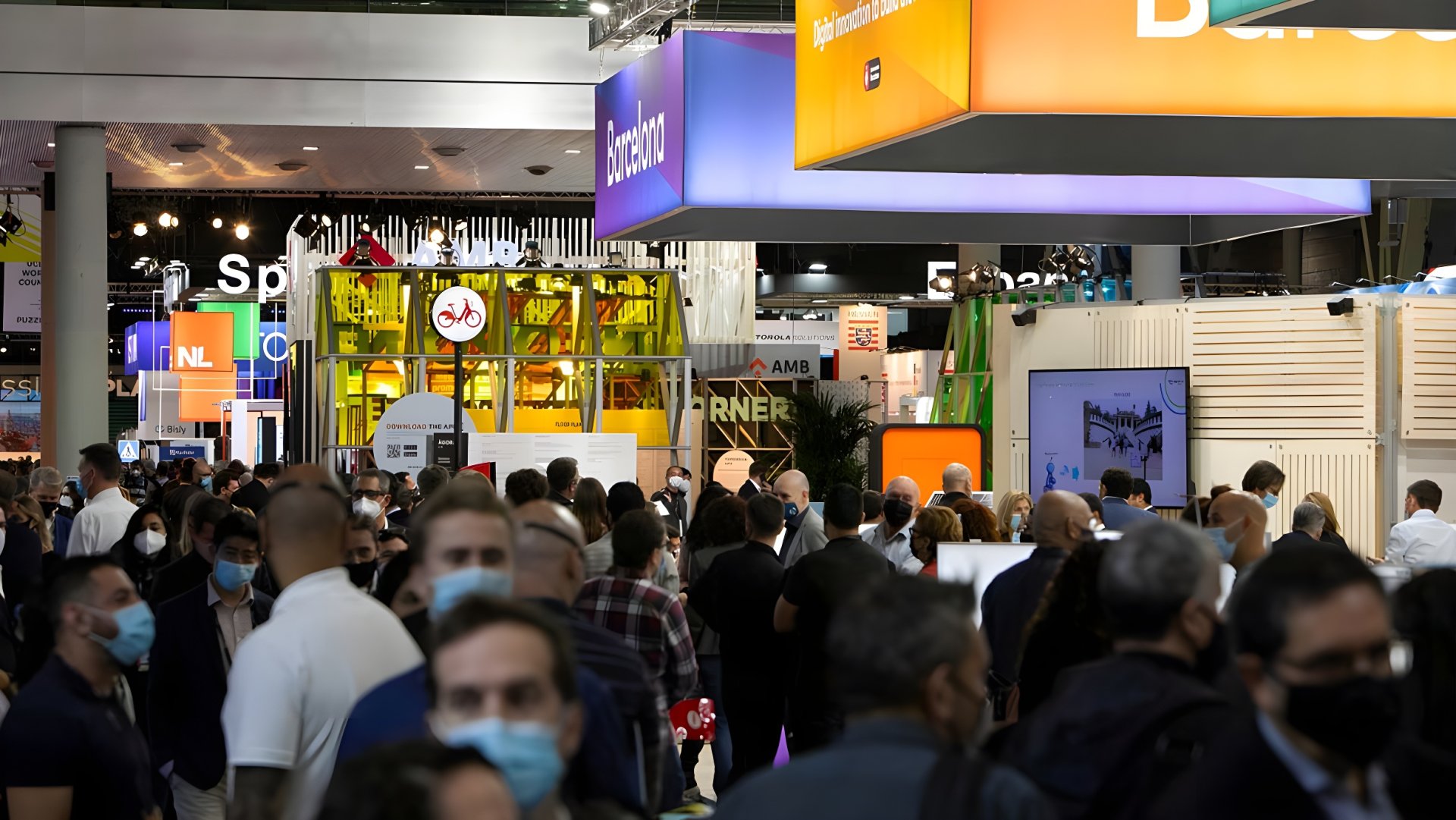
Smart City Expo World Congress Barcelona 2024
Future Mobility: Navigating Smarter Cities with Technology and Human-Centric Design
📖 Read Video Transcript
I think navigation is a big issue for vehicles, for people and how people navigate using technology like phones and mobile technology of that sort.
But I think that's actually quite old now.
And I think in the future we're going to be looking much more at, prediction of mobility and prediction of navigation.
And we need to be much smarter about how we do that in order to be able to cope with that.
So we might want to change routes and change information to people according to how they feel.
Whether they feel a bit scared, whether they feel happy, we might want to change things along those lines, not just basing it all on how many people there are or how many cars there are, but actually about much more about the person themselves and understanding the person themselves.
So I think that's where it will go.
And I think that's a good thing, because I think it will help to make the city technologically much more people centered.
This is very much around the information delivery.
And where we find it very difficult is we immediately we divide, you and I talk about mobility, which we should, but everybody else talks about bits of mobility.
So you talk about e-scooters or, busses or bicycles or whatever.
And we see them as very separate things.
But actually mobility isn't that.
Mobility is different from movement.
And I think the concept of mobility as being the possibility of being able to go somewhere is kind of what I tend to think of when I think of mobility.
And smart mobility is about knowing what there might be and what I might think about that.
So that puts the smartness in.
It isn't actually the mobility itself.
The way in which we can enable that to happen then becomes one of how you enable somebody who wants to, let's say, go over there somewhere.
And part of that they may walk part of it, they may cycle parts of it, they may go in a taxi or whatever.
How we actually coincide those things in order to achieve that objective.
And that objective, I might think that the objective is over there, but really a better one is over here.
So if my technology could say instead of telling the technology, I want to go to that corner over there, tell me how to go there.
If I said, I want to have a coffee.
So this is where you can have a coffee.
You know the best coffee, the one that you really like, you'll find in this direction.
And you can get to that by this means.
So it's kind of taking mobility out of movement and enabling person to feel that they can move around and giving them the options to do that.
So it's very much about information.
Interactive kind of information between people and the system.
Transport for London wanted to have a sound on e-scooters, which would alert people, and I think what they thought was it would just be a sound.
It would be like, a song or, an ambulance siren or something.
But instead we looked at what is good for human ear.
So how do we hear, why do we have ears at all?
You know?
And when we started to look back across history, we have ears in order to detect very small sounds far away.
So humans are quite good at small sounds quite far away.
We know where they are.
We tie it up with our eyes to tell us what it is that's causing this.
We're very bad at very loud sounds, so that tends to destroy our hearing.
So small sounds are really good.
And then we looked at what those small sounds might be.
And if you were 20,000 years ago in the Savannah and you heard the snap of a twig, that's that (noise), that could be your lunch, or it could be something that thinks that you're their lunch.
So you kind of need to make the right answer.
And that is kind of how our hearing is evolved, is to be able to detect that.
So we made a sound which is a bit like the snap of a twig.
And we made it so that it works with the hearing system, so that the hearing system inside your brain tells your vision system to expect a scooter.
And we could do that in a way that it told your vision system before you're consciously aware of the scooter.
I think we're in a bit of a cusp, a junction.
One says 20 years, I am not sure whether autonomous vehicles in cities is going to be really viable in 20 years.
I think there's a long, long way to go.
We’re doing work on this, and there's a long way to go before they can really interact well and naturally, if you like, with people.
So I think there is a bit of an issue there.
It might happen.
So that's one possibility.
You've got drones.
Drones I think is a big thing that's going to come.
The issue with drones that we're picking up is the resistance to things flying around, noise, those sorts of questions.
So drones are going to appear.
Then somebody will decide they either like them or they don't.
So there's that.
There's that kind of road where the technology is producing new means of movement, which might come with different ways of doing things.
So there's that kind of direction.
And the other direction is almost the opposite, where we're using technology to enable people to become more social.
Which way are you going to go?
Are you going to go, I want a technology route.
Let's have lots of technology and people interact with that.
Or do I want to go people route?
And I think the question of that may be that 20 year period, because that is going to depend on how we educate the upcoming generation of people about what they want the city to be like.
I'm sort of thinking more and more that we should actually start to say, well, actually, hang on a minute.
The technology should enable us to live a better quality life.
Let's do that.
So what is the quality life that we want?
The straight answer.
We don't know.
Because we've never really asked ourselves that question.
And so I think we need to do that.
And I think we need to do it with the next generation.
More Smart City Expo World Congress Barcelona editions


Recent event coverage
See all


Latest Kurrant Originals
See all

Latest news
All news- eThekwini Municipality Plans Citywide Smart Water Meter Rollout Against 58% Non-Revenue Water2 Nov 2026
- The Australian Renewable Energy Agency Funds A$4.1M JET Charge V2G Trial2 Nov 2026
- TALQ Consortium Releases Edition 5 Tender Template For Interoperable Smart Street Lighting31 Oct 2026
- City Of Zadar Selects ELIPSA For €197,900 Design Of Intelligent Transport System Phase Two31 Oct 2026
Kurrant advisory
Planning a smart city or utility project? Talk to Kurrant.
Behind these interviews is Kurrant's advisory team, working with utilities, cities and the companies that serve them.
- Strategy AdvisoryKurrant is actively involved in resolving the challenges that cities, utilities and industry players are facing.
- M&A AdvisorySmart city and utility expertise for successful deals, turning insights into strategic gains.
- Engineering & ProcurementBetter engineering and procurement decisions, by identifying and developing digital and IoT solutions across use cases.
Or write to us: contact@kurrant.com
Send us a message
© Kurrant. All Rights Reserved. · Editorial Standards · Cookie settings
This site is protected by reCAPTCHA and the Google Privacy Policy and Terms of Service apply.