 in Barcelona
 3 to 5 Nov 2026
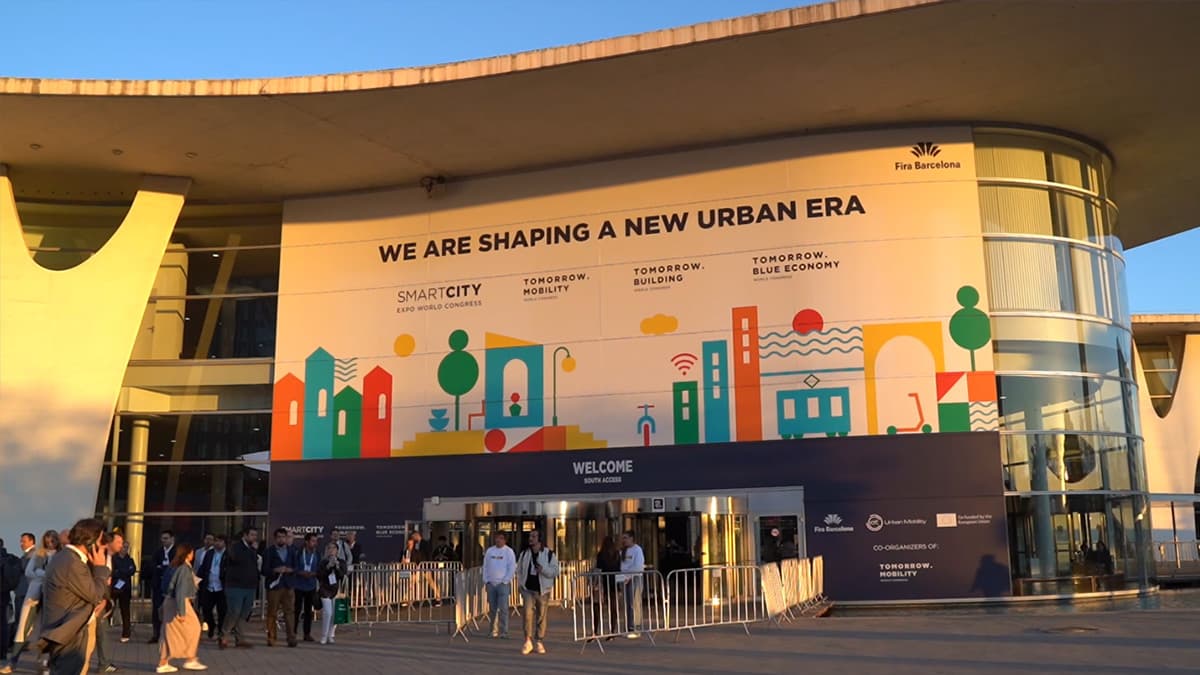
Smart City Expo World Congress Barcelona 2026
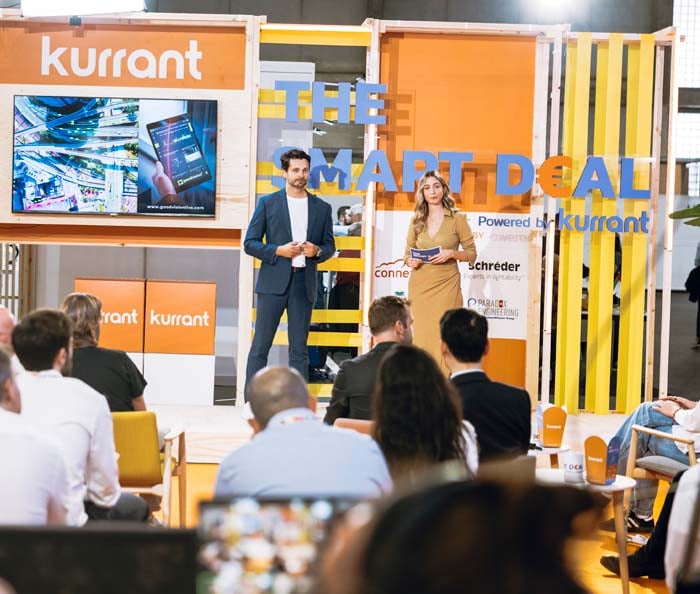
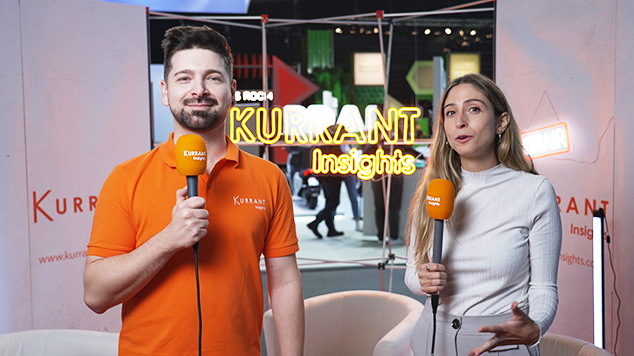
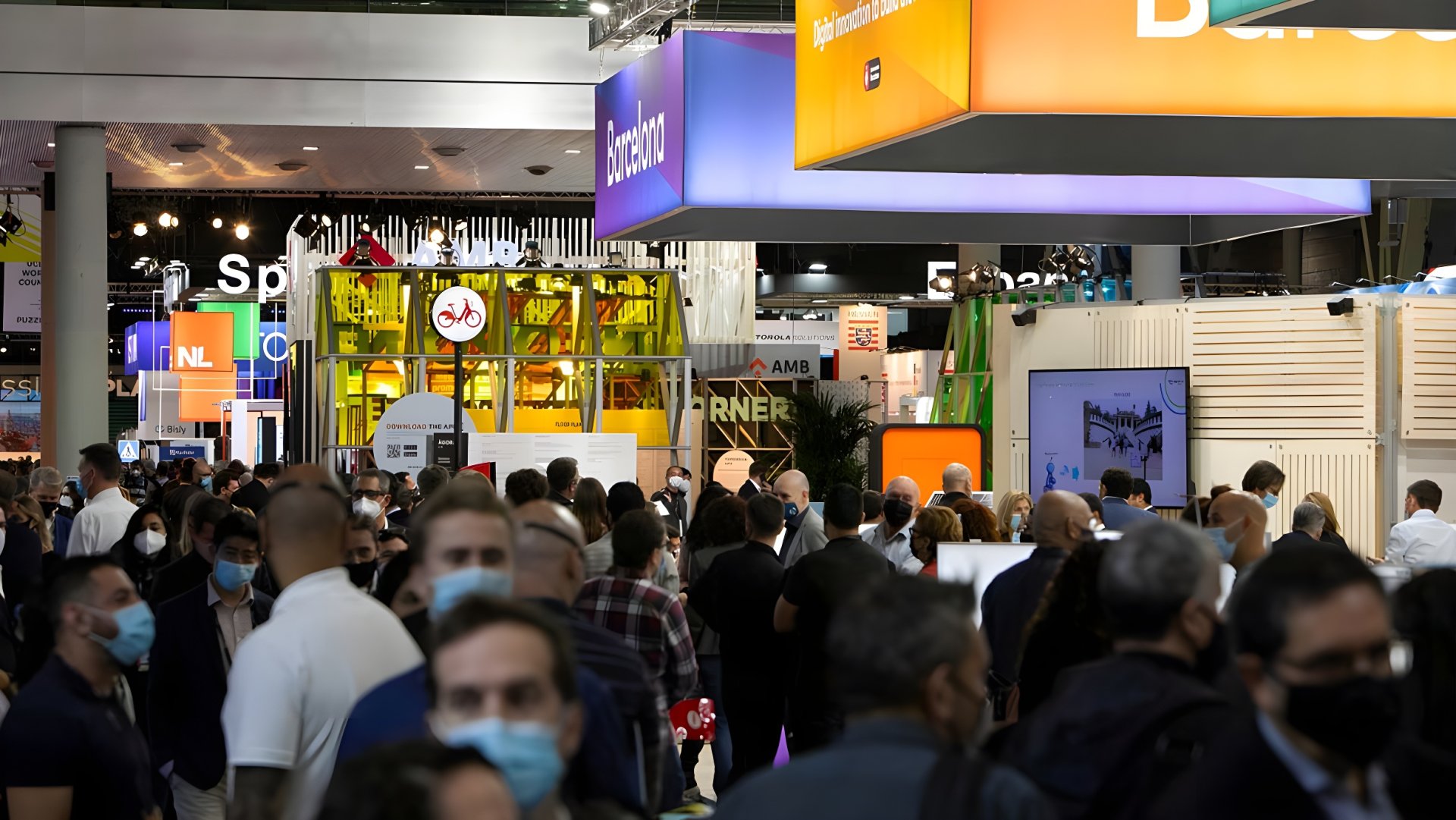
Smart City Expo World Congress 2026, Barcelona, 3 to 5 November. Kurrant films the expo floor, interviews with city and utility leaders and the companies that work with them, and The Smart Deal live pitches at Booth D151 in Pavilion 3. Videos are added here as we film them.
Making sense of city lighting data in 5 minutes
Highlights from the Zhaga, TALQ and DALI Alliance panel at the Kurrant booth, Smart City Expo World Congress 2026, with Jonathan Catchpole (Zhaga Consortium), José Sanchis (TALQ Consortium) and Paul Drosihn (DALI Alliance). Moderated by Emma Lozano Doogan.
Between them, the three organisations cover the whole lighting data stream, from the driver and the sensor up to the CMS platform. Zhaga sets the form factors and the electromechanical interface, DALI provides the functions and the data through the D4i interface, and TALQ makes that data accessible in the same way across manufacturers.
For tenders, writing “interoperability” is not enough. A city needs precise requirements, certification and proof of how interoperability is achieved. It does not have to start from scratch: the TALQ Tender Template is on the TALQ website. With the TALQ profiles, a city no longer defines each attribute it wants to collect from a driver or a Zhaga D4i sensor. It lists the profiles, and any Zhaga D4i sensor can be fitted to a luminaire at any point in its life.
On AI, the panellists see a strong tool for spotting patterns and analysing data, as long as the data is consistent and means the same thing on both sides. Standards provide that, and keep cities free to choose different technologies today and in the future.
📖 Read Video Transcript
they buy solutions that work
and that work today and in the future.
When cities invest in smart street
lighting, they're making decisions
that will most likely
affect them for decades.
That's why the collaboration
between the TALQ Consortium,
the Zhaga Consortium, and the DALI
Alliance is particularly interesting.
But what does this actually
mean for cities?
What was the original goal of bringing
these three organizations together?
So between the three organizations,
we owned almost all
of the whole data stream
from driver sensor all the way up
to the CMS platform.
But the three organizations
weren't talking to each other.
So we formed this liaison.
So the three of you were amazing
and said let's collaborate.
We always say that we're enabling
the interoperability by plug and play
interoperability, where Zhaga
determines the form factors,
the mechanical aspects,
the electromechanical aspects,
the pinouts, these kind of things.
And then DALI provides the
functionality, if you will,
the play element of that.
And then by adding TALQ into that
relationship, we're then bringing
in the user access to that data
that comes from the DALI interface
and making that more accessible,
more standardized so that you get
that interoperability between
different manufacturers also
from a user interface perspective.
And what does a city need to do
to include this in their tenders?
When the cities want to do a tender,
interoperability is not just a word
that you put in the tender
and that's all.
You need to refine requirements,
you need to require also
certification standards,
and to prove how
interoperability is achieved.
So what the city needs to do
is to make this requirement.
This is very hard work, but they don't
need to start from scratch because
in the TALQ website, they can use
the TALQ Tender Template to do that.
They just need to use
it and to define this.
And this gives these cities freedom
to evolve with the same technology,
not today, but in the future also.
Once lighting data is
unified and interoperable,
what can a city actually do
with that data that was difficult
or impossible to do before?
I think before the TALQ profiles
existed, there was a lot more work
that a city and a
municipality had to do.
They had to define each and every
attribute that they wanted to collect
from a driver or from a Zhaga D4i
sensor and have exposed in the cloud.
Now all they need to do is
just list the TALQ profiles.
So this now means that any Zhaga D4i
sensor can be fixed to a luminaire
at any point through the
lifecycle of the luminaire.
How important is interoperability
in times of AI?
AI is an amazing tool.
I think it can be used to spot
patterns and trends and analyze data,
and it's very efficient at doing that.
But it also, if you ask it 20 times,
you'll get 20 different answers.
So it needs a reliable data source,
a consistent data source.
So what we provide from the DALI,
the D4i interface,
is that consistency of data.
So let's use AI to solve the problems
that we need it to solve,
and not solve a problem
that doesn't need to exist.
I mean, the data is key.
If we don't have the same meaning
of data in both parts, AI is useless.
AI with bad data, bad responses.
But we still need standards.
We need standards because
we need to have the same meaning
of data and we have to give
the customers the freedom
to choose different technologies,
different solutions today
and in the future.
I think what Pepe and Paul
have said is correct.
AI is a hugely powerful tool.
But I think at the moment
it's going to be used
to analyze the data, process the data,
create something that's bigger
than the sum of the parts.
But to help develop hardware faster,
I don't think it's there yet.
But it probably will be by the
time my plane lands in the UK.
Thank you very much for coming.
Thank you to our panelists.
Round of applause, please.
Thank you, Emma.
Thank you.
About Smart City Expo World Congress Barcelona 2026
Smart City Expo World Congress 2026, Barcelona, 3 to 5 November. Kurrant films the expo floor, interviews with city and utility leaders and the companies that work with them, and The Smart Deal live pitches at Booth D151 in Pavilion 3. Videos are added here as we film them.
More Smart City Expo World Congress Barcelona editions
Latest Kurrantly News
All news Tadweer Group Puts AI Camera Inspection Vehicles On Abu Dhabi Waste Patrols
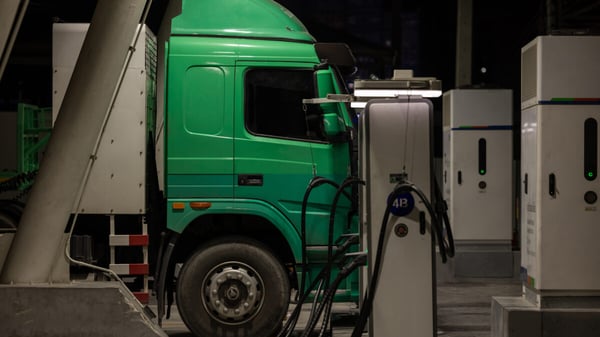 Autobahn GmbH Tenders E-Truck Fast Charging At 227 Serviced Motorway Rest Areas
 SUEZ UK Signs Long-Term Deal To Distribute Aganova’s Nautilus Pipe Inspection Tool
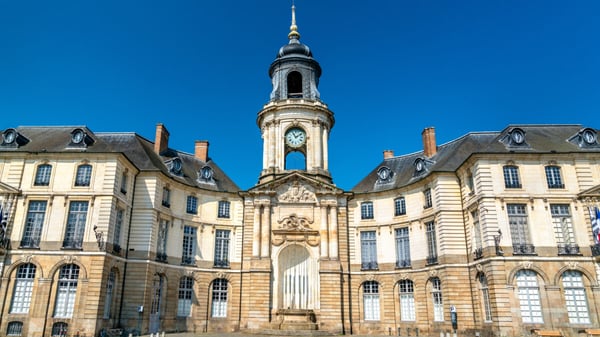 Rennes Métropole And Eau Du Bassin Rennais To Connect 6,000 Water Meters To Écodata Network
 SenseNet Raises $43M Series B Led By Idealist Capital To Expand Wildfire Detection
 Switzerland Awards 32 Motorway Charging Sites For Electric Trucks To Fastned, Obornes And Milence
Latest Kurrant Originals
See all

Kurrant advisory
Planning a smart city or utility project? Talk to Kurrant.
Behind these interviews is Kurrant's advisory team, working with utilities, cities and the companies that serve them.
- Strategy AdvisoryKurrant is actively involved in resolving the challenges that cities, utilities and industry players are facing.
- M&A AdvisorySmart city and utility expertise for successful deals, turning insights into strategic gains.
- Engineering & ProcurementBetter engineering and procurement decisions, by identifying and developing digital and IoT solutions across use cases.
Or write to us: contact@kurrant.com
Send us a message
© Kurrant. All Rights Reserved. · Editorial Standards · Cookie settings
This site is protected by reCAPTCHA and the Google Privacy Policy and Terms of Service apply.